

Cheese Processing - Case Study
Boasting an extensive array of Italian cheeses perfected in Italy and brought to the United States over 3 decades ago, this state-of-the-art facility culminates tradition and innovation. Intrinsic to their old world traditions is the concept that their Community is as important to them as the customers who savor their delicacies.
Challenge
With great success came expansion. Working closely with the regulators in their community, this Company took it upon themselves to develop a wastewater pretreatment system that would expand with their production and integrate seamlessly into their surroundings. Sustainability and physical footprint were very important to the Client who also utilizes solar panels to reduce their carbon footprint. Based in a small neighborhood in one of the United States’ largest cities, water use, odors and aesthetics were carefully considered in deciding upon adopting a wastewater treatment solution.
Solution
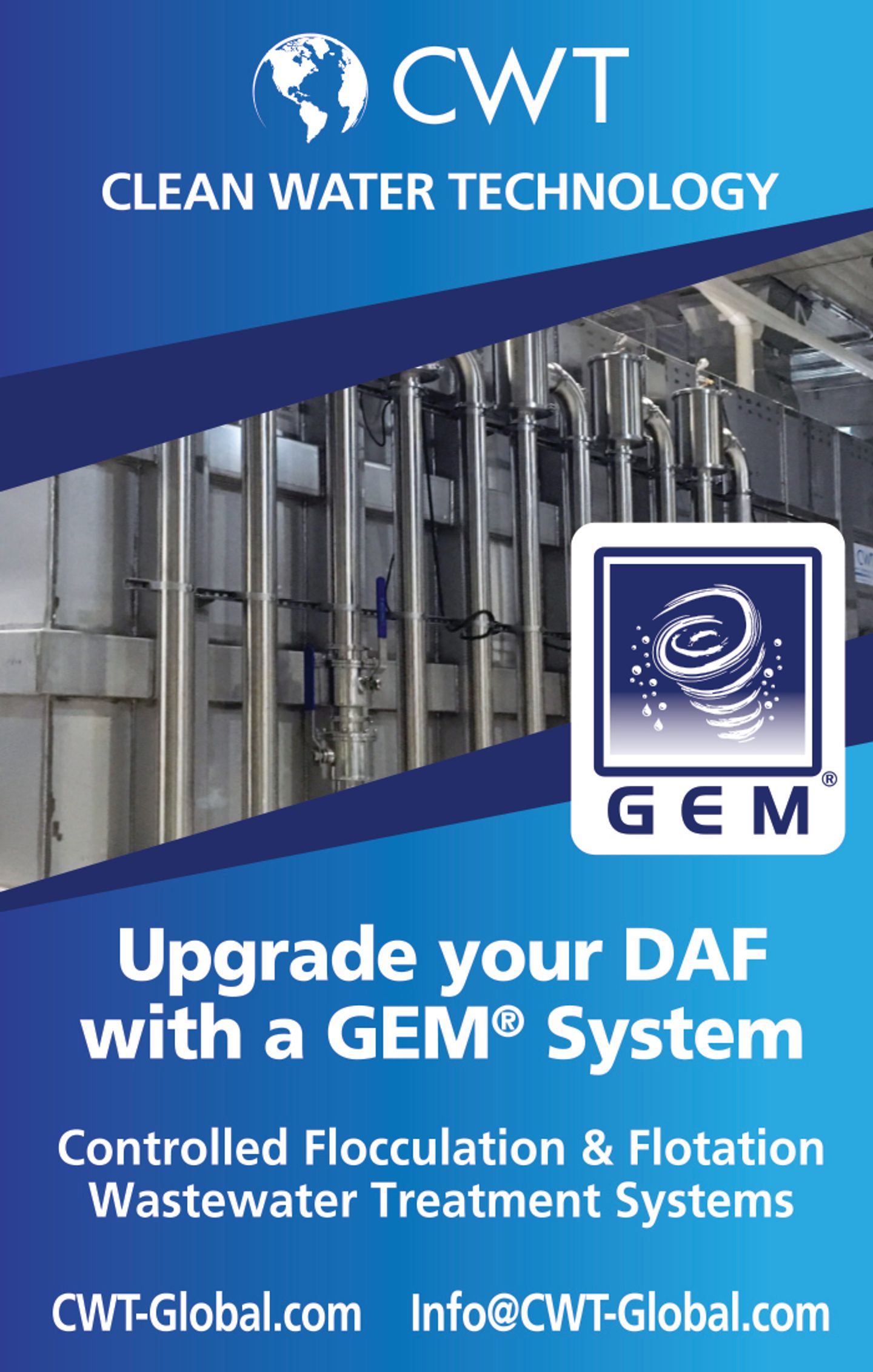
The Client reviewed five wastewater pretreatment technologies: One grease trap, three Dissolved Air Flotation (DAF) units and CWT’s Gas Energy Mixing (GEM) System. After reviewing data and visiting sites that utilized these five technologies, the Client chose the GEM System for its small footprint, adaptability to higher contaminant loadings and ease of operation. Once the GEM System was purchased, the unit was calibrated at CWT’s fabrication facility and shipped to the Client’s site where CWT’s installers provided hook-up, start-up and training.
Methodology
Unlike conventional DAF technologies, the GEM System utilizes a unique combination of mechanical and chemical mixing to remove TSS and FOG and reduce undissolved BOD/COD. The GEM System is not inhibited by contaminant loading. A single GEM System can treat 200 or 10,000 ppm of FOG and TSS while providing superior results within the same small footprint.
Entraining air into 100% of the wastestream and using a system of Hydrocyclone heads to separate the solids from the liquids in a centrifuge effect, the GEM System provides large, tight flocs that quickly rise to the top of th:e GEM System skimmer tank. The GEM System technology serves three purposes: 1) It provides homogeneous mixing of liquid contaminants and chemistry resulting in the attraction of more waste particles per polymer; 2) It offers the flexibility to change the mixing speed and energy to adapt to Client’s unique wastewater characteristics and changing wastewater conditions; and 3) It creates more air bubbles of various sizes to attract higher removal rates of waste particles (contaminants).
As such, the GEM System flotation tank is significantly smaller than most DAF flotation tanks as it is used only to skim the large, decantable solids that come off the beach at 10-13% solids with continued decant to more than 30% solids.
DAF Retrofits
By removing the floc tubes on an existing DAF and adding a Bloom Chamber and LSGM Heads, CWT can increase the DAF flow and contaminant loading capacity exponentially. On a recent retrofit, the Client’s DAF was rated at 200 gpm when they learned about an increase in production. Since the DAF had been a recent purchase, the Client was hard-pressed to justify the purchase of a second or larger DAF because their initial investment had not yet been returned.
By adding two sets of LSGM Heads, the Client is now capable of treating flows up to 600 gpm. In addition, the existing DAF tank is so large that additional sets of LSGM Heads could increase the capacity to over 1,000 gpm with no increase in capital.
Sustainability
Footprint: The GEM System is 30 – 60% smaller than most conventional DAF technologies saving real estate, building costs and overall carbon footprint.
Hauling: Due to more efficient chemical use and the injection of air into 100% of the wastestream, less and drier sludge is produced. With sludge-related costs accounting for over 70%* of the cost of wastewater treatment for a single Processor, this can result in dramatic savings. For one Client sending 6 trucks per day of sludge to a disposal site 85 miles away, the savings due to the higher quality sludge paid for the GEM System in one year.
Reuse: Sludge can be used for landspreading to provide nutrients back into the feed cycle, mixed with soil and added as daily cover layer on landfills, sent for rendering to reclaim oils to be used in everyday products or be burned off to create heat for boilers. Water can be further treated and used for CIP cleaning or wash down areas.
Surcharges: Higher contaminant removal due to the treatment efficiencies of the GEM System result in significant savings for the Processor in areas where they are charged for water use in general plus surcharges on TSS, FOG and BOD. For a processor who reduces their annual surcharges from $50,000/year to less than $5,000/year, the ROI can be less than 3 years.
Energy, Chemical, Sludge Cost Reductions: Other savings related to the advanced efficiencies of the GEM System include reduced footprint, reduced chemical usage, reduced energy consumption, and reduced sludgerelated expenditures when compared to traditional dissolved air flotation (DAF) units.