
- Home
- Companies
- The TDJ Group, Inc
- Articles
- Contaminated Soil Fixation
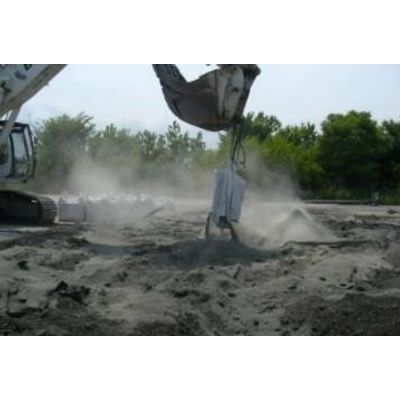
Contaminated Soil Fixation
Contaminated soil is one that has heavy metals present within the project site. The EPA requires a Toxicity Characteristic Leaching Procedure (TCLP) test to determine if metal contaminated soil needs to be managed as hazardous or non-hazardous waste. Soils exhibiting hazardous characteristics need to be disposed of at a facility permitted for that material at a high cost. The alternative is to chemically treat metals to reduce leaching and allow for non-hazardous disposal at a much lower cost.
To see video, please click here
When done correctly, a treatability study can be an important component of the remedial investigation/feasibility study (RI/FS) and the remedial design/remedial action (RD/RA) process. Engineers use this tool to help identify the full range of remedial options that are available to their client regarding safe & cost-effective remedies in the market. Remedial contractors can use this tool to further optimize dose rates for the selected technology, thereby making it more cost-effective.
The data generated from site characterization will provide insight into whether the waste is hazardous, and if so, what treatment options might be available. Use of a proper sampling method is vital to obtain a representative sample of metal contaminated soils. For a given project, several smaller samples should be randomly pulled from various areas of the waste pile.
Depending on the size of the area, we suggest eight (8) to ten (10) smaller samples be obtained. This is especially true for projects where some of the wastes have very high concentrations of metals (TCLP > 100 mg/l). The keys to successful metal stabilization are (1) using the right reagent, (2) using the right dosage and (3) achieving good mixing of the reagent and the waste.
Soil remediation is the process of encapsulating heavy metals in contaminated soil sites to render them non-hazardous. If the contaminated soil exceeds the Toxicity Characteristic Leaching Procedure (TCLP) limits, stakeholders should be aware that remedial applications, such as Blastox exists that can be added directly to the soil to render it non-hazardous.
Blastox is a complex calcium silicate chemistry listed as US EPA Best Demonstrated Available Technologies (BDAT) for stabilizing heavy metal wastes, especially lead and cadmium. Custom chemistries are also available to stabilize chromium and other toxic metals.
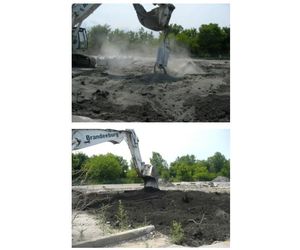
Because of its effectiveness, Blastox had been used successfully on thousands of tons of heavy metal contaminated soil. Its chemistry has a proven long-term stability benefit. You can apply it at low dose rates and have peace of mind knowing that the soil remediation waste will remain stable, always. Its smaller particle size provides more reactive surface which is beneficial when stabilizing heavy metals for contaminated soil remediation projects. Due to the low dose rate and competitive pricing, Blastox 215 is becoming an effective resource for many engineers and also project managers.
- Creation of an alkaline waste matrix in which various heavy metals become more resistant to acidic leaching;
- Addition and substitution reactions change the chemical form of the lead from a lead oxide, carbonate or hydroxide to a lead silicate, which is significantly less soluble than most other lead compounds;
- Hydration reactions physically encapsulate the waste, limiting water access and leaching.