


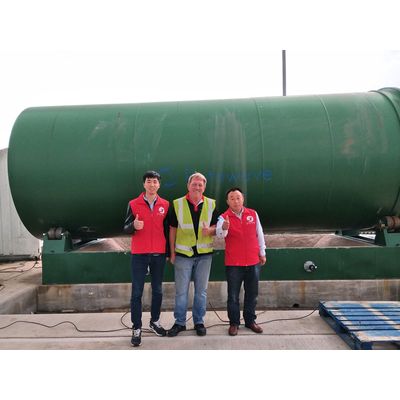
How Continuous Tire Pyrolysis Plants Fuel New Businesses
Waste tires pose a significant environmental challenge. Stockpiled tires occupy valuable space, leach harmful chemicals, and are highly flammable. Thankfully, innovative technology like continuous tire pyrolysis plants offers a solution. These plants convert waste tires into valuable products, making them ideal for several business ventures.
What is a Continuous Tire Pyrolysis Plant?
Tire pyrolysis is a thermochemical process that breaks down tires in the absence of oxygen. A continuous tire pyrolysis plant feeds tires constantly into a reactor where high temperatures (around 500°C) decompose them into:
- Pyrolysis Oil: A dark, viscous fuel similar to crude oil.
- Steel Wire: Separated during processing, it can be recycled in steel mills.
- Carbon Black: A valuable industrial material used in rubber products, pigments, and plastics.
Continuous plants offer several advantages over batch-operated ones. They have a higher processing capacity, leading to greater output and efficiency. Additionally, continuous feeding ensures a more consistent product quality.
Businesses Well-Suited for Continuous Tire Pyrolysis Plants
Several businesses can benefit from investing in a continuous tire pyrolysis plant:
- Waste Management Companies: These companies are constantly looking for sustainable ways to dispose of waste tires. A pyrolysis plant allows them to not only solve a disposal problem but also generate revenue from the recovered materials.
- Fuel Oil Producers: Pyrolysis oil can be used as a substitute for traditional fuels in industries like cement production, glass manufacturing, and power generation. Businesses focusing on alternative fuels can find a ready market for pyrolysis oil.
- Recycled Material Suppliers: Steel wire and carbon black from the pyrolysis process are valuable recyclable materials. Businesses specializing in recycled materials can establish a steady supply chain by partnering with pyrolysis plant operators.
- Refined Fuel Producers: Further processing pyrolysis oil through distillation can transform it into usable fuels like diesel. Businesses focusing on refined biofuels can create a niche market for this eco-friendly alternative.
Beyond the Products: Additional Benefits
The advantages of a continuous tire pyrolysis plant extend beyond the recovered materials:
- Environmental Sustainability: By diverting waste tires from landfills and creating reusable products, these plants contribute significantly to a circular economy.
- Reduced Reliance on Fossil Fuels: Pyrolysis oil offers a renewable alternative to traditional fuels, helping reduce dependence on fossil resources.
- Job Creation: The operation and maintenance of these plants create new employment opportunities in the local community.
Factors to Consider Before Investing
While continuous tire pyrolysis plants offer exciting possibilities, some factors require careful consideration:
- Capital Investment: These plants require a significant upfront investment for equipment and infrastructure.
- Regulations: Licensing and environmental regulations vary depending on location. Researching these regulations beforehand is crucial.
- Market Demand: The success of the business hinges on the demand for pyrolysis oil, steel wire, and carbon black in your region. Conducting thorough market research is essential.
Additional Considerations (For Further Exploration)
- The above provides a high-level overview. Consider delving deeper into the specific pyrolysis process and the properties of the recovered materials.
- The viability of a pyrolysis plant depends on factors like the plant's capacity and the cost of acquiring waste tires. Researching these aspects will aid in financial planning.
- Explore success stories of existing pyrolysis plant businesses. Learning from their experiences can provide valuable insights.