

- Home
- Companies
- Earth Shield Environmental Co., Ltd.
- Articles
- How much does geocell cost per square ...
How much does geocell cost per square meter?
What Is Geocell?
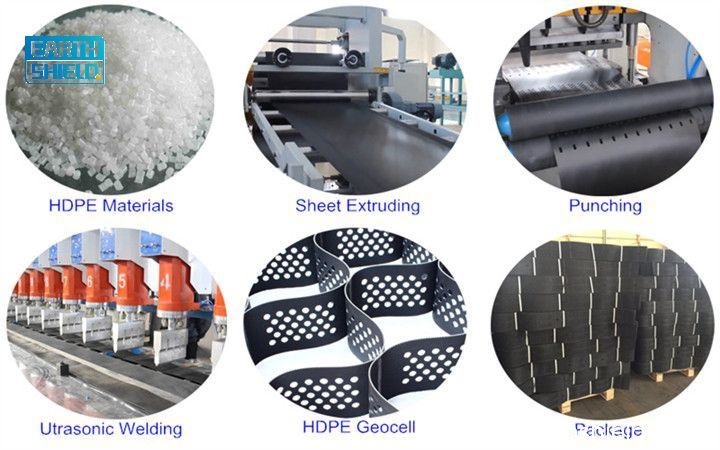
Geocell is a three-dimensional honeycomb structure made of polymer materials (such as HDPE, PP) or reinforced synthetic materials connected by ultrasonic welding or other processes. It is formed into a three-dimensional grid after unfolding, filled with materials such as soil, gravel or concrete, and is widely used in foundation reinforcement, slope protection, road base treatment and other fields in civil engineering. The main materials are HDPE (high-density polyethylene): corrosion-resistant and aging-resistant, often used in long-term projects (such as roads and railways). PP (polypropylene): low cost, suitable for short-term or temporary projects. Polyester fiber reinforced: high-strength demand scenarios (such as military access roads, heavy loads).
Working Principle of Geocell:
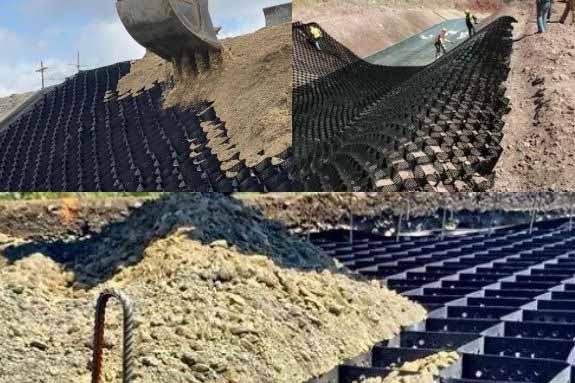
- Soil Locking: Honeycomb grid fixes soil and rocks to prevent them from spreading.
- Pressure Distribution: Disperse concentrated loads (such as vehicles) to a larger area to reduce settlement.
- Anti-scouring: The grid structure prevents rainwater scouring and protects slopes and bases.
- Effect: loose soil becomes hard board, soft ground can be driven, steep slope does not slide.
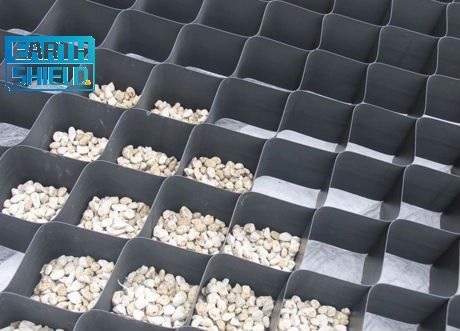
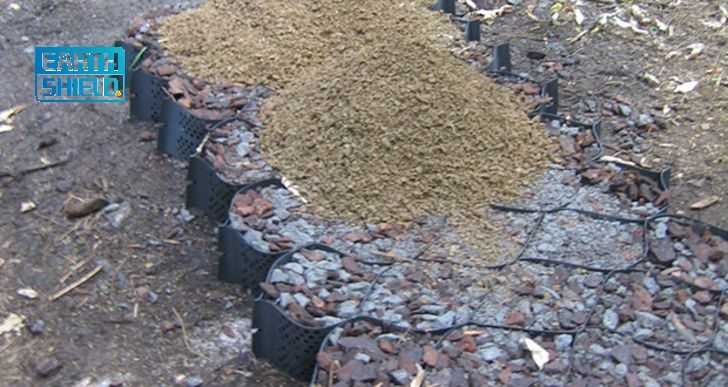
Total cost of geocell = material price + construction fee.
Factors affecting geocell cost:
- Material: HDPE (commonly used) is slightly more expensive than PP, polyester fiber is more expensive.
- Height: The higher the geocell, the more expensive it is (stronger bearing capacity).
- Welding distance: The smaller the geocell grid (higher density), the slightly higher the cost.
- Purchase volume: 10%~20% discount for bulk purchases or geocell projects.
- Construction fee: Including geocell laying, filling, and compaction.
- Common filling materials for geocells:
- Sand/plain soil: Applicable scenarios: slope greening, light-load roadbed; Features: low cost, can be planted with turf, but low strength
- Crushed stone/gravel (best particle size 2~5cm): Applicable scenarios: road base, soft foundation reinforcement; Features: high bearing capacity, good permeability, anti-settling
- Concrete (dry hard or self-compacting): Applicable scenarios: military footpaths, heavy load areas; Features: highest strength, but high cost, complex construction
- Mixed materials (such as soil-rock mixture, recycled aggregate): Applicable scenarios: environmental protection projects, cost-sensitive projects
Selection points:
- Strength requirements: choose crushed stone/concrete for heavy loads, and sand for light loads.
- Drainage requirements: crushed stone has the best permeability, and clay needs to be equipped with drainage facilities.
- Ecological requirements: arable soil is preferred for greening slopes.
- Note: After filling, it needs to be compacted in layers (each layer ≤30cm) to ensure close integration with the geocell!
Lifespan of geocell:
- Conventional lifespan range
- HDPE material: 20~50 years (anti-aging formula can reach more than 50 years)
- PP material: 10~20 years (suitable for short-term projects)
- Polyester fiber reinforced: more than 30 years (high strength and corrosion resistance)
- Key factors affecting lifespan
- Ultraviolet light: Anti-UV agent needs to be added in exposed environment, otherwise the lifespan will be halved.
- Chemical corrosion: Corrosion-resistant materials (such as HDPE) need to be selected in acid/alkali/salt environment.
- Load strength: Long-term heavy load will accelerate fatigue, it is recommended to select according to design specifications.
- Construction quality: Incomplete filling or loose anchoring will shorten the service life.
- Extend Lifespan
- Choose UV-resistant and antioxidant formulas
- Cover with soil/vegetation (reduce direct sunlight)
- Regular inspection (especially on exposed areas)
Elevate Your Project with EarthShield Geocells – The Ultimate Soil Stabilization Solution!
Why Choose EarthShield Geocells?
- Unmatched Durability – High-strength HDPE material resists UV, chemicals, and heavy loads for 30+ years of reliable performance.
- Cost-Effective – Reduce material and labor costs vs. traditional methods (like concrete or riprap).
- Easy Installation – Lightweight, modular design deploys quickly, even on tough terrain.
- Eco-Friendly – Perfect for green slopes, erosion control, and sustainable infrastructure.
- Ideal for:
- Road/Railway Base Reinforcement
- Slope & Channel Protection
- Retaining Walls & Load Support
- Military/Disaster Recovery Paths
(Need specs or samples? Ask now – we’ll match your project needs!)