


- Home
- Companies
- Liberty Industries
- Articles
- ISO Cleanroom Standards Explained: ISO ...
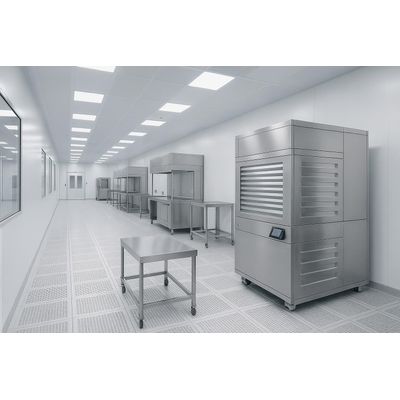
ISO Cleanroom Standards Explained: ISO Classes 1–9
ISO cleanroom classifications are defined in ISO 14644-1 and categorize environments by airborne particle concentration per cubic meter for defined particle sizes. The scale runs from ISO 1 (the cleanest) to ISO 9 (closest to standard indoor air). The lower the ISO class number, the tighter the particle limits and the more stringent control measures required.
Classification is based on maximum allowable particle counts at sizes such as 0.1 µm, 0.2 µm, 0.3 µm, 0.5 µm, and 5.0 µm. The result is used to guide HVAC design, filtration levels, air change rates, gowning protocols, and cleaning regimens. Misalignment between process requirements and ISO class can drive contamination risk, audit findings, and capital expenditure.
ISO 1 Cleanrooms
ISO 1 represents the highest level of air cleanliness, with ultra-low particle concentrations. Achieving ISO 1 requires highly efficient filtration, tightly controlled airflow, and stringent gowning and material compatibility requirements. Typical tasks include advanced nanotechnology research, quantum computing component development, and specialized semiconductor processes.
ISO 2 Cleanrooms
ISO 2 supports processes with near-zero contamination risk. Facility design must address vibration control, material off-gassing, and micro-contamination in addition to particle control. Typical applications include precision optics manufacturing, high-end semiconductor fabrication, and aerospace component research.
ISO 3 Cleanrooms
ISO 3 environments are used in semiconductor and microelectronics manufacturing, with laminar airflow, high air change rates, and strict entry protocols to maintain compliance. Typical features include laminar flow systems and tight personnel controls.
ISO 4 Cleanrooms
ISO 4 maintains low particle counts and is used in microelectronics assembly, sensitive optical component production, and advanced research laboratories. Filtration typically involves HEPA or ULPA and elevated air change rates.
ISO 5 Cleanrooms
ISO 5 employs laminar airflow at critical locations and requires defined gowning procedures and environmental monitoring. Common applications include aseptic pharmaceutical filling, sterile compounding, biotech research, and selective semiconductor zones.
ISO 6 Cleanrooms
ISO 6 serves as a transitional zone between higher and lower stringency areas. Facilities may combine ISO 6 and ISO 5 zones to meet process requirements. Typical uses include medical device manufacturing, pharmaceutical support spaces, and electronics assembly.
ISO 7 Cleanrooms
ISO 7 is commonly specified in industrial and pharmaceutical settings, with routine environmental control including scheduled cleaning, approved disinfectants, and validated procedures. Use cases include medical device assembly, pharmaceutical manufacturing support, electronics manufacturing, and aerospace component assembly.
ISO 8 Cleanrooms
ISO 8 permits higher particle counts and is used in regulated industries requiring basic contamination control. Gowning and entry protocols are defined but less restrictive. Typical applications include medical device packaging, nutraceutical production, certain pharmaceutical processing, and component assembly.
ISO 9 Cleanrooms
ISO 9 is the least stringent classification, comparable to standard indoor air. It is less commonly treated as a traditional cleanroom; potential applications include controlled warehouse environments and general manufacturing with low contamination risk, where higher classifications will be added only as process requirements dictate.
How Liberty Industries Supports ISO Cleanroom Standards
Meeting ISO cleanroom standards requires compatible equipment, furnishings, and contamination control products. Liberty Industries supplies cleanroom equipment and consumables designed to support ISO classifications from ISO 1 through ISO 8. Available solutions include cleanroom apparel and gowning systems, gloves, wipes, cleaning supplies, cleanroom furniture, pass-throughs, and accessories, as well as environmental monitoring and airflow support equipment. Product selections should align with the cleanroom classification, regulatory requirements, and operational objectives.
Build With Confidence
Choosing the appropriate ISO classification impacts regulatory alignment, product quality, and operating costs. Understanding ISO classes supports facility design and operation that align with process requirements and cost objectives. For questions about cleanroom classification or facility requirements, consult with a cleanroom specialist to ensure compliance and operational efficiency.
Original: https://www.liberty-ind.com/blog/2025-iso-cleanroom-standards-explained-iso-classes-1-to-9/