
Refine by
3d Scanning Articles & Analysis
87 articles found
Grain Level Measurements: A Technological Question Bin-level indicators have been around for decades. From simple switches and rotaries to advanced non-contact sensors, there’s no shortage of technologies to choose from. But there’s more to bin levels than just the sensor. The good news is there's a solution for you, whether your operation is small or large with one bin or hundreds. ...
Measure Volume in a Wedge or Pie-Shape Silo For operators, having accurate data about the amount and dollar value of material on hand can help reduce safety stock, increase inventory turns, and pay for itself by freeing up spend that could be tied up in inventory. Operations that manage inventory in pie-shaped silo segments now have a solution that provides accurate volume data thanks to the ...
Level sensors play a leading role in the implementation of cloud technology for a range of industries, including grain storage and handling. BinMaster's product line includes four sensor types that provide cloud-based connectivity, accurate bulk material mapping, and precise measurements of bin and silo ...
Super cement producers care about people, products, and profit. 3D scanners, laser, and radar technologies ensure accurate monitoring of product levels. No manufacturer wants to risk a bad batch due to missing materials. That's where sensors come in. Cement manufacturers find non-contact level sensors attractive for several reasons: ...
For more than a decade, BinMaster's 3DLevelScanner has provided highly accurate level and volume measurements for bins, tanks, and silos storing challenging ...

In today’s era of miniaturized, high-performance electronics, the true effectiveness of a semiconductor chip (die) depends not only on its design—but on its packaging. While the chip’s performance is crucial, it is the semiconductor packaging that enables functional integration, protects device integrity, and ensures reliable connections within microelectronic systems. As form ...
Introduction Optical measurement plays a critical role in modern precision manufacturing. Engineers constantly evaluate whether 2D or 3D optical measurement better suits their inspection needs. While both approaches rely on non-contact metrology, their capabilities, data output, and application suitability differ significantly. Understanding these differences helps improve accuracy, efficiency, ...
The measurement of manufactured components has evolved across decades. Traditional coordinate measuring machines (CMM) set a foundation for precision validation, while optical metrology introduced speed and non-contact ...

Every Crop Is Different, and So Is Our Approach No two harvests are ever the same. Soil types, climate, and storage conditions vary, retail standards evolve, and sustainability expectations are rising. For processors, these shifts can mean fluctuating crop size, shape, density, and finish, all of which impact line performance. We design equipment that doesn’t just perform; it adapts. ...
A profilometer is a precision instrument used to measure the surface profile of objects, providing critical insights into surface roughness, texture, and step height. For anyone working in industries requiring high accuracy, understanding profilometers is essential. This guide explains everything about profilometers, from basic principles to industrial applications. ...

In the era of miniaturized, high-performance electronics, the semiconductor chip is only as effective as its packaging. While the spotlight often falls on the chip itself, it is the semiconductor packaging that enables integration into real-world systems. This article by View Micro Metrology breaks down the concept of semiconductor packaging to help you understand what it is, why it matters, how ...
Laser metrology is a subfield of optical metrology that utilizes the unique properties of laser light—coherence, monochromaticity, and low divergence—for precise distance, angle, and dimensional measurements. Instead of physical probing, lasers capture measurements safely and quickly—especially useful for intricate or lightweight items. At its core, laser metrology is about ...
From the outside in, choosing between a point or continuous level sensor can be pretty daunting. Not to mention the process of narrowing down sensors in either category! Leave it to us at BinMaster to help you learn the ins and outs of level measurement sensor ...
Measurement accuracy has always been at the heart of technological progress. In the early days of manufacturing, metrology—defined as the science of measurement—was a manual and time-consuming process. As industries scaled up production, the demand for faster, more precise, and automated measurement systems grew. This led to the evolution of high throughput metrology, a field that ...
Silos full. Conveyors humming. Trucks on time. What could go wrong? Inventory measurements could—and often do—cause trouble. A cost controller says, “there is no way your material measurements are right. You said we had 120,000 cubic feet of material at the end of May. Based on sales and deliveries, you should have been closer to 7,700 cubic feet." Dropping a tape to measure ...
Defect detection in manufacturing refers to the process of identifying imperfections or faults in products during or after production. These defects can range from surface irregularities to structural flaws and dimensional inaccuracies. Detecting these defects early is crucial to ensure that products meet required specifications and quality standards. Advanced systems such as computer vision and ...
Precision is the foundation of any successful manufacturing process, especially in industries where even the slightest deviation can lead to faulty products and costly rework. One such critical aspect of precision is the alignment and positioning of dies. Die Shift measurement ensures that dies remain perfectly aligned during production, allowing manufacturers to maintain consistent quality and ...
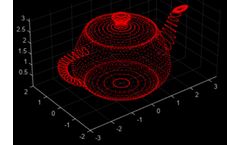
These vertices are typically defined by coordinates (X, Y, Z) and generally are intended to represent the exterior surface of an object [1]. Point clouds are created by 3D scanners, most often LiDAR or Time of Flight (ToF) cameras [2]. 3D scanners automatically measure many points on the surface of the scanned object and usually generate a point ...

LiDAR stands for Light Detection and Ranging and is a remote sensing tool used to measure the distances of scanned objects. These distances are exact depending on the distance and the LiDAR device used. Measurements can be taken by utilizing multiple lasers in the device that shoot narrow cones of light and are on a rotating encoder spinning and spanning a wide horizontal field ...
Non-contact measurement refers to the process of determining the dimensions, geometry, or other physical properties of an object without physically touching it. This technique leverages various advanced technologies to capture precise data while ensuring that the object’s integrity remains unaltered. Non-contact measurement is crucial in situations where physical contact could damage the ...