
Refine by
Automatic Sorting System Articles & Analysis: Older
28 articles found

Faced with an increasing amount of scrap lithium-ion batteries, battery recycling has become a crucial component of environmental protection and resource recovery. Lithium-ion battery recycling not only effectively reduces environmental pollution but also recovers valuable metals, achieving a circular economy. With fluctuating raw material prices and increasingly stringent environmental ...
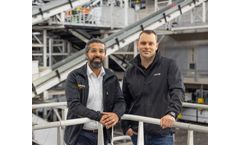
A new chapter in Swiss plastic recycling industry has begun with the launch of a state-of-the-art PET sorting plant in Zurich. The facility, developed by AGIR in collaboration with Bollegraaf Group, focuses on separating PET bottles into food and non-food grade fractions — a critical step toward high-quality bottle-to-bottle recycling. Designed and built by Bollegraaf, a leader in ...
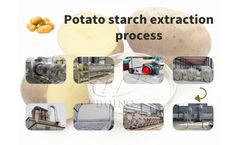
As an important food and industrial raw material, the market demand for potato starch continues to rise, attracting numerous investors to enter this field. Before getting involved, calculating production costs and evaluating profit margins are crucial, and choosing high-quality processing equipment is the core prerequisite for achieving efficient profitability. As a leading enterprise in China's ...

Circular economy, Textile recycling Can clothes be recycled? The path from waste to wearable clothing In 2023, 183.8 billion pieces of clothing were consumed worldwide. Unfortunately, only 1% of recycled clothing is converted into new garments. This begs the question of how clothes are recycled today and how we can improve the recovery process. Yes, recycling is urgent and there are two main ...

What are the unique challenges of recycling specific materials? Recycling specific materials presents different challenges due to their diverse properties and the complexities involved in processing them. Each material, from food, to textiles to various types of plastics, requires specialized handling and processes to ensure efficient recycling. Overcoming these hurdles is essential to enhance ...
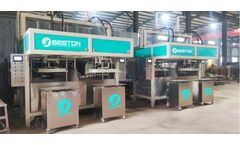
The advent of automation has redefined the landscape of industrial production, and the packaging sector is no exception. Industrial packaging equipment has undergone significant advancements, integrating automated technologies to enhance efficiency, precision, and sustainability. These developments are shaping the future of packaging by addressing challenges such as labor shortages, rising ...
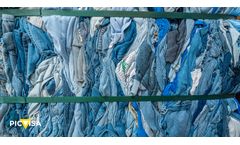
Circular economy, Textile recycling The textile recycling sector receives funding to boost innovation Reducing the consumption of virgin raw materials, reducing their waste and/or improving their proper management – thereby contributing to the development of the transition towards a circular economy – are major challenges for the textile and fashion recycling sector in Europe. An important step ...

Post-harvest management is a critical phase in the agricultural supply chain that can significantly impact the quality and profitability of crops. Efficient handling during this stage ensures that the hard work invested in growing the crops translates into high-quality products for consumers. With increasing global demand for food, optimizing post-harvest practices is crucial than ...

In India, e-waste recycling technologies are revolutionizing the way electronic waste is managed and processed. Here are seven key points exploring the various technologies driving e-waste recycling in the country: Automated Sorting Systems: Advanced automated sorting systems are employed to segregate different types of electronic waste efficiently. These systems use sensors, conveyor belts, ...
ByEcoverva
In India, e-waste recycling holds significant economic potential, offering various benefits to both the environment and the economy. Here are key points highlighting the economic advantages of e-waste recycling: Resource Recovery: E-waste contains valuable materials such as gold, silver, copper, and rare earth metals. Recycling these materials from electronic devices reduces the need for ...
ByEcoverva
The current situation is that there are many plastic items which do not carry any form of plastic identification/recognition and this severely hinders automatic sorting systems. A related issue is the marketing of packaging as “recyclable”. ...
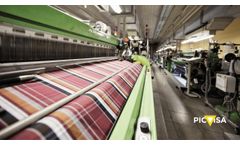
The textile industry is classified as one of the industrial activities that currently generates the highest volume of waste. Proper management of textile waste, particularly post-industrial clippings and unsold garments, is crucial to reduce the environmental impact of the sector. Among the wide range of products, materials, and uses that this sector encompasses, used clothing (post-consumer ...

The aim of this collaborative project, led by Leather Cluster Barcelona with the participation of Intarex, Curtidos Badia and PICVISA, is to study the technical feasibility of a vision and artificial intelligence system for automatic leather sorting. This is a technological solution that will make companies more competitive by cutting their costs ...

The textile sector is in constant growth, and by 2025, 102 million tons of clothing are expected to be produced worldwide, representing a 63% increase compared to current production. Despite this, only 1% of recycled clothing today is turned into new garments. RECYCLING AND TEXTILE ECODESIGN Most of the clothing consumed is composed of a mixture of textiles, with polyester as the dominant ...
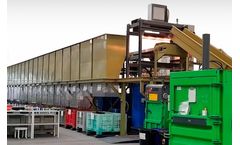
Textile recycling is an urgent need in our world. With the annual production of 92 million tons of textiles, of which 73% end up in landfills or incinerators, the environmental impact of the textile industry is enormous. However, the shortage of sorters has revealed that, despite the increased demand for recycled materials and growing awareness of sustainability, the lack of specialized sorters ...
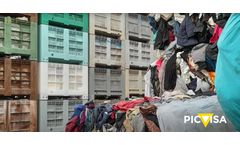
EUROPE READY FOR THE GREAT CHALLENGE OF TEXTILE RECYCLING According to a European Commission strategy paper on sustainable textiles, every second is dumped in landfills the equivalent of a garbage truck full of textiles is burned.?If nothing changes,?the consumption of clothing and footwear will increase by 63% until 2030 and?by 2050 the fashion industry will consume a quarter of the global ...
Industrial waste refers to solid waste discharged by machinery, light industry and other industries during the production process. It is mainly divided into five categories: food waste, general waste, construction waste, cleaning waste and hazardous waste. JONO uses the mature automatic sorting production line for industrial waste to manufacture raw materials for construction materials such as ...

A technology based on the so-called hyperspectral vision, which allows a greater recovery of value through an automated separation of materials. AUTOMATED SORTING OF TEXTILE WASTE But what exactly is hyperspectral vision? This solution combines two different technologies. ...

Wiscon recommends a size-reduction recycling system for bulky wastes. How is the bulky waste treated after recycling? ...
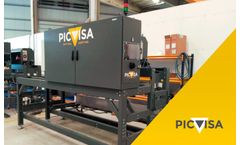
We know that the “Optical Sorting” concept is not new. But what do you really know about it? Did it emerge as an exclusive technology for the waste management and recycling sector? When did it start to be applied? BRIEF HISTORY OF OPTICAL SORTING Optical Sorting is not a 21st century thing. The idea as such emerged in the first decades of the 20th century. Following the desire (and need) to ...