
Refine by
Combustion Controller Articles & Analysis: Older
116 articles found

Problem Improving combustion and pollution control at Engelhard’s metal recovery incineration plant. ...
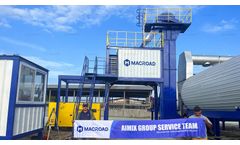
This approach often led to inconsistencies and inefficiencies.With intelligent data systems, every stage of asphalt production—from aggregate feeding to bitumen mixing and temperature control—is now monitored in real time. The control system collects data on energy consumption, material use, and environmental performance. ...

This property is particularly advantageous in the production of high-grade iron, steel, and ferroalloys, where impurity control determines final product quality. Thermal Efficiency and Combustion Properties Charcoal exhibits excellent combustion stability, with consistent calorific values ranging from 28 to 33 MJ/kg. Its porosity promotes ...

Pharmaceutical IndustryPressure and Liquid Level Control in Reactors: In pharmaceutical processes, pressure and liquid level inside reactors are critical parameters. ...
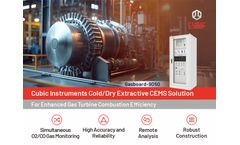
For gas turbine facilities, where operational efficiency directly impacts both environmental performance and economic viability, complying with evolving emissions regulations requires advanced monitoring capabilities that can deliver real-time insights into combustion performance. Industry Challenge: The Critical Need for Precise Combustion ...
Volatile compounds are released and directed to a secondary combustion unit, while fixed carbon remains as biochar. Temperature stratification is essential. ...

The Task: Off gas analysis is a key to control the stoichiometry in electric arc furnaces (EAF) and by that the chemical energy usage and overall consumption. ...

This is where uling making machines, particularly those equipped with advanced carbonization equipment from DOING Holdings, come into play The Traditional Uling Making Process in the PhilippinesThe traditional method of making uling in the Philippines involves constructing a large pit, filling it with wood or coconut shells, igniting the materials, and then covering the pit with soil to ...
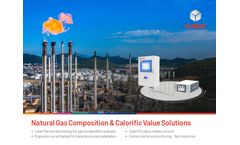
Following EU methane regulations, it also emphasize the importance of flare combustion efficiency. For instance, Article 17 mandates that flares be equipped with automatic igniters or continuous pilots, with inspections required every 15 days. It also mandates that flare systems be designed to achieve a 99% Destruction and Removal Efficiency (DRE), ensuring minimal emissions. ...

Natural Gas Composition & Calorific Value Solutions Following EU methane regulations, it also emphasize the importance of flare combustion efficiency. For instance, Article 17 mandates that flares be equipped with automatic igniters or continuous pilots, with inspections required every 15 days. ...

Beyond customization, Cubic excels in mass production under strict quality control system, efficiently fulfilling diverse and large-scale requirements in the healthcare and medical sectors. 4. ...

CEM systems monitor gases at the source of industrial emissions, producing data that must be both precise and defensible. The trust placed in that data, by regulators, engineers, and environmental managers alike, depends on one fundamental condition: accurate gas calibration. When calibration is neglected or imprecise in a CEM system, the integrity of every reading begins to erode. What appears ...
Applications: ✔️ Compressed air and nitrogen monitoring ✔️ Natural gas and biogas measurement ✔️ Industrial combustion control ✔️ HVAC air monitoring 6. Turbine Flow Meter Selection Criteria: Best for clean, low-viscosity fluids (e.g., water, fuels, oils). ...
This property makes it suitable for controlled combustion in industrial applications but requires careful handling and storage to prevent accidental ignition. 2.3 Viscosity and Flow Characteristics The viscosity of plastic fuel oil affects its flow behavior and suitability for various engines and combustion systems. ...

CO poisoning occurs when fuel or gas combustion of residential gas furnaces and boilers is incomplete, leading to the production of the harmful CO gas. ...

Vapor phase flame retardant: Flame retardants can decompose a large amount of non-flammable gases when heated, such as CO2, N2, NH3, H2O, HCl, and HBr, which can dilute flammable gases and dilute the oxygen concentration in the combustion zone. Free radical capture: Flame retardants capture and destroy HO· and H· free radicals generated during polymer ...
The absence of oxygen in this controlled environment prevents combustion, directing the process towards the realm of thermal decomposition.The Threefold Yield: Biochar, Bio-oil, and SyngasBiochar: Carbon ResurrectionIn the alchemy of pyrolysis, biochar emerges as the solid residue, rich in carbon. ...
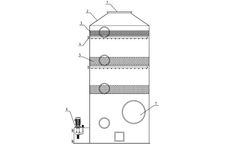
Carbon Monoxide (CO) and Volatile Organic Compounds (VOCs) Removal: CO and VOCs are often removed using combustion control technologies to ensure efficient and complete combustion. This can involve optimizing burner designs and adjusting combustion conditions to minimize the production of these pollutants. Mercury Removal: ...
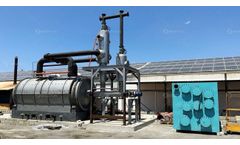
As the temperature rises, the absence of oxygen prevents complete combustion and initiates thermal degradation. Complex molecules break down into simpler components like gases, liquids, and char. ...
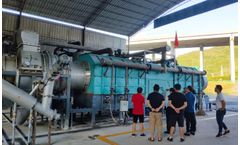
The equipment ought to be cured with combustion control technology since it creates tar and wood vinegar. For that reason, after treatment, they are both safe and environmentally friendly. ...