
Density Separator Articles & Analysis: Older
54 articles found

Alloy scrap metal prices per ton are a critical benchmark for recycling plant operators, traders, and industrial end users. While global commodity indexes provide reference values, the actual price achieved in real transactions depends heavily on material quality, consistency, and processing efficiency. In modern recycling operations—especially those linked to lead-acid battery ...
In line with the principles of “resource reduction, harmless treatment, and reuse,” the project integrates advanced equipment and smart management systems to minimize environmental impact and maximize the value of waste materials. The facility serves as a crucial part of the region’s circular economy strategy. The project is capable of processing up to 600 tons of renovation ...
The Wujiang Construction Waste Recycling Project is a major environmental and public infrastructure initiative located on the west side of Jing’er Road in the Dongtai Lake Resort Area, Wujiang District, Suzhou, China. The project covers a land area of 44.45 mu (approx. 29,630 m²) and has a total construction area of 16,099.39 m². ...
Decentralized Deployment for High-Density Zones Large-scale incinerators often struggle with logistical constraints and public resistance in densely populated areas. ...

This is accomplished by removing organic matter using hydrogen peroxide (H2O2), followed by removal of mineral matter by density separation with sodium iodide (Nal). Finally, identification of fibers into synthetic or natural under the stereomicroscope can be achieved following a diagram produced by systematically observing the most common textile fibers. ...
In line with the principles of “resource reduction, harmless treatment, and reuse,” the project integrates advanced equipment and smart management systems to minimize environmental impact and maximize the value of waste materials. The facility serves as a crucial part of the region’s circular economy strategy. The project is capable of processing up to 600 tons of renovation ...

Popular isolation methods include: Ultracentrifugation: A gold-standard method that separates exosomes based on density. Size-Exclusion Chromatography (SEC): Allows separation of exosomes based on size, minimizing contamination. ...
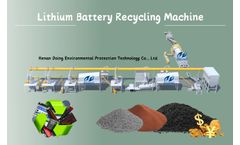
The pyrolysis process can remove electrolytes and other organic substances in lithium batteries and reduce pollution to the environment. 4. Air separation: Air separation is to use airflow to sort the lithium battery fragments after pyrolysis. By adjusting the speed and pressure of the airflow, materials of different densities can be ...
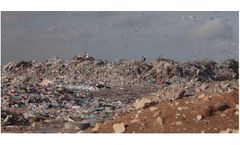
Industrial waste is the waste produced by industrial activity which includes any material that is rendered useless during a manufacturing process such as that of factories, mills, and mining operations. Types of industrial waste include dirt and gravel, masonry and concrete, scrap metal, oil, solvents, chemicals, scrap lumber, etc. Industrial waste may be solid, semi-solid or liquid in form. It ...
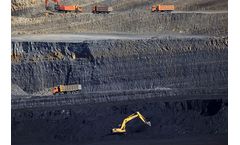
Gravity Separation This method uses the difference in density between coal and impurities to separate them. Dense media separation and jigging are common gravity-based techniques. In dense media separation, a liquid medium with a specific density of coal from heavier impurities. 3. ...
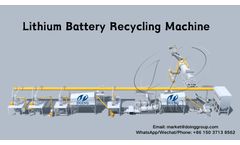
Lithium-ion batteries are firstly discharged to ensure safe handling during the recycling process. 2.Shredding: The waste lithium-ion batteries enter double-shaft shredder through feeding conveyor, and the battery shell and internal materials are initially separated through efficient shredding. This step lays the foundation for subsequent processing. 3.Carbonization(Pyrolysis): ...
Other plastics can be cleaned very effectively with hydrocyclone separators, but the high density of PET makes it difficult to float and thus separate using wet gravity methods. ...
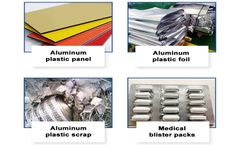
The main methods of aluminum plastic recycling include physical separation method and chemical separation method. 1.Physical separation method: Mechanical sorting: Aluminum is separated from plastic by cutting, crushing and then using techniques such as rolling or electrostatic separation. Flotation method: ...

Magnets and other sorting equipment separate ferrous and non-ferrous metals from the waste stream. Secondary Crushing and Screening: After primary processing, the crushed materials are further processed through secondary crushing and screening stages. This step further reduces the size of the materials and ensures uniformity in particle size. Screens and classifiers ...

Additionally, innovating advanced sorting at materials recovery facilities simplifies separation and directs greater volumes of plastics to proper reclamation channels. ...
ByAntecs
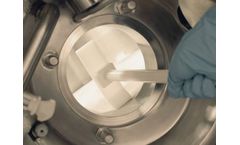
What is Solid-Liquid Separation? As the name suggests, solid-liquid separation is a method to separate solids and liquids from a mixture so that they are available as individual components, which is crucial when just one phase is needed. ...
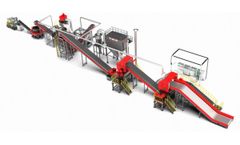
Through the fine disposal processes of automatic shredding, pulse dust removal, air separation, magnetic separation and RDF granulation, the bulky waste processing system offered by Harden realizes size reduction of bulky waste and 100% resources recycling, turning bulky waste into RDF(alternative fuel) and reducing carbon emissions. The whole bulky waste ...
The molding price Greater, higher density, filtration. Magnetic separation tool is called for prior to granulation, to ensure that the mould will certainly not be harmed and also unneeded losses will certainly be prevented. ...
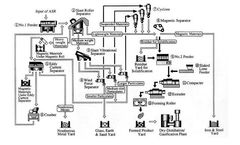
The ASR is then obtained as the light shredder fraction from the airflow separator that separates it from the heavier metallic fraction, which is fully recyclable as a secondary raw material. ...
Gravity will always naturally separate materials of different densities. Using a centrifuge you can speed up and fine tune this natural separation and sedimentation process. ...
ByTrucent