
Refine by
Elemental Analysis Articles & Analysis: Older
384 articles found
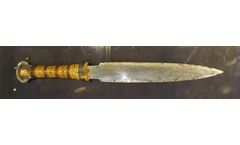
For most of human history, the materials behind great artifacts were a matter of educated guesswork. Was that dagger really made from a fallen star? How did a Roman glass cup change color from green to red? What alloys did ancient mints and silversmiths actually use? X-ray fluorescence (XRF) has quietly become one of the main tools for answering these questions. It lets scientists determine what ...
Owners and managers of scrap-recycling companies know very well: profit is born not at the shear or the weighbridge, but at the sorting stage. Mix up stainless grades, let a nickel alloy slip into “heavy melt,” or miss lead in aluminum – and all your margin goes negative together with a claim from the steel mill. At the same time, visual inspection, a magnet, spark testing and ...

Optical gas imaging continues to evolve as industries demand higher sensitivity, greater reliability, and stronger field performance for methane and VOC detection. Among the technologies contributing to these advancements is Sierra Optical, a class of high precision optical components engineered for superior infrared transmission, stability, and spectral accuracy. As OGI systems grow more ...
ByOPGAL
PMI (Positive Material Identification) is an instrumental verification of the actual chemical composition of piping and equipment components before installation and during service. In oil & gas and chemical industries, PMI is implemented within a Material Verification Program (MVP): the current 4th edition of API RP 578 (February 2023) explicitly describes the program’s purpose, scope, ...
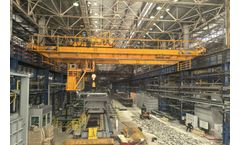
Girder Design The main girders are the primary load-bearing elements, responsible for carrying the trolley and the hoist. Design considerations include:Cross-Section Optimization: Box-shaped or I-beam girders are common. ...
That’s why it’s essential to know exactly what elements are in the alloy and in what concentrations. This is where XRF analysis provides a clear advantage: it determines the elemental composition of a sample in seconds—without destroying ...
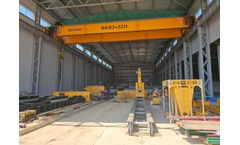
This ensures that even if the crane experiences unexpected loads or slight design variations, the structure remains within safe limits.Finite Element Analysis (FEA) Engineers use finite element analysis to simulate stress distribution, deflection, and fatigue life. ...

Key technical considerations include:Load Distribution: The cantilever beam must be capable of bearing the load without excessive deflection. Finite element analysis is often used to simulate stresses. Material Strength: High-strength structural steel is commonly used to withstand bending moments and shear forces. ...

Design Optimization Techniques Modern gantry crane design leverages computational tools to simulate wind effects and optimize structure. Finite Element Analysis (FEA) allows engineers to model the crane under various wind conditions, identifying stress concentrations and potential deformation points. ...

Imagine the first human settlements: people building homes, making pottery, storing water and grain. The material that made all this possible was clay. It is highly plastic, easily molded into any shape, and after firing becomes as hard as stone. Not by chance, clay tablets became the very first “pages” of human history. Even today, clay remains the foundation of entire industries: ...
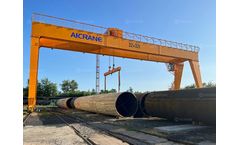
Modular and Lightweight Crane Design ✅ Optimized Structural Design Engineering cranes to be lighter without compromising strength reduces material usage and transport weight. Techniques include:Finite Element Analysis (FEA)High-strength low-alloy steelModular assembly that allows for on-site construction These innovations lead to:Lower energy consumption during ...
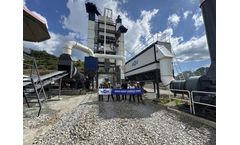
Asphalt plants play a crucial role in the road and bridge construction industry, directly influencing the quality and cost-efficiency of infrastructure projects. However, the price of asphalt plant equipment varies significantly depending on a wide range of factors, which also shape the dynamics of market competition. Understanding these pricing factors can help contractors, investors, and ...

Heavy metals such as lead (Pb), chromium (Cr), barium (Ba), nickel (Ni), arsenic (As), antimony (Sb), and cadmium (Cd) are biologically toxic and can cause serious harm to human health. These elements are non biodegradable and can interact with proteins and enzymes in the body, rendering them inactive or leading to accumulation in organs, ultimately causing chronic toxicity. ...
In this application, R3/R5 microwave digestion systems are used to efficiently and completely decompose leather samples prior to elemental ...
When accumulated in the human body beyond certain limits, heavy metals can be toxic and even life-threatening. Thus, heavy metal analysis in textiles has become essential in quality control, failure diagnostics, complaint investigation, R&D, and regulatory monitoring. In this application, microwave digestion is used to efficiently prepare textile samples for trace metal ...
Abstract Zinc concentrate is typically produced from lead-zinc ore or zinc-containing ores through processes such as crushing, ball milling, and froth flotation. It contains a high concentration of zinc that meets national standards and serves as the primary raw material for the production of metallic zinc and zinc compounds. Based on the content of zinc and associated impurity elements, zinc ...
Abstract Nylon, first industrialized in 1939, was initially used in the textile industry. Due to its high mechanical strength, excellent toughness, and outstanding heat resistance, nylon has since been widely adopted across various fields. In civilian applications, it is used in products such as medical sutures, personal care items, and household cleaning tools. In industrial settings, nylon is ...
The latest edition reflects advancements in science and the pharmaceutical industry, including newly added testing requirements for heavy metals and hazardous elements in ten commonly used herbal materials, such as Salvia miltiorrhiza and Angelica sinensis. Traditional digestion methods often lead to the loss of volatile elements like mercury and arsenic. In ...
According to the pharmacopoeia, strict limits are imposed on hazardous elements including lead (Pb), cadmium (Cd), arsenic (As), mercury (Hg), and copper (Cu). ...
Additionally, smaller quantities of kaolin are applied across a range of industries including plastics, paints, pigments, abrasives, pencils, cosmetics, soaps, pesticides, pharmaceuticals, textiles, petroleum, chemicals, construction materials, and national defense. Accurate analysis of the metal elements present in kaolin is essential to ensure product quality ...