
Nitrate Conversion Articles & Analysis: Older
20 articles found

On the one hand, molybdenum, as a component of nitrate oxidase of ruminant rumen microorganisms, directly participates in the conversion of feed nitrate in the rumen. ...
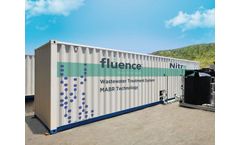
There has been progress, starting with full nitrification-denitrification and simultaneous nitrification-denitrification, both of which have the formation of nitrate as an intermediary step. A more recent advance, shortcut nitrogen removal, still converts ammonia to nitrite, but it skips the intermediate conversion to nitrate, directly ...

Carbonaceous/BOD For many treatment plants the carbonaceous demand must be considered as 2 components: Oxygen to supply the active sludge to take soluble carbon (BOD) out of solution and grow more sludge. This conversion of carbon to cells is the synthesis reaction requiring about 0.5 to 0.6 lb O2/lb BOD (kg O O2/kg BOD). ...
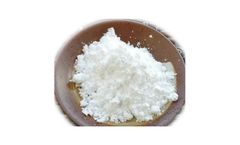
Nitrapyrin is a white crystalline solid with a sweet odor and is often mixed with anhydrous ammonia for application.Nitrification is the biological oxidation of ammonia or ammonium to nitrite followed by the oxidation of the nitrite to nitrate. The transformation of ammonia to nitrite is usually the rate limiting step of nitrification. ...

Complete nitrification (i.e. conversion of ammonia to nitrate) in the filter with Ceralite- A media was observed within ten weeks of startup. ...

Biological denitrification is the conversion of nitrate (NO3) into nitrogen gas (N2) and carbon dioxide (CO2) by a consortia of bacteria. This process requires good control over the ratios of three elements- carbon (generally must be supplied externally), phosphorus (nearly always in Ag runoff), and nitrogen (from the nitrate nutrients in the ...

Daily live weight gain and feed conversion were improved by supplementation with nitrate rather than urea. The ratio of methane to carbon dioxide in the mixed eructed gas and air was decreased by feeding nitrate with an overall 25% reduction in methane emission, for animals fed nitrate compared with those fed urea. ...
The dual-stage biological treatment process relies on naturally occurring bacteria to achieve complete nitrification — the conversion of ammonia to nitrate without the presence of nitrite. In the first stage of the treatment process, precise levels of nutrients and dissolved oxygen are added to the water in the aerobic contactor – a gravel-filled ...

According to the Connecticut Water Pollution Abatement Association: Nitrification is the conversion of ammonia (NH3) to nitrate (NO3). […] This is a two-step process that is done with oxygen and two types of bacteria, Nitrosomonas and Nitrobacter, known collectively as the nitrifiers. […] Denitrification is the conversion of ...

Straws of four ornamental flowers (carnation, rose, lily, and violet) were added into denitrification biofilters using gravel as matrix through vertically installed perforated polyvinylchloride pipes to provide organic carbon for the treatment of nitrate-contaminated wastewater operating in batch mode. Removal efficiencies of nitrate and phosphate, as well as ...

What is Denitrification? Denitrification is the conversion of soluble nitrate to nitrogen gas in the nitrogen cycle. For denitrification to occur, three factors are needed: Presence of Nitrate Anoxic conditions (no free dissolved oxygen) A carbon source (soluble BOD) Floating Sludge Denitrification is useful and desired in certain ...

Vermicomposting process increased the conversion of ammonium into nitrate when compared with control ( p = 0.05). ...

In order to reduce ammonia in a waste water stream businesses require their plants to perform a biological process called 'nitrification'. This involves the conversion of ammonia into nitrate, which is then easily converted into nitrogen. ...
However, previous reports suggest that less than 90% total nitrogen removal should be expected with this process alone because over 10% of the ammonium removed will be converted to nitrate. This is caused because nitrite conversion to nitrate is required for reduction of carbon dioxide to cell carbon. However, recent research ...
The liquid-phase hydrogen peroxide catalytic oxidation of p-nitrophenol was performed with an FeIII-resin catalyst. The conversion and mineralization of p-nitrophenol was effectively achieved at mild reaction conditions with the FeIII-resin catalyst. ...
In order to reduce ammonia in a waste water stream businesses require their plants to perform a biological process called 'nitrification'. This involves the conversion of ammonia into nitrate, which is then easily converted into nitrogen. ...

These processes are able to: 1) convert refractory organics into more biodegradable constituents, 2) remove heavy metals such as Pb, As, Cd, Hg through co-precipitation, adsorption and redox mechanisms, 3) deal with ammonia through stripping of NH3(g) and also conversion of ammonia to nitrate through aeration, 4) destroy or completely mineralize recalcitrant ...

Process upsets due to the nitrogen load changing from the incoming wastewater or due to equipment malfunction can result in significant problems such as high nitrate discharges that can lead to problems with permits and other environmental issues. ...

Every organism has different potential to accumulate NO3- from the environment. Nitrate reduction processes are perhaps most significant in maintaining water quality by alteration of nitrate to nitrite. A comparative study between the nitrate reductase NR activity of green and blue green algae in presence of heavy metals is being conducted to ...
The equilibrium time constant for transfer between ammonia, acid gases, and aerosol phase of ammonium nitrate and ammonium chloride was determined based on kinetic rate constants (kN as the rate constant of ammonium nitrate aerosol: 2.04 × 10⁻⁴ m³/µmole/sec; kCl as the rate constant of ammonium chloride aerosol: 3.44 × 10⁻⁴ m³/µmole/sec) and the observed ...