
Refine by
Pipe Fitting Articles & Analysis: This-Year
17 articles found
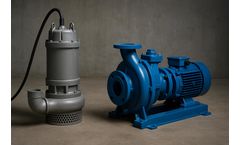
The comparison below focuses on performance under load, typical application fit, and how system constraints drive the choice. What Is a Submersible Pump? ...
It includes static head from elevation differences, friction losses from pipe walls, and minor losses from bends, valves, reducers, and fittings. Friction losses increase with pipeline length, velocity, slurry density, and line roughness. Even modest changes in pipe diameter, routing, or fitting count can change the total head ...
In the realm of pipe and fittings, flanges are a crucial component. They do not just connect pipes but create a robust and leakage-free connection on which various industrial applications rely. ...
Why Use Butt Weld Fittings? Unlike threaded or socket weld options, weld on pipe fittings offer several distinct advantages for large-scale industrial projects: Strength: The joint is as strong as the pipe itself. ...
When it comes to high-pressure and high-temperature piping systems, the reliability of your fittings is non-negotiable. At Rayoung, we specialize in manufacturing high-performance industrial pipe fittings that meet and exceed global standards. Among the most critical specifications in our catalog is ASTM A234 (ASME ...
When it comes to industrial piping systems, carbon steel is the undisputed workhorse. Among the various grades available, ASTM A234 WPB pipe fittings are by far the most commonly used components in moderate to high-temperature service environments. ...
Carbon steel is more common in a butt weld reducer due to the cost advantage. Sch 10 pipe reducers are also more common in stainless steel fittings. Our supply range is from small Ecc Reducer 2″ x 1/2″ A234 WPB to large Weld Conc Reducer 56″ x 36″ SS400, and Galvanized Reducer is in our service. ...
The Core of Industrial Systems: For large-diameter piping and high-pressure applications, carbon steel buttweld pipe fittings are the industry standard. ...
What Exactly is a Pipe Reducer? A pipe reducer is a specialized fitting that connects a larger bore pipe to a smaller bore pipe. ...
When your piping project involves large diameters—specifically anything over 24 inches—ASME B16.5 is no longer the standard you need. ...
Pipe bends and returns are essential components in piping systems, designed to change the direction of flow while maintaining smooth transitions to minimize pressure loss. ...
As a leading provider of piping solutions,JS FITTINGS wirte this blog. This guide covers the essential types of steel pipes, their applications, and a roadmap for professional procurement. ...
In the steel pipe industry, selecting the correct wall thickness is just as critical as choosing the material grade. Whether you are sourcing high-pressure oil lines or structural mechanical parts, you will inevitably encounter the terms SCH 40, SCH 80, and SCH 40S. But what do these numbers actually mean for your project? In this guide, we will break down the technical differences between these ...
What is a Welded Pipe Fitting (Butt Weld Fitting)? Welded pipe fittings, specifically Butt Weld (BW) fittings, are the backbone of large-diameter, high-pressure industrial systems. ...
What is seamless steel pipe? A seamless steel pipe is exactly what it sounds like: a pipe without a welded seam or joint. Unlike welded pipes, which are formed by rolling a plate and welding the edge, seamless pipes are made from a solid round steel billet. ...
In the world of industrial piping, the term “Seamless” is synonymous with operational integrity. While welded pipes have made technological leaps, the absence of seamless steel pipe remains the critical requirement for high-pressure, high-temperature, and corrosive environments found in offshore drilling and petrochemical refineries. ...
Professional buyers must distinguish between “standard” and “fit-for-purpose” materials: Low-Temperature Service: While ASTM A105 is the industry workhorse, projects in Arctic or sub-zero environments require ASTM A350 LF2. ...