
Refine by
Process Analyzer Articles & Analysis: Older
346 articles found

Is your CAPA process solving problems, or just documenting them? A CAPA approach that’s too reactive, ill-defined, or focused on ticking boxes is unlikely to drive real improvements. In a regulated industry, it can also lead to serious compliance issues. We summarize the most common issues and associated audit findings and offer practical ways to strengthen your CAPA ...

Selecting the right marble crusher machine requires thorough raw material analysis to ensure optimal performance and costeffectiveness. The process begins with comprehensive geological testing to determine key characteristics that directly impact crusher selection and operational efficiency. ...

Temperature Control and Material Precision The process level of an asphalt plant reflects its ability to maintain consistent mix temperatures and precise material proportions. ...

Safety and compliance are fundamental in pharmaceutical manufacturing. From drug formulation to final packaging, each stage requires precision and strict adherence to international regulations. A critical element of achieving this safety is the use of SIL2 gas analysers for pharmaceuticals. These analysers ensure accurate gas monitoring, maintaining controlled atmospheres that prevent ...
A common trap for businesses is simply restating a quality problem – instead of pinpointing its cause – before leaping into corrective and preventive action (CAPA) processes. If you don’t really know what caused a problem, efforts to fix it tend to go awry. This is partly because root cause analysis (RCA) can be complex. It’s also because it can get pigeonholed in risk ...

Flow rate is the rate at which a process fluid passes through a pipe, orifice plate, or vessel in a given amount of time. ...

Options included enlarging the bridge opening to let more water through, which could result in increased downstream discharges, or raising the road, which would alter the road overtopping hydraulics and possibly increase flooding upstream. Skupien is still in the process of analyzing the site’s hydraulic characteristics, but he is clear on one point: the ability ...
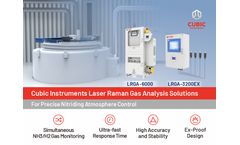
Both systems can measure multiple gas components including N2, H2, and NH3, which are precisely the key gases required for nitriding process control, enabling operators to achieve unprecedented gas atmosphere control over nitriding processes. ...
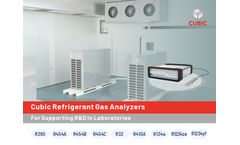
Cubic refrigerant gas analyzers can be widely used in multiple scenarios of refrigerant analysis, including the production process of HVAC equipment, verification tests in laboratories, and compliance testing by third-party testing agencies. ...
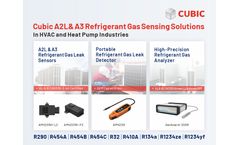
Moreover, Cubic offers end-to-end capabilities across the entire refrigerant leak detector development cycle for after-sales and maintenance scenarios, encompassing sensor solutions, hardware design, software development, mold development, prototype testing, and industrial device manufacturing. 3) Cubic NDIR A2L & A2 Refrigerant Gas Analyzers Cubic refrigerant gas ...
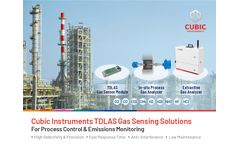
TDLAS In-situ Process Gas Analyzer: In addition to OEM solutions, Cubic Instruments also offers the advanced gas analyzer, GasTDL-3100, for in-situ process gas measurements. Utilizing highly selective TDLAS technology, GasTDL-3100 advanced gas analyzer accurately measures a broad spectrum of gases including O2, ...

These images can then be further processed and analyzed using various software tools. Image Preprocessing: This step involves enhancing the image quality through noise reduction, contrast adjustment, and normalization. ...
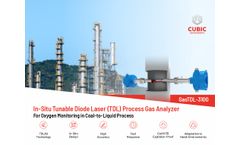
• Sampling Unit: Collecting the gas from coal-to-liquid process and introducing the gas into the laser gas analysis system. • Preprocessing Unit: Using precision filters to remove dust and oil, purifying the sample gas, and ensuring that the sample gas meets the requirements of the laser gas analyzer, thereby enabling accurate measurement and analysis. ...
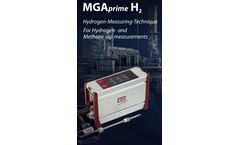
Unburned portions of the fuel gas can lead to hydrogen slip, which can reach levels of several tens of thousands of ppm H2.To fully analyze combustion processes, flue gas measurement must account for this potential increase in hydrogen content. Challenge: Hydrogen. Many gas analyzers for flue gas analysis use electrochemical sensors to measure ...

Flood risk assessments are critical tools used to evaluate the potential risks associated with flooding in a specific area. These assessments are essential for effective flood management, urban planning, and disaster preparedness. Here’s a detailed look at what flood risk assessments entail and why they are ...
Every measurement is more than just numbers — it’s confidence in your decisions. Mistakes are costly, and lost time is a missed opportunity. You need an instrument that delivers fast, precise results with no compromises. That’s exactly what the ProSpector 3 from Elvatech offers — a handheld XRF analyzer designed for professionals who value speed, accuracy, and ease of use. ...

Measurement accuracy has always been at the heart of technological progress. In the early days of manufacturing, metrology—defined as the science of measurement—was a manual and time-consuming process. As industries scaled up production, the demand for faster, more precise, and automated measurement systems grew. This led to the evolution of high throughput metrology, a field that ...

In the world of welding, the choice of shielding gas plays a pivotal role in determining the quality and efficiency of the weld. Argon gas is a popular choice for MIG (Metal Inert Gas) welding, known for its superior properties that enhance weld performance. At Cambridge Sensotec, we specialise in advanced gas analysis solutions that help optimise the use of argon gas in MIG welding. Here’s ...
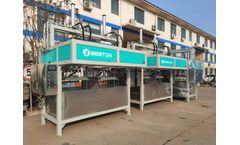
An industrial packaging machine equipped with automation technology can process large volumes of products at a pace far beyond what is achievable through manual labor. ...

In Ängelholm in Sweden EKOGRID in-situ solution successfully demonstrated its capability to quickly clean up embankments and bottom sediments of a stormwater pond, which was polluted by fuel oil leaked from a nearby industrial area. The toxic substances included aliphatic hydrocarbons and polycyclic aromatic hydrocarbon (PAH). Instead of traditional ex-situ methods such as dig and dump and ...