
Refine by
Sample Preparation Articles & Analysis: Older
613 articles found

Owners and managers of scrap-recycling companies know very well: profit is born not at the shear or the weighbridge, but at the sorting stage. Mix up stainless grades, let a nickel alloy slip into “heavy melt,” or miss lead in aluminum – and all your margin goes negative together with a claim from the steel mill. At the same time, visual inspection, a magnet, spark testing and ...

For a comprehensive comparative assessment, two distinct catalyst samples were synthesised: 10Ni/CeO2-CEDI, prepared via the CEDI method, and 10Ni/CeO2-DI, prepared using the conventional DI method, which served as the control. ...
In the production of galvanized rolled steel products, it is critically important to strictly control the composition of metallic coatings. Modern protective coatings on steel – from traditional zinc to complex zinc-aluminum-magnesium alloys – contain alloying elements (additions) such as aluminum (Al), magnesium (Mg) and silicon (Si). These additions have a strong influence on the ...

Plant cell viability refers to the proportion of living, metabolically active cells in a given sample. It provides insight into cellular health, growth potential, and the effects of treatments such as cryopreservation, toxins, or genetic modification. ...
PMI (Positive Material Identification) is an instrumental verification of the actual chemical composition of piping and equipment components before installation and during service. In oil & gas and chemical industries, PMI is implemented within a Material Verification Program (MVP): the current 4th edition of API RP 578 (February 2023) explicitly describes the program’s purpose, scope, ...

Abstract Carbon black is a form of amorphous carbon. It is mainly used as reinforcement filler in automobile tires and other rubber products, but is also used in pigments, paint, and carbon paper. Raman spectroscopy is a very effective analytical technology to characterize carbon materials. The Raman bands associated with different carbon bonds reveal details of the structure on the molecular ...
ByB&W Tek
Edible oils are not only a major source of nutrition but also a key basic material in the food industry. Vegetable oils are increasingly important because of their high content in mono- and polyunsaturated fatty acids in comparison with animal fats. In this application note, the main ingredients of olive oil, camellia oil, arachis oil, sunflower seed oil, and colza oil are analyzed using a ...
ByB&W Tek
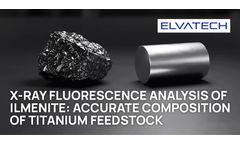
Ilmenite and Its Significance: Where It’s Used and Why Composition Matters Ilmenite is a mineral—the primary source of titanium—occurring as iron–titanium oxide (FeTiO3). It is a raw material for producing titanium dioxide (TiO2), a widely used white pigment, and for metallic titanium. About 95% of all mined titanium feedstock is processed into TiO2 pigment used in paints ...

Most clinical analyzers essentially operate as "stand-alone laboratories," featuring precise, accurate, and highly reproducible programmatic liquid handling, sample addition, and washing steps. However, aside from cost, the size limitations of these automated analyzers mean they are not suitable for remote applications. ...
Cast aluminum-silicon alloys are widely used in automotive, mechanical, and instrument manufacturing. They allow complex parts to be produced with precise geometry and low weight. But the properties of silumin depend heavily on its chemical composition. Even small deviations from the standard can affect fluidity, strength, crack resistance, and corrosion behavior. That’s why it’s ...
Metrohm is proud to announce the launch of the i-Raman NxG, a next-generation laboratory Raman spectrometer designed to enhance precision and performance in routine quality control measurements. The i-Raman NxG continues Metrohm's tradition of quality, offering advanced features that enable faster measurements, improved sensitivity, and greater sampling ...
ByB&W Tek
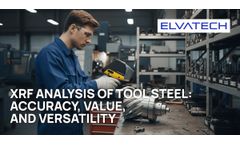
Why composition control matters Tool steel is the foundation of cutting and measuring instruments, machine parts subject to heavy wear, and dies for cold and hot forming. Even the slightest deviations in its composition can affect hardness, wear resistance, or hardenability. The result: equipment downtime, costly remelting of batches, or reduced service life of finished products. For ...

Imagine the first human settlements: people building homes, making pottery, storing water and grain. The material that made all this possible was clay. It is highly plastic, easily molded into any shape, and after firing becomes as hard as stone. Not by chance, clay tablets became the very first “pages” of human history. Even today, clay remains the foundation of entire industries: ...
l Inert Matter (IM) – Non-seed material such as soil, stones, chaff, broken seed parts without embryos, and empty glumes. Step-by-Step Procedure 1. Sampling The process begins with obtaining a representative sample from the seed lot. Proper sampling is critical since even the most accurate laboratory work cannot correct for poor ...
Precautions to Ensure Accuracy 1. Sample Preparation Matters Selecting the right extraction solvent is essential, as polarity strongly influences which compounds are recovered. ...

Wood has been part of human life for millennia - from a childhood understanding of it as the “trunk of a tree” to recognizing it as an anisotropic, fibrous material widely used in construction, paper production, furniture manufacturing, chemical industries, arts, and even as fuel. Chemically, wood is a complex structure containing a range of organic compounds and various chemical ...
Obtaining precise results in X-ray fluorescence (XRF) analysis requires thorough and proper sample preparation. For liquid samples, meticulous preparation ensures high accuracy and reproducibility of measurement outcomes. This article covers essential aspects of liquid sample preparation and ...
Introduction To obtain reliable and reproducible results by X-ray fluorescence (XRF) analysis, it is crucial that the sample be as compositionally uniform as possible and optimally prepared in terms of structure and surface. ...

In this application, microwave digestion is used to efficiently prepare textile samples for trace metal analysis. This method employs a high-pressure, sealed environment to rapidly digest samples without loss of volatile elements—ensuring reliable and accurate ...

This application demonstrates the use of the R3/R5 microwave digestion systems for the accurate and efficient sample preparation of cosmetic products, such as lipstick, in mercury testing ...