
Refine by
Solids Pumping Articles & Analysis: This-Year
6 articles found
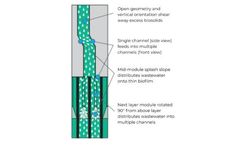
To address this, an advanced aerobic bioreactor (AAB) was selected as the core treatment technology, providing reliable and efficient BOD reduction as part of the overall process.The Process First, gravity ensures that wastewater from food processing (vegetable production, in this case) flows into the sump, where a microfilter reduces most of the undissolved solids. The ...
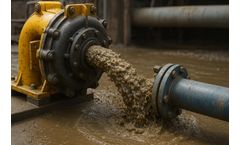
Mining slurry presents one of the most challenging transport media in industrial pumping systems due to abrasive solids that wear internal components and create unstable flow. Slurry characteristics such as particle size, solids concentration, density, viscosity, and material composition affect pump performance, wear rates, and ...
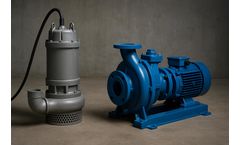
Performance Differences in Slurry and Solids Handling In slurry operation, submersible pumps can handle higher solids concentrations because they operate directly in the material and do not depend on suction lift. Submersible slurry pumps are well suited to dense mixtures such as sludge, sediment, tailings, and settled ...
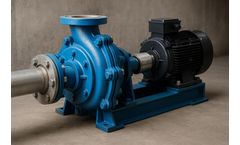
Accurate sizing impacts performance, wear life, and operating costs; a correctly sized pump maintains stable flow, prevents solids from settling in the pipeline, and operates within a controllable range. ...
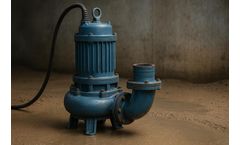
A submersible slurry pump is designed to operate fully submerged in liquid containing suspended solids, with the pump and motor integrated into a sealed unit. This configuration allows operation directly within the slurry without suction lift or priming, enabling direct discharge from the source. By locating the pump below the ...

The real problem is not the flow rate. It is solids handling. If your pump cannot move solids without choking or destroying internal parts, production slows, and downtime grows. This is where Appalachian self-priming pumps come in. These pumps are built for jobs where solids are part of the ...