
Refine by
Stabling System Articles & Analysis: This-Year
39 articles found
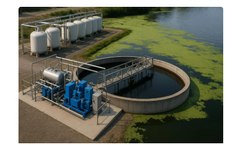
Aerobic bacteria oxidize ammonia to nitrates in an oxygen-rich environment, followed by denitrification where anaerobic bacteria convert nitrates to nitrogen gas. Conventional systems require energy for sufficient aeration to support the nitrifying bacteria; fluctuating loads demand stable performance with lower energy intensity when possible.Phosphorus Removal ...
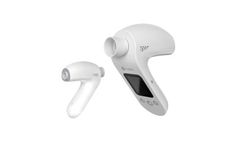
The approach delivers the precision, stability, and clinical versatility required for both spirometry and diffusion capacity assessment in a single, scalable platform.Supporting Equipment for System Validation and Calibration: Measurement accuracy begins with sensor performance but extends throughout the entire diagnostic system. To ensure complete ...

Its performance matches imported European and American counterparts while offering a more competitive price. Backed by a stable and reliable domestic manufacturing system, the holder is widely recognized by mold, aerospace and automotive parts manufacturers and exported to numerous countries. ...
Large air volume continuous operation with high stability requirements With a treatment air volume of 25,000 Nm³/h, the system must support 8,400 hours of continuous operation per year, imposing strict requirements on equipment durability and fatigue resistance. ...

Instead of allowing organic materials to decompose or be openly burned, modern thermal conversion systems transform them into stable carbon-rich products with applications across agriculture, environmental remediation, and industrial manufacturing. ...
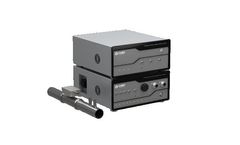
Built on Cubic's mature gas sensing technology platforms including NDIR and UV-DOAS, Gasboard-9805 Portable Emissions Measurement System (PEMS) delivers exceptional accurate gas emissions measurement (CO, CO2, THC&CH4, NO, NO2), particulate matter analysis, and exhaust flow rate monitoring in a single unit. ...
Recently, CADAIR successfully completed and commissioned an exhaust gas treatment project for a semiconductor manufacturing enterprise in Tianjin.Designed to treat organic exhaust gases generated during the cleaning process, including n-propyl bromide and acetone, the project adopts a core process combining a Zeolite Concentrator Wheel with a Three-Bed Regenerative Thermal Oxidizer (RTO), ...
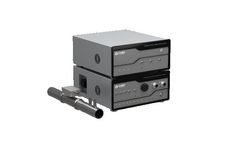
Built on Cubic's mature gas sensing technology platforms including NDIR and UV-DOAS, Gasboard-9805 Portable Emissions Measurement System (PEMS) delivers exceptional accurate gas emissions measurement (CO, CO2, THC&CH4, NO, NO2), particulate matter analysis, and exhaust flow rate monitoring in a single unit. ...
A large aircraft coating enterprise in Tianjin, facing the dual pressures of tightening emission standards and rising operating costs, finally chose CADAIR Industrial Brain Intelligent Hub AI energy-saving equipment to carry out intelligent upgrading of its original zeolite rotor + RTO treatment system. Up to now, this AI intelligent VOCs treatment system has ...
With a heat recovery efficiency above 95% and a purification efficiency over 99%, the system ensures long-term stable operation. Zhuhai Sapici Chemical Co., Ltd. ...
To date, the CADAIR VOCs treatment system has achieved more than 3,350 consecutive days of stable operation, building a long-term operational benchmark for VOCs treatment in China’s printing industry. ...
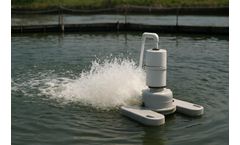
This is particularly costly in high-density operations. Advanced DO systems improve gas transfer and energy use by delivering finer bubbles.What Are Advanced Dissolved Oxygen ...
CATL Project: VOC Treatment with Zeolite Rotor and Catalytic Oxidation CATL is one of the world's largest manufacturers of lithium-ion batteries for electric vehicles and energy storage applications.Project Overview Exhaust Components: Benzene, Toluene, Xylene, n-Hexane Air Volume: 7,000 Nm³/h × 3 systems Treatment Technology: Zeolite Rotor Concentrator + Catalytic Oxidation ...
However, the manufacturing process generates significant volumes of volatile organic compounds (VOCs), which require effective treatment before atmospheric discharge.As a professional photovoltaic raw material exhaust gas treatment manufacturer, CADAIR provides advanced VOC treatment systems specifically designed for photovoltaic material production facilities. Project ...
Key Advantages High Concentration Efficiency The system can achieve concentration ratios of up to 10–40 times, significantly reducing downstream treatment requirements.Reduced Energy Consumption By concentrating VOCs before oxidation, the size and fuel demand of oxidation equipment can be substantially reduced.Excellent Moisture Resistance Zeolite materials exhibit strong ...
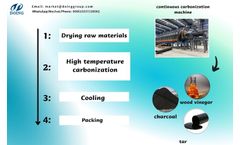
Strict moisture control serves not only to satisfy process requirements but, more importantly, to ensure the continuous and stable operation of the entire biomass carbonization system. The specific reasons for this are reflected in the following three aspects: 1. ...
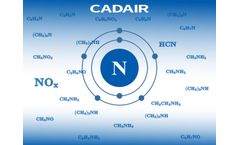
Direct discharge from conventional Regenerative Thermal Oxidation (RTO) systems often results in excessive nitrogen oxide emissions. To address this industry pain point, the three-level governance system of source nitrogen control, in-furnace optimization, and end-of-pipe denitrification is currently the most scientific and effective solution, which needs to be ...
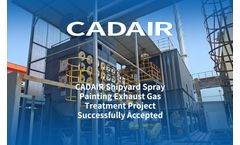
The heat recovery efficiency exceeds 95%, enabling self-sustaining combustion under suitable VOC concentrations and significantly reducing fuel consumption. Eight Years of Stable Operation Led to a Second Cooperation Back in 2018, CADAIR supplied a 25,000 m³/h RTO system for the client’s 4.5-meter pretreatment line. The system was ...
By concentrating VOCs before thermal oxidation, the solution significantly improved treatment efficiency while reducing fuel consumption. After implementation, the system achieved stable compliant emissions, high automation performance, and lower operating costs, helping the enterprise improve environmental management efficiency. 3. ...
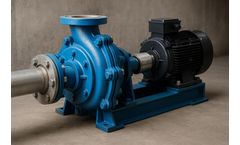
The goal is to move the required volume through the full pipeline while overcoming system resistance and maintaining stable solids transport. The sizing variables are flow rate, total dynamic head, and slurry properties, with pipeline characteristics further influencing the result. ...