
Refine by
Surface Testing Articles & Analysis: This-Year
5 articles found

Magnesium-to-lithium ratios can differ 5–10x within a few kilometers. Traditional approaches test 50 holes with lab shipment, incurring 7–10 days turnaround and about $80,000 in assay costs, plus significant time loss. On-site XRF testing of brine chemistry enables immediate zone identification, reducing overall time to discovery to around 2 days for ...
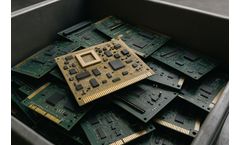
For example, a beige board from a 1998 telecom switch may test near 1,200 ppm gold, while a 2020 consumer router board may test around 250–350 ppm, despite a similar exterior. ...
A scrap yard in Houston processes 40 tons of mixed cables every week. For years, they sorted by weight and appearance: thick cables went in one pile, thin in another, shiny copper here, dull brass there. The operation made money, but the owner knew he was leaving cash on the table. Then one day, a customer brought in what looked like standard copper wire. Visual inspection said copper. The scale ...

What XRF Cannot Do: XRF analyzes only surface composition (top 10-100 microns). If a cable carries heavy plating over a steel core, testing the plating may misrepresent the core. In such cases, testing multiple spots or cross-section samples is advisable, and cleaning the surface improves accuracy. ...
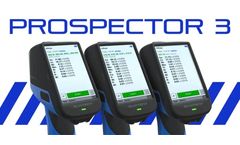
When a $2.3 million aerospace component fails catastrophic testing, investigators often trace the problem back to a single moment: the loading dock where the wrong alloy entered the facility. A batch of 316L stainless steel arrives with paperwork certifying its composition. It looks identical to 304 stainless. The receiving team checks the documentation, signs off, and sends it to production. Six ...