
Refine by
Ventilation Control Articles & Analysis: This-Year
17 articles found
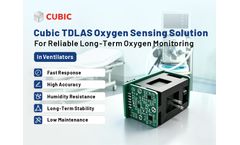
Oxygen Measurement Challenges in Modern Ventilator Systems Accurate control of oxygen delivery is defined as an essential performance requirement in modern ventilator systems, where the fraction of inspired oxygen (FiO2) must be precisely regulated and continuously monitored across a wide operating range. ...

These modules support real-time monitoring of PM1.0/PM2.5/PM10, CO2, VOCs, temperature, and humidity simultaneously, making them ideal for seamless integration into fresh air and HVAC-related systems.Equipped with I2C digital communication interfaces, the modules ensure stable and efficient data transmission to control units. By providing accurate, real-time IAQ data, the modules ...

Whether through manual soldering, selective soldering, wave soldering, or rework operations, flux vapors and solder smoke are released directly into the operator's breathing zone. Without proper ventilation, these contaminants can accumulate rapidly and affect workplace air quality. ...

Gas detection systems are increasingly deployed as part of IoT platforms rather than as standalone devices. In modern installations, gas sensors are integrated into distributed networks that combine sensing hardware, communication infrastructure, and centralized data processing. IoT integration allows gas monitoring systems to operate continuously across multiple locations, transmit measurement ...
Modern methane detection systems are a core element of mine safety infrastructure. They are used to control ventilation, trigger alarms, and prevent the development of explosive conditions before critical thresholds are reached. ...
Propane (C3H8) is widely used in industrial facilities as a fuel and process gas, particularly in LPG storage, manufacturing, and chemical operations. Due to its flammability and tendency to accumulate near the ground, uncontrolled propane leaks represent a serious explosion and fire hazard. Industrial propane gas sensors are therefore an essential element of safety systems in hazardous areas. ...
Monitoring carbon dioxide (CO2) is an established requirement in industrial safety systems and in applications where CO2 concentration is used as a control parameter. Most professional CO2 sensors rely on NDIR (Non-Dispersive Infrared) technology due to its measurement stability and long service life. This article explains the NDIR principle, outlines the main advantages and limitations of the ...
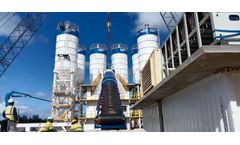
The transition toward environmentally certified ready mix concrete batching plant operation is no longer a voluntary positioning exercise — it is a compliance imperative with direct operational and commercial consequences for non-conforming facilities.Effective dust control in modern batching plants is not achieved through any single intervention. ...
Introduction Installing a welding fume extraction system is only the first step toward maintaining clean and safe industrial environments. In many facilities, systems operate below their intended performance due to airflow imbalance, poor hood positioning, clogged filters, or improper maintenance practices. As a result, fumes escape into the workspace despite the presence of extraction ...
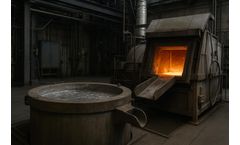
Benefits include improved process consistency, safety, and labor cost reductions. Emission Control Integration Emission streams from lead refining require integrated control. Key targets include: Particulate emissions: lead fume and dust; controlled by ventilation with baghouse filtration to SO2: generated during antimony ...
Introduction Accurate airflow design is one of the most critical aspects of any welding fume extraction system. Undersized systems fail to capture fumes effectively, while oversized systems lead to unnecessary energy consumption and operational costs. In industrial workshops, improper airflow design is one of the leading causes of poor fume control ...
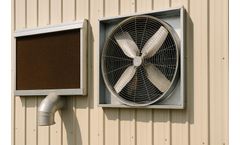
Ventilation is a key element in the microclimate control of production, livestock and agricultural environments. ...

Failing to prepare properly can cause blistering, peeling, and premature failures.2. Controlled Environment Temperature, humidity, ventilation, and dust control affect how coatings cure and perform. ...
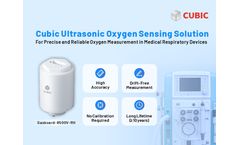
Challenges of Continuous Oxygen Measurement in Medical Respiratory DevicesAccurate and stable oxygen concentration measurement is a fundamental requirement in medical respiratory devices where oxygen delivery must be continuously monitored and controlled. In applications such as ventilators and infant incubators, oxygen concentration measurement directly supports ...
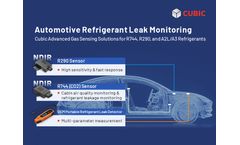
The sensor simultaneously enables precise CO2 concentration monitoring to support intelligent ventilation control and ensures early detection of R744 refrigerant leakage, enhancing overall safety in vehicle HVAC systems. ...

Traditional emissions testing and stack measurements offer limited real-time visibility and may not capture short-term fluctuations or localized deposition on the shop floor.Real-time monitoring and high-resolution air quality data enable visibility into emission patterns, supporting accurate, targeted control options, enhanced ventilation, and proactive ...

As a result of the odorous process inside, the EA required odour control on the ventilation system to the building. Exeon also had strict thresholds on noise to comply with regulations. The odour control limit on the odour abatement system was 1000 odour units per ...