
Refine by
Well Sampling Articles & Analysis: This-Year
7 articles found

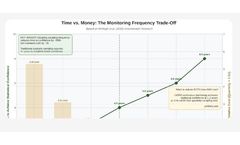
Groundwater contamination doesn’t move in neat, predictable intervals. Yet for decades, environmental monitoring programs have relied on quarterly or annual sampling as the standard approach to understanding subsurface conditions. While this method has been widely accepted, it introduces a critical challenge: it captures only snapshots in time,not the full story. As regulatory ...
ByLiORA
The Interstate Technology and Regulatory Council published its Vapor Intrusion Toolkit in January 2026. The Toolkit consolidates three earlier ITRC documents into one resource: the 2007 VI-1 guidance, the 2014 PVI-1 petroleum guidance, and the 2021 VIM-1 mitigation ...
ByLiORA
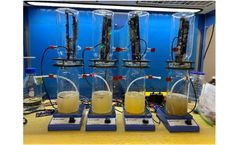
INTRODUCTION Environmental Material Science ("LiORA") provides a new generation of Internet of Things (loT) enabled non-dispersive infrared (NDIR) water sensors that provide high-resolution quantification of groundwater (GW) petroleum hydrocarbon (PHC) concentrations. The current generation water sensor transmits data at 30-minute intervals using a 4-channel pyroelectric NDIR detector, along ...
ByLiORA
Why Do Static Monitoring Networks Waste Money? Most groundwater monitoring programs operate under networks designed years or decades ago. These networks persist unchanged despite accumulating data that could inform more efficient sampling strategies. The result represents a hidden cost that compounds annually, with typical contaminated sites paying 20 to 40 percent more than necessary for ...
ByLiORA
Understanding What Monitoring Frequency Reveals Why Frequency Determines Knowledge I spend considerable time thinking about how we measure things underground. The physical act of lowering a bailer into a well or watching a pump purge three volumes of stagnant water forms only part of the story. The deeper question concerns what those groundwater measurements tell us and what the measurements ...
ByLiORA
The Well Redundancy Problem Every groundwater monitoring network includes wells that cost money but provide no commensurate value. This statement reflects reality at contaminated sites worldwide, not a criticism of the hydrogeologists who designed these networks. Contamination plumes evolve over time, and our understanding of subsurface conditions improves as data accumulates. A well that ...
ByLiORA
The Global Contamination Challenge Over 2 million contaminated sites exist globally, and we continue polluting more sites than we clean up. This disparity between the problems we face and our ability to solve them through innovation creates what I call an ingenuity gap. The gap persists not because solutions do not exist, but because industry practices lag behind scientific advances by decades. ...
ByLiORA