


- Home
- Companies
- Andermatt Group AG
- Articles
- Strengthening Resistance Management: ...
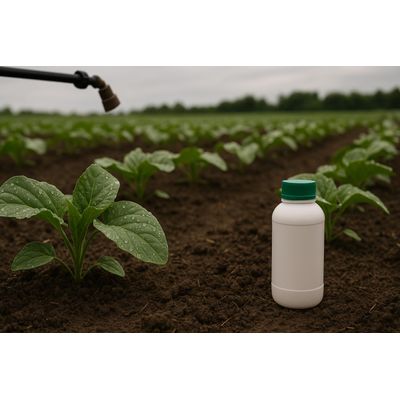
Strengthening Resistance Management: The Growing Role of Biological Crop Protection
June 9, 2026 — In a recent interview with Meister Media Worldwide, Dr Brendon Neumann highlighted resistance management as a core challenge and outlined how biological crop protection solutions are becoming integral to sustainable farming systems.
The Growing Challenge of Resistance
Resistance management is critical to maintaining the long-term effectiveness of crop protection tools. Developing new chemically active ingredients is time-consuming and costly, resulting in a limited pipeline; protecting existing products is essential.
Resistance has largely developed due to widespread use of single-mode-of-action chemistries that target a specific site, making resistance from small genetic mutations possible. Repeated use, especially across large monocultures, creates selection pressure that can lead to resistant populations dominating.
Biologicals as Part of the Solution
Biological crop protection products offer a valuable solution. Unlike many conventional chemistries, biologicals often operate through multiple modes of action, significantly reducing the likelihood of resistance development.
When integrated into crop protection programs (through rotation or tank mixing), biologicals can help eliminate resistant individuals that survive chemical applications. This complementary approach strengthens overall efficacy and supports more resilient pest and disease control systems.
Biological products undergo rigorous testing comparable to conventional chemicals before market. While resistance mitigation is not always tested directly as a standalone claim, it is widely accepted that combining different modes of action within a program slows resistance development and improves overall control. Field experience supports this: programs integrating biologicals alongside chemistries consistently outperform those relying on a single solution, particularly where resistance has already begun to emerge.
Improving Performance Through Knowledge
Performance variability with biologicals is sometimes perceived; the main driver is environmental sensitivity rather than product inconsistency. Factors such as UV exposure, temperature extremes, and humidity influence effectiveness.
The key to reliability is grower education: understanding how and when to apply biologicals and adjusting practices accordingly leads to more consistent performance.
Where Biologicals Make the Greatest Impact
Biologicals are particularly valuable in high-intensity cropping systems, such as greenhouse vegetables and orchard crops, where frequent product applications occur. The risk of resistance is higher due to repetitive use of the same chemistries. Integrating biologicals helps manage resistance and supports reduced chemical residues, aligning with market access and consumer expectations.
Overcoming Barriers to Adoption
Adoption remains constrained by familiarity gaps. Growers with deep chemical experience may not fully understand how to deploy biologicals effectively. Addressing this requires ongoing education and practical support, including:
- Field-level technical guidance
- Demonstrations and grower days
- Review and optimization of seasonal programs
- Collaboration with distributors and advisors
Looking ahead, digital tools and AI-driven recommendations may further improve knowledge access and decision-making support.
Innovation Shaping the Future
The biologicals sector is evolving rapidly. Advances in formulation technology are improving product stability and reducing sensitivity to environmental conditions, leading to more consistent performance.
New classes of biological solutions, including metabolites, peptides, and RNA-based technologies, are emerging. These innovations offer enhanced precision and effectiveness, with some capable of targeting pests similarly to conventional chemistries while maintaining a favorable environmental profile.
Complementary Today, Transformational Tomorrow
Biologicals are unlikely to completely replace synthetic chemistries in the near term, but they are already enabling reduced reliance on chemicals in certain crops and regions. In some cases, growers achieve production with minimal or even zero detectable residues at harvest.
Continued expansion of biological tools will support fully integrated programs built on a diverse toolbox of solutions, with the potential to reduce or replace conventional chemical use over time.
A Rapidly Advancing Industry
Over the past two decades, biological crop protection has evolved from a niche segment to a mainstream component of modern agriculture. As adoption grows, so does knowledge, driving further innovation and improved outcomes across the industry. The takeaway is that integrated approaches combining biologicals and chemistries are essential for sustainable, effective resistance management, providing growers with effective solutions and shaping the future of crop protection.
Original: https://www.andermatt.com/strengthening-resistance-management-the-growing-role-of-biological-crop-protection/