

- Home
- Companies
- Aimix Group Co., Ltd
- Articles
- Utilizing a Concrete Trailer Pump
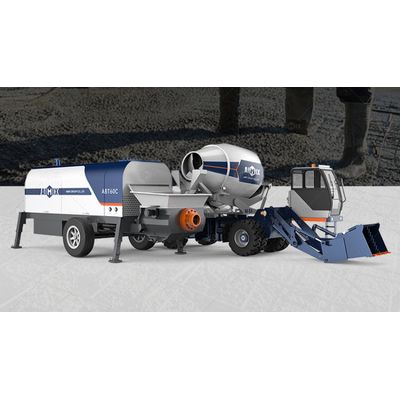
Utilizing a Concrete Trailer Pump
With the rapid growth of urban populations worldwide, the construction industry faces immense pressure to deliver infrastructure such as housing, schools, and hospitals efficiently. According to the World Economic Forum, the global urban population grows by approximately 200,000 people every day, driving the demand for faster and more efficient construction solutions. One machine that has become crucial for meeting these demands is the concrete trailer pump, which plays an essential role in streamlining construction work.
In this article, we will discuss the steps involved in using a concrete trailer pump, explain its pumping system, and offer tips for selecting the right machine for your project.
Steps to Using a Concrete Trailer Pump
1. Mixing the Concrete
The process begins with mixing the concrete in a rotating drum. The necessary components, such as cement, aggregates, and water, are poured into the mixing drum according to specific ratios. If you are using a fully-automatic concrete trailer pump, the machine will measure and pour the ingredients into the rotating chamber without requiring manual input. This automation ensures that the correct proportions are consistently maintained, resulting in a uniform concrete mix. Get More Info: https://aimixgrupo.com/bomba-de-concreto-estacionaria/
2. Transferring to the Hopper
Once the drum has mixed the components, the concrete is transferred into a hopper. The hopper is responsible for churning the mixture and adding water at regular intervals to maintain the desired consistency. Monitoring the water level is essential, as too much water can result in a liquidy mix, while too little water can produce overly thick concrete, making it difficult for workers to apply.
3. Mixing and Pumping
Inside the hopper, multiple blades ensure that the ingredients are thoroughly mixed, producing high-quality concrete. After the mixture is ready, the concrete pump extracts it from the hopper and pumps it through a valve system. Most concrete trailer pumps come with auxiliary hoses that allow you to direct the flow of concrete to specific areas of the construction site where it is needed.
Understanding the Pumping System
Twin-Cylinder Mechanism
Concrete trailer pumps typically feature a twin-cylinder pump system with two parallel cylinders, each equipped with a drive piston. These pistons move back and forth in a continuous cycle, extracting concrete from the hopper and delivering it through the pump of AIMIX Group. The quick, repeated movement of the pistons enables the efficient flow of concrete, allowing the machine to pump the mixture to various parts of the construction site.
Material and Discharge Cylinders
The material cylinder, located at the front of the pump, pulls the concrete from the hopper. In contrast, the discharge cylinder at the rear of the pump is responsible for pushing the concrete to the designated area. This alternating push-pull motion ensures a steady flow of concrete, preventing any blockages or solidification of the material during the pumping process. This system allows for smooth and continuous concrete delivery, maximizing efficiency on the job site.
Benefits for the Construction Industry
The use of concrete trailer pumps offers several advantages for construction projects, especially in urban settings where speed and accuracy are critical. With their ability to pump concrete to hard-to-reach areas, these pumps eliminate the need for manual labor and traditional methods like wheelbarrows, reducing time and effort significantly. Their flexibility also makes them suitable for large-scale projects, such as high-rise buildings, bridges, and tunnels, where precision and consistency in concrete application are essential.
Tips for Buying a Concrete Trailer Pump
If you are considering purchasing a concrete trailer pump for your construction projects, it is essential to evaluate the machine's features carefully. Here are some factors to consider:
1. Rotating Drum Capacity
A larger drum allows for mixing more concrete in one batch, increasing overall efficiency. Ensure that the drum size aligns with the volume of concrete required for your projects.
2. Hopper Quality
Check if the hopper has multiple blades for thorough mixing. The quality of the hopper directly impacts the uniformity and strength of the concrete mix.
3. Pump Power and Cylinder Design
Look for a pump with twin cylinders and high engine power. The strength of the engine determines the machine’s ability to deliver large quantities of concrete over long distances and heights, making it crucial for high-rise or expansive projects.
Conclusion
Utilizing a concrete trailer pump enhances construction productivity by ensuring quick and precise delivery of high-quality concrete. Whether you are working on residential buildings or large infrastructure projects, investing in a trailer pump can significantly improve efficiency while reducing labor costs. When choosing a concrete trailer pump, look for a machine with robust features, such as a large rotating drum, an efficient hopper, and a powerful twin-cylinder pump system.