


- Home
- Companies
- Chengyi Electronics (Jiaxing) Co., Ltd
- Articles
- What Components Should Be Tested On A ...
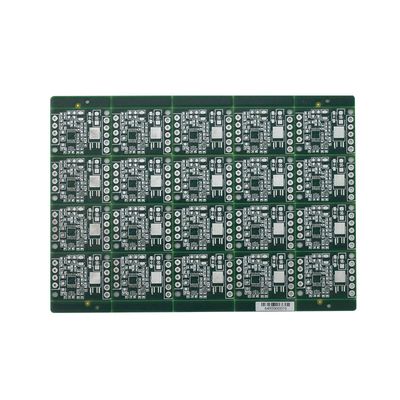
What Components Should Be Tested On A PCB?
All electronic products need to be tested even if they are accurately designed and professionally fabricated, as they can be prone to malfunctions and problems. Printed circuit boards are composed of various electrical components which need to function correctly, and PCB testing is essential to test that each component is functioning. Quality control and quality assurance throughout the designing and manufacturing processes are crucial, especially in the early stages. In the designing stage, PCB testing can be performed to analyze issues and minimize faults. Techniques such as EMI, Signal Integrity, and Power Integrity, can help identify problems early on in the design stage.
Several items are tested on a printed circuit board, including:
Diodes
Diodes are electrical devices that transmit current in a single direction, and they consist of semi-conductive material between terminals. Essentially, diodes provide a current in one direction, whilst blocking the current in the opposite direction.
Diodes are very sensitive components so caution is advised when testing the component. It is recommended to consult with a professional before testing electrical equipment. To test a diode, you will need to disconnect one end of the diode from the PCB. You can then use a digital meter or an analog meter and find the red and black meter probes. After locating the probes, you can connect the black probe to the cathode and then connect the red probe to the anode. You can then set the meter between one and ten ohms.
There are a few outcomes that you can expect if there is a problem with the diode:
● To identify a leak in the diode, you should see if the meter registers two readings.
● To check if a diode is forward biased, you should see some resistance in the meter readings.
Automotive dashboard
Capacitors
Capacitors are essentially electronic devices that store energy as an electrostatic field. They consist of an insulating material placed between conductive plates.
Testing a capacitor in a printed circuit board requires one end of the capacitor to be removed from the circuit board. Then, it’s essential to make sure that the power supply of DC voltage matches the range of the capacitor to prevent overloading of the device. When you apply a voltage to the circuit board, there may be several outcomes:
● To check if a capacitor may be leaking, you will see a high jump, followed by a low drop on the meter reading.
● To test if a capacitor has shorted, you will need to see if the voltage from the power supply has been reflected on the meter reading.
● If the meter reading shows no jumps when a voltage is applied, then the capacitor may be open or the capacitance is too low for the meter to register it.