

- Home
- Companies
- Harmony Enterprises, Inc.
- Articles
- Why More Facilities Are Compacting ...
Why More Facilities Are Compacting Waste At The Source
Waste handling in many facilities has traditionally involved collecting trash from multiple areas, transporting it across hallways and interior spaces, staging it in back rooms, and finally moving it to exterior dumpsters or compactors. This approach places significant operational strain on staff and can impact sanitation, odors, and facility appearance.
In healthcare facilities, hotels, commercial kitchens, grocery stores, universities, casinos, senior living communities, and daycare centers, moving waste through buildings can increase labor demands, create sanitation concerns, contribute to odors, disrupt workflows, and degrade the overall appearance of a facility.
That is why more organizations are reconsidering where waste is compacted. Rather than transporting large volumes of loose waste long distances, many are compacting waste at the source where it is generated.
The Operational Challenge With Traditional Waste Movement
Waste is often collected in carts or bins and moved through corridors, service elevators, loading docks, kitchens, housekeeping areas, and back rooms before final disposal. While routine, this waste movement adds up in labor, time, and risk. Frequent trips can strain staff resources, overflowing carts can clutter workspaces, and wet or food-related waste may contribute to odors, liquid leakage, or sanitation concerns. In healthcare and hospitality environments, visible waste handling can affect patient, guest, or customer perceptions.
Why More Facilities Are Compacting Waste At The Source
Waste compaction at the source reduces the volume of waste at the point of generation rather than transporting loose waste long distances. Hospitals may compact waste directly within environmental services or utility areas. Hotels increasingly utilize indoor compactors in housekeeping or back-of-house operations, while commercial kitchens and cafeterias benefit from compacting wet waste closer to food preparation areas. Grocery stores, universities, daycare centers, and senior living facilities are recognizing the advantages of reducing overflowing carts, improving sanitation, and minimizing custodial waste handling time throughout their buildings.
This decentralized approach to waste handling can help improve workflow efficiency while reducing unnecessary labor and waste movement throughout a facility.
Benefits Of Indoor Waste Compaction
- Reducing the movement of loose waste minimizes labor demands and improves housekeeping efficiency.
- Compact waste closer to its source helps manage odors, maintain cleaner workspaces, and reduce clutter in back-room operations.
- In sanitation-sensitive environments, reducing open waste indoors contributes to cleaner and more organized operational areas.
- By compacting waste before transport, facilities can reduce overall waste volume and improve hauling efficiency.
Why Stainless Steel Matters In Indoor Waste Applications
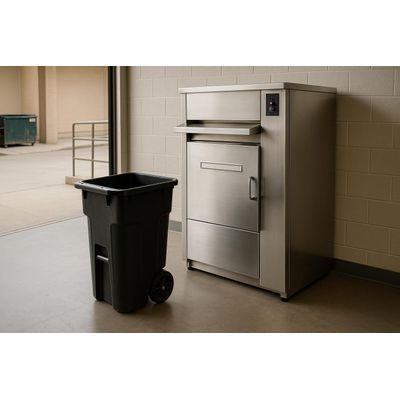
In sanitation-sensitive environments, equipment construction matters. Stainless steel compactors provide corrosion resistance in wet or washdown environments and simplify cleaning, supporting durability in healthcare, hospitality, and foodservice settings. Harmony’s Indoor Stainless Steel Compactors are designed for indoor use where cleanliness, durability, and corrosion resistance are critical, including hospitals and healthcare systems, hotels and resorts, commercial kitchens, grocery stores, universities, senior living facilities, casinos, daycare centers, foodservice operations, and other high-occupancy environments.
Stainless steel construction helps maintain a cleaner and more professional appearance while supporting long-term durability in demanding environments. Unlike traditional outdoor waste handling, indoor stainless steel compactors help organizations maintain cleaner and more efficient waste management processes directly within their facilities.
In addition, Harmony’s 300SS, 450SS, and 700SS stainless steel compactors come with UV light protection that reduces airborne pathogens and odor, contributing to a healthier environment for patrons and employees.
Common Applications For Indoor Stainless Steel Compactors
As facilities pursue operational efficiency, sanitation, labor utilization, and indoor cleanliness, compacting waste at the source is becoming an increasingly important component of modern facility management strategies. Harmony Enterprises remains a trusted source for compacting technology and environmental responsibility.
To learn more about Harmony indoor stainless steel waste solutions, contact Harmony Enterprises at (507) 886-6666.
Harmony Enterprises remains your trusted source for compaction technology and environmental responsibility.
Original: https://harmony1.com/compacting-waste-at-the-source/