


- Home
- Companies
- Dam-It Dams, Inc.
- Applications
Dam-It Dams, Inc. applications
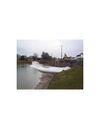
The aging and dilapidated infrastructure of our nation’s bridges and roads, particularly those in colder climate areas where water turns to ice and creates cracks and potholes in frequently traveled roadways, has led to a tremendous increase in the number of needed repairs and/or complete replacements. When these areas are not properly tended to, the problems tend to get much worse and create dangerous driving conditions, not to mention cause excessive wear on your vehicles suspension. When it comes to bridge or road construction, the use of a cofferdam is undeniable, and a portable cofferdam from Dam-It Dams is the ideal solution to provide you with an effective tool in order to get your job done right and safely for blocking or diverting water and/or de-watering an area.
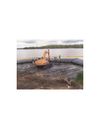
Boat Ramp and Dock Repair Using Cofferdams. The installation or repair of boat ramps and docks requires dry work environments for the project to proceed in a safe, timely, and efficient manner. Whether the need is to dam, divert, or de-water, Dam-It Dams rapidly deployed and environmentally friendly water inflated barriers offer a flexible and compact cofferdam to meet virtually every project need. Whether in dry surface areas, static water, or dynamic movement water areas, we provide the equipment to best keep you and your project safe.
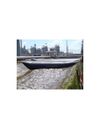
When performing tasks as hefty as canal repairs, having a dry work environment is an absolute MUST. Canals containing large quantities of water need that water to be held safely and securely at bay in order to ensure the safety of you and your crew as you move forward to complete the task at hand. With Dam-It Dams portable and expandable water-inflated barriers, you can rest easier knowing that, not only is your project area safe to work on, but it’s also going to get done on time and on budget! Installation time will vary depending on the size of the project and the depth and current of the water.
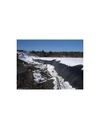
With all the versatile uses of cofferdam systems during wet spring months and flood season, it can’t be forgotten that snowy weather can also bring on the need for damming, diverting, or de-watering an area. Particularly in northern snow-blanketed states, we know we go through cold snaps and warm winter days. With this, we experience melting and freezing and melting, etc. Once this snow and ice melts to slush and water, flooding of roads can frequently occur, and if there’s over-saturation outside, sometimes it can get inside.

Dredging is the activity of excavation underwater in order to gather sediments or sand for beaches that’ve suffered erosion. It is also a technique used to allow for widening of a waterway, which is essential in some cases for purposes of navigation. But Increasing the channels depth also increases the capacity to carry water and prevent flooding on land in the future. When dredging is needed, cofferdams are a must. In order to get to the base of the underwater earth, the surrounding water will need to be controlled by being held back in order to allow work to proceed safely. This is where Dam-It Dams comes in. Properly sized and positioned cofferdams provide an excellent temporary water barrier to allow easier and more efficient dredging of smaller waterways such as canals, ponds, rivers, and boat access sites. Dam-It Dams has readily available cofferdams in a wide range of sizes to accommodate virtually every type of project.

De-watering, or more accurately unwatering, is a process of removing groundwater from an area. This step is necessary to create a dry-land environment in order to proceed with a construction project. There are several different de-watering solutions to remove water from an area. And as it pertains to construction, cofferdams combined with water pumps, are an effective solution to create an acceptably safe and secure construction site. There are many water removal solutions including deep wells, horizontal drains, and well points, among others. Here at Dam-it Dams, we provide this water removal solution in the form of a protective barrier which will hold back water while it is being pumped away from the necessary “dry” areas of the project site.
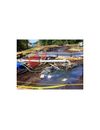
Environmental Remediation is, more simply put, the removal of contaminants or pollutants from the environments medias (for example, surface water, soil, groundwater, and sediment). There are numerous reasons to fulfill this particular service, not the least of which is the health concerns that may be affecting members of the community. When doing this, a cofferdam comes into play in such a way that the clean water can be diverted (one of the 3 D’s) away from a contaminant and kept away from it by damming (another of the 3 D’s). The segregation of the two waters, filtered and polluted, is pivotal because it can potentially save the condition of the surrounding environment.
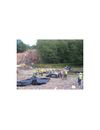
River diversion can be a necessary part of a construction project. Creating a dry work site along a riverbank does not always require damming; oftentimes diversion using a cofferdam while the project is underway is the best solution. Dam-It Dams cofferdams are used to raise water level to properly and safely redirect the water to an approved location where it is then, either clearing the work site or it is made available for use for irrigation systems or reservoirs.
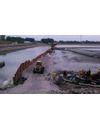
Preventing potentially toxic substances from entering clean water is the foremost priority of project managers. Sewage treatment, or wastewater treatment, plants remove contaminants from wastewater by means of physical, chemical, and biological processes. This is where our 3-D’s (Damming, Dewatering, and Diversion) come in to play! By damming or diverting the flow of wastewater, the plant can then focus on the task-at-hand of purification without having to worry about the stability of the cofferdam they’re using, because our cofferdams are made of industrial strength geo-textile woven polypropylene materials that can withstand tremendous water pressure. They are puncture resistant and sturdy, not to mention easy to use, expandable, and portable.

There are many different examples of water containment barriers including booms, pneumatic, hydraulic containment, permeable reactive barriers, and berms, among others. There are two basic categories of water containment barriers – temporary and permanent. Temporary water containment barriers are primarily used to hold back flood waters or to provide a dry environment for a project to proceed. Examples of temporary water containment barriers are cofferdams (also coffer dams), sandbags and earthen berms. There also are permanent water containment barriers that include dams, levees, locks and seawalls. Regardless of type, the mission of every water containment barrier is to control water, whether by stopping or diverting its flow.