


GlobeCore articles
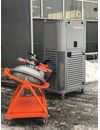
We continue to cover the topic of wastewater treatment from different hazardous components. Today we will adumbrate wastewater treatment from fluorine and nitrocompounds using Vortex Layer Device AVS-100 and AVS-150
WASTEWATER TREATMENT FROM FLUORINE AND NITROCOMPOUNDS
Fluorine-containing wastewater
The wastewater from chemical and metallurgical enterpri
Oksana Bichurina
What is “coal-water fuel”?
Coal-water fuel (CWSF or CWS or CWF) is a fuel which consists of fine dispersed coal particles, water and plasticizing agent. This type of fuel is widely used as an alternative to gas and black oil on different heat generating facilities. The operational economy is the main of advantages of the coal-water fuel. CW fuel has almost the same heat transfer level that the m
Oksana Bichurina
We all talk about priority pollutants, about hazardous substances and discharge to the atmosphere etc. which are dangerous for our environmental. Day by day we adopt new laws and regulations to protect our green future. So, what is that “priority pollutants”? Priority pollutants are highly toxic chemicals. The list of these chemicals is quite large and includes thousands of items but today we will speak about hexavalent chromium and methods of chromium-containing was
Ultrasonic vortex generators AVS-100
Cavitation technology application
Cavitational effect is accompanied by microexplosions, ultrasound and also by mechanical cuts and encounters from exposure of the hundred of cuts pairs which are moved towards each other with the high linear speed. The value of that speed is reach to a few dozen of meters per seconds which gives a possibility
Oksana Bichurina
Cavitation is one such recent technique which has been found to be substantially beneficial in wastewater treatment.
Cavitation can be described as formation, growth and sub-sequent collapse of cavities releasing large magnitudes of energy locally, creating conditions similar to hot spots, and also generating strong oxidizing conditions by way of production of hydroxyl radicals and also hydrogen peroxide.
Qualitative treatment of wastewater from phenol and other organic contaminants has a great practical importance within different branches of industry.
In many cases, contemporary ways of usage by enterprises do not provide high qualitative treatment (degree of phenol decline is 75-90%). These ways have defects such as long process duration from 3 to 5 hours, long processing time, high reagent consumption (pyrolusite, kali bichromate or sodium bichromate), and process temperature is 95
Oksana Bichurina
The Intensifier of Technological Process (or ABC-100) can be successfully applied at the fuel industry for liquid hydrocarbon fuels modification by means of water. This unit can be used for production of motor and heating fuels which have improved operational and ecological characteristics.
The mode of obtaining of modified liquid hydrocarbon fuel includes mixing of hydrocarbon components and the water by means of rotate electromagnetic field. Ratio of the hy
Oksana Bichurina
To get full article please follow the link Nanomodified Concrete Compositions
The one of the main problems of contemporary construction material production is problem of obtaining concrete compositions of high quality. The possible way to resolving this problem is modification of a cement stone structure that allows using all durability potential of the cr
Oksana Bichurina
Expanded clay industry
In the process of expanded clay production the argillous raw material homogenizes and mills in the drilling mud mixers and rollers. But these equipments not ensure qualitative desintegration. As result we obtain the expanded clay of low quality.
Insufficiently desintegration and homogenizing of raw materials lead to the result when even 3% of carbonate inclusion in the low-melt expanded clay can make it unusable. Obtained in such way exp
Oksana Bichurina
During the production of lacquers and paints you can use an intensive dispersion of solid phase and contemporaneous activation of particles.
The time of dispersing of the ferrate pigments in the Intensifier of Technological Processes is 15-60 seconds. During this time the ferrate pigments disperse to the size of 20 micron. At the ball mill the same process goes on for couple hours.
We were test
Oksana Bichurina