

- Home
- Companies
- MoHo s.r.l.
- Articles
MoHo s.r.l. articles
Summary
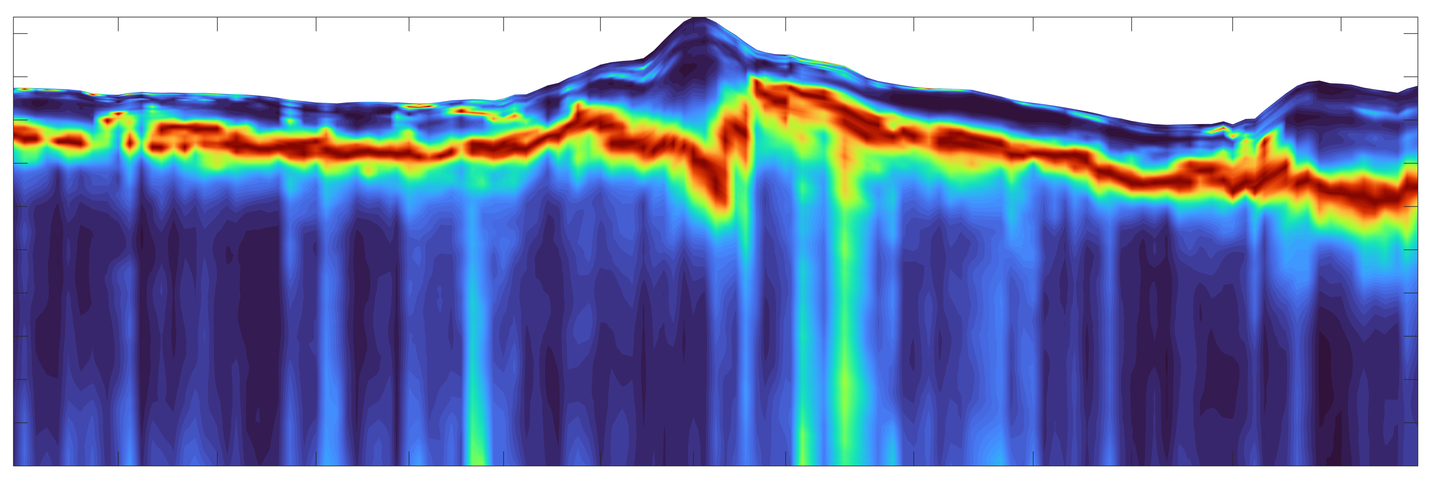
Detailed airborne electromagnetic (VTEM), gravity and passive seismic HVSR surveying, followed up by RC and diamond drilling, has identified an isolated circular and geologically young meteorite impact crater filled with sediments and located next to the town of Coolgardie in Western Australia. It was discovered in 2017 (Meyers, 2017), is 800 m in diameter and estimated to be >140 m deep based on passive seismic results, because only angled drilling was carrie
David Stannard;Jayson Meyers;Ed Turner;Angelo Scopel
Summary
The Abra sedimentary replacement Pb-Ag-Cu-Au deposit is located in the Paleoproterozoic Edmund Basin, 900km NNE of Perth. Mineralisation at Abra has no surface expression and the deposit was discovered in 1981 by drill testing coincident magnetic and gravity anomaly highs. The deposit is hosted within siliciclastic and carbonate deposits of the Edmund Group and consists of a stratabound apron of Pb-Ag-Ba mineralisation in a laminated iron oxide and barite altered
David Stannard;Jayson Meyers;Ed Turner;Angelo Scopel
Summary
Trial passive seismic HVSR survey lines were carried out in the north-western part of the Wilga sedimentary basin in Western Australia, which is a small and shallow isolated sub-basin to the Perth Basin, sitting above rifted Archaean granite-gneiss basement rocks. The HVSR survey method was trialled to determine if it could resolve subsurface basin features quickly and cheaply. This trial HVSR survey was carried out as a series of transects along open walking tra
David Stannard;Jayson Meyers;Thomas Dronfield
Matera, European capital of Culture 2019. Tromino contributed to the pride of the town: It was employed for the dynamic characterization of some bridges, built for the occasion.
Tromino has been using for several years in the experimental modal analysis of hundreds of structures in the whole world. Ask us for some examples…
Summary
Passive seismic HVSR surveying is increasingly being used for investigating the thickness of soft sedimentary cover deposits sitting over hard and fresh bedrock, and for direct drill targeting of paleochannels for groundwater and brine resources. A detailed passive seismic HVSR survey was carried out at the Chilalo Graphite Project in SE Tanzania to assist with defining the thickness of alluvial deposits on the margins of the Mbewmburu River system. These alluvia
Sharna Riley;Jayson Meyers;John Sinnott
Abstract
Measuring the dynamic behavior of a structure, thus assessing its modal frequencies, shapes and damping, is a mandatory step in the tuning and validation phase of any numerical model. In this special issue, devoted to infrastructures, we focus on bridges. Many national building codes impose to experimentally assess the fundamental frequency of bridges to validate the numerical models used in the design of new structures and in the retrofit of existing ones. Howe
Perth, Australia
Fortescue Metals has recently studied the applicability of the HVSR method to the assessment of mining embankment integrity.
Embankments are common features in mine sites, necessary for tailings storage, surface water management or general infrastructure such as dewatering ponds. Even though their construction methodology can largely vary, the degree of compaction is a fundamental property to be assessed during the con
Western Australia
An intriguing presentation given by dr. Jayson Meyers (Resource Potential, Perth, Australia) that illustrates how passive seismic and other geophysical methods identify a young meteorite crater in Archaean greenstone of the Coolgardie Goldfield (Western Australia).
A new and cost-effective site-assessment tool for the quarrying industry
Good quarry design and efficient operation depend upon a ground model that reliably defines the quality, volume and spatial distribution of resource and waste. Most ground models are based on boreholes, sometimes with additional 2D or 3D control provided by ‘traditional’ geophysical surveys such as microgravity, resistivity and active seismic. However, for logistical and economic reas
Dave J.R. Morgan;Michael G. Raines;Stephen Thorpe;Silvia Castellaro;Eddie Bailey;Philip R. Wilby
A study of the site amplification in the Kathmandu valley during the 2015 M7.6 Gorkha, Nepal earthquake, has recently been published in the Bulletin of Earthquake Engineering (2016, vol. 14, p. 3301-3315) by Sarah Tallett-Williams et al. The study was performed by using as a main tool a Tromino donated to the mission by MoHo srl.