

Royal Eijkelkamp articles
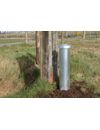
Groundwater monitoring is an essential element in any environmental information system. Based upon validated groundwater monitoring data, information is derived on which decisions can be made.
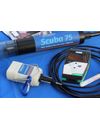
Measuring equipment for water quality is becoming increasingly advanced. Some meters can be equipped with up to 13 different sensors. But is it always necessary to measure so many? Which parameters should you investigate in which situation? In this article we will examine various water problems and their corresponding parameters. When measuring water quality, it is first important to determine the question and the objective. Which possible problems are being investigated? And is a spot-check
The pore pressure is often measured during CPT, along with the cone tip resistance and sleeve friction. This is, however, not the hydrostatic pressure at the cone depth, but rather the dynamic pore pressure. The dissipation test helps to correct these measurements.
While SCPT has been applied around the world for decades, recent years have seen a dramatic increase in the use of this soil investigation technique. Whether to provide input for the design of monopiles for offshore wind farms or the tracks for high-speed trains, or to assess the potential impact of seismic activity in areas where that kind of activity is a relatively new phenomenon.
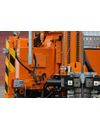
SonicCPT is an exciting and rapidly developing technique from Royal Eijkelkamp that is reducing early refusals in CPT soundings by carefully applying a vibration, when needed, to the CPT string. The technique actually has a history dating back almost 40 years to when Sasaki et al. (1983) reported their work to develop and deploy their vibratory cone, which they used for liquefaction analysis. They compared tip resistance with and without vibration and found that in loose soils the tip resista
When the days get warmer in spring and summer, the risk of blue-green algae, or cyanobacteria, increases. The growth of blue-green algae is a sign that the water quality is declining: there are more nutrients such as nitrogen and phosphorus in the water on which these bacteria thrive. Many species of blue-green algae produce toxic substances that are harmful to humans and animals.
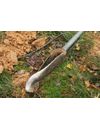
The Royal Eijkelkamp Edelman auger is used all over the world for soil sampling, traditional soil mapping and soil research. But how did this hand auger get its name? To find out we have to travel back in time, to when the first activities for soil mapping took place in the Netherlands.
One of the most common applications of Cone Penetration Testing (CPT) is to identify and delineate soil layers. When pushing the cone during CPT the data acquired can provide an indication of the soil behaviour, often referred to as Soil Behaviour Type (SBT). CPT does not provide a direct measurement of the typical physical properties used to define soil type such as grain size and material, but does however provide a good indication of the soil behaviour and thus the mechanical characteristi
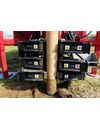
Focusing on the safety of your crew does not just mean fewer injuries; it also makes financial sense. That’s why we adhere to the motto: “Safety isn’t expensive, its priceless!” Yes, next to the standard PPE hat drillers and assistants need to wear, there are also standards for safety for machinery used in the drilling industry. But our machines are designed to be even more safe and ergonomic than these safety standards. If you ask us, these are the safety features tha
Introduction
While in certain parts of the world Standard Penetration Testing (SPT) is the most widely used geotechnical soil investigation method, it has drawbacks. Cone Penetration Testing (CPT) is also a well-proven soil investigation method and is in many instances a more appropriate method than SPT.