


- Home
- Companies
- Recycling Today (GIE Media)
- News
- Colorado EV battery recycling bill ...
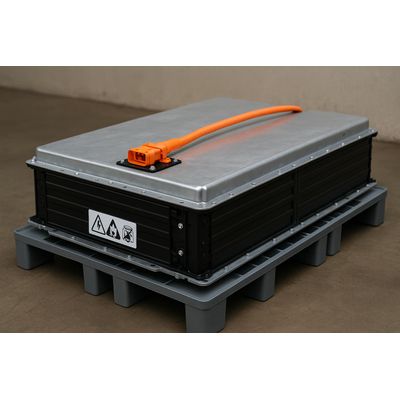
Colorado EV battery recycling bill signed into law
Colorado Gov. Polis signed Senate Bill 26-003 on June 4, establishing an extended producer responsibility framework for large-format propulsion batteries and expanding the state's Battery Stewardship Act to cover larger formats. The measure introduces detailed documentation requirements and sets per-mineral recovery targets for cobalt, nickel and lithium to guide end-of-life management across the sector.
A key provision is a landfill ban on propulsion batteries beginning July 1, 2029, intended to align disposal with existing recycling infrastructure. The law also requires enhanced battery tracing and labeling to support safe handling and material recovery.
Implementation timeline and obligations include:
- The obligation for entities selling or distributing propulsion batteries or vehicles containing them to register with the Colorado Department of Public Health and Environment on or before July 1, 2027.
- By Jan 2, 2029, providers must submit an education and outreach plan; by July 1, 2029 they must establish a website with education and outreach resources; failure to do so restricts sales or distribution in the state.
- Starting July 1, 2029, battery labels must include specified information covering responsibility and technical details.
- From June 1, 2030, producers must submit annual reports to the department detailing battery management and mineral recovery rates.
Large-format battery handling is defined by the act to require a recycler to perform extraction, separation or refining of materials. Collection-only or transportation-only operators do not qualify, ensuring downstream obligations reflect actual material recovery.
Critical mineral recovery targets are set for cobalt, nickel and lithium. By 2031, the minimum recovery rates are 90 percent for cobalt, 90 percent for nickel, and 50 percent for lithium. By 2035, cobalt and nickel remain at 90 percent, while lithium increases to 80 percent. Recovered material may be in elemental, compound or intermediate form, which must be identified in reporting and labeling.
Industry stakeholders emphasize that the bill integrates a battery management hierarchy prioritizing repurposing before recycling and creates a practical, market-facing framework. The act does not require a producer responsibility or battery stewardship organization to oversee a program. Instead, the emphasis is on education and clear obligations for manufacturers, remanufacturers, and downstream handlers, with a defined recycler standard.
Notably, the framework aims to support domestic energy storage deployment by extending the useful life of batteries through repurposing, while maintaining flexibility in how downstream materials move within the supply chain to accommodate evolving chemistries.
For other states considering battery recycling legislation, several principles are relevant: frameworks should accommodate diverse business models, avoid undue compliance costs, and ensure end-of-life management does not unduly raise vehicle prices while enabling robust mineral recovery.
Industry input highlights that approximately 330,000 vehicles reach end of life in Colorado annually, with automotive recyclers handling a majority of these batteries. The law seeks to preserve and adapt Colorado's end-of-life infrastructure to emerging battery technologies and safety requirements.
Source language and industry collaboration reflect input from automakers, battery manufacturers and associations such as the Automotive Recyclers Association, underscoring a practical, durable approach to future battery management.
Original: https://www.recyclingtoday.com/colorado-electric-vehicle-battery-recycling-bill-signed-into-law