

- Home
- Companies
- S.I.C.A.V Srl
- Products
- SICAV - Activated Carbon
SICAV - Activated Carbon
SICAV activated carbon are manufactured in different ways each one with different activities and physical properties for to satisfy the wide range of applications: Powdered activated carbon:for water treatment and alimentary use. Granular Activated carbon:for water and waste water treatment. Pelletized activated carbon:for treatment of air, gas and solvent recovery. Impregnated activated carbon:for adsorbment of particular substances.
For reactivation SICAV use two rotative furnace that work at controlled atmosphere and different temperature, according to types of activated carbon treated. The use of two different furnace allow to avoid the contamination of products used in alimentary field with those used in industrial field.
The advantages of reactivation: the reactivation of exhaust activated carbon, when it is possible, is always advantageous operation. SICAV carry out the reactivation of exhaust activated carbons keeping separate the different lots, giving back at each customer own product.
The movement of activated carbon: SICAV use suitable equipment and specialized staff for to carry out the operations of emptying and filling of filters containing activated carbon.
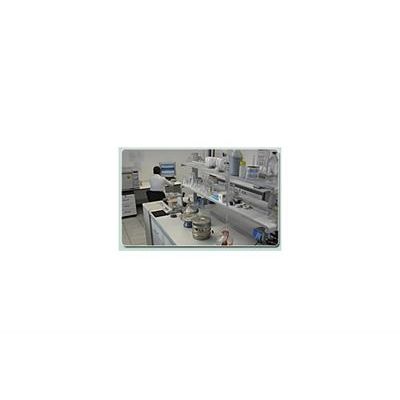
Analytical control of activated carbons: SICAV has an internal laboratory purposely equipped for to make several analytical tests on activated carbons.
With term “activated carbon” are identified substances with high adsorption properties.
The high adsorptive capacity is due at internal porosity produced during the activation treatment.
The activation is the last step of a very complicated process, that come from a carbonisation of raw material like: lignite, bituminous coal, coconut shell, fruit stone, torba, raw dust and residual from petroleum process, etc.
During the activation the carbon is exposed at heating at very high temperature under steam flow (physical activation) or by chemical reagent (chemical activation); at high number of internal pores with molecular dimension are developed during these processes, where we can find at high exchange surface. This surface can, in function of raw materials and activation process, be higher than 1000 m 2/g of carbon. The atoms of carbon on internal surface of activated carbon make an attraction force on molecules of liquid and gas. The intensity of that force is function of the nature of molecules.
The mean field where the activated carbons can be used are in treatment of water and gas. The use in these fields are increasing by increasing of environmental problems. The activated carbons are used for to remove the pollutants for increase the quality of products, moreover in such case the removal of pollutants is done for to reuse these substances in production cycle (Ex. solvent recovery)
The activated carbons are commercialised with three different shapes:
- Powder, Particle size < 200 mesh;
with this shape is used for adsorbment in liquid phase, mixing directly with the liquid waste( the separation will be done by sedimentation and filtration); - Granular, used especially for treatment of water and waste water. With particle size in the range 4-40 US Mesh;
- Pellets, with cylindrical form manufactured by extrusion. Used especially in gas and air treatment.