- Home
- Companies
- Crust Minechem Pvt. Ltd.
- Products
- Activated Carbon
Activated Carbon
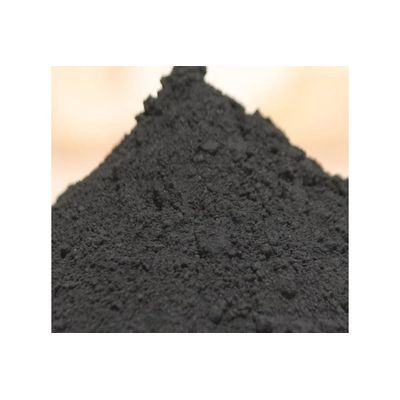
Activated carbon, also called activated charcoal, is a form of carbon processed to have small, low-volume pores that increase the surface area available for adsorption or chemical reactions.
Due to its high degree of microporosity, just one gram of activated carbon has a surface area in excess of 1,500 m2 (16,145 sq ft), as determined by gas adsorption. An activation level sufficient for useful application may be attained solely from high surface area; however, further chemical treatment often enhances adsorption properties.
Activated carbon is usually derived from charcoal and is sometimes utilized as biochar.
Activated carbon is an absorbent material that eradicates organic compounds from liquids and gases by a method called to as "Absorption".
In surface assimilation, liquids or gases experience a bed or layer of extremely porous material referred to as adsorbent. The compound to be removed, termed as adsorbate, diffuse to the surface of the adsorbent and area unit maintained thanks to weak enticing forces. Surface assimilation happens on the interior surfaces of the materials.
The primary staple employed in the assembly of our activated carbons is soft coal that`s crushed, processed in temperature bakers followed by high temperature furnaces. This heating method is activation, it develops the pore structure of the carbon
Manufacturing ProcessThe process is called Water-Gas reaction basically:-
C + H20 » CO + H2 -175,440 kJ/(kg mol)
This reaction being endothermic, the temperature is maintained by partial burning of the CO and H2 formed:-
2CO + O2 » 2CO2 +393,790 kJ/(kg mol)
2H2 + O2 » 2H2O +396,650 kJ/(kg mol)
The air is added in controlled way so as to burn the gases without burning the carbon