

- Home
- Companies
- Lian Tadbir Engineering Company
- Products
- Lian Tadbir - Model AOP - Advanced ...
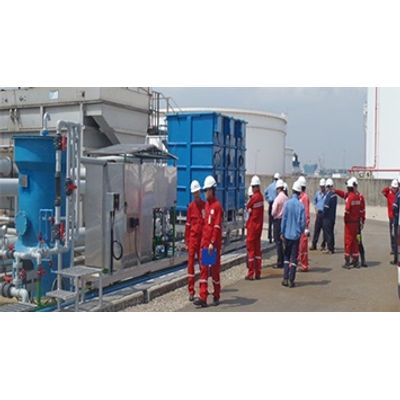
Lian Tadbir - Model AOP -Advanced Oxidation Process Systems
Advanced oxidation processes (AOPs) utilizing powerful hydroxyl or sulfate radicals as a major oxidizing agent were first proposed in the 1980s for potable water treatment. Later, AOPs were broadly applied for treatment of different types of wastewaters because the strong oxidants can readily degrade recalcitrant organic pollutants and remove certain inorganic pollutants in wastewater. Oxidative water treatment (AOP, advanced oxidation processes) is understood as processes for chemical water treatment in which hydroxyl radicals are formed. These highly reactive radicals are available for chemical decomposition reactions and react with organic or inorganic substances that are not easy to break down biologically. They can be formed by adding oxidative substances such as ozone and hydrogen peroxide, or by introducing energy by means of UV radiation, ultrasound or electric current via inert electrodes as well as by a combination of these processes.
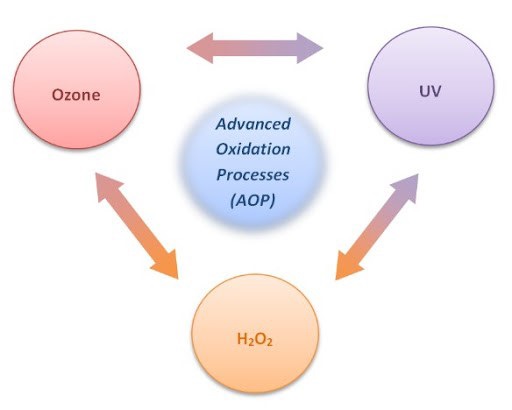
State-of-the-art AOP systems use or combine two or more oxidizing agents to create hydroxyl radicals, the ultimate oxidant for elimination of organic pollutants. We design and manufacture the widest range of ultraviolet, ozone and AOP systems incorporating the most sophisticated electronics and lamp technologies available to meet the needs of industrial and municipal customers. LiAN TADBiR experts partner with customers to achieve the best overall answer to meet treatment requirements safely and economically.
How Advanced Oxidation Processes Work
AOP are aqueous phase oxidation methods consisting of highly reactive species used in the oxidative destruction of target pollutants. AOP creates a more powerful and less selective secondary oxidant, hydroxyl radicals, in the water. This secondary oxidant can cause the oxidation of most organic compounds until they are fully mineralized as carbon dioxide and water. The hydroxyl radical has a much higher oxidation potential than ozone or hydrogen peroxide and usually reacts at least one million times faster, thus leading to a smaller contact time and footprint.
HOW IT WORKS?
AOP combinations provided by LiAN TADBiR include
- O3
- O3 / UV
- O3 / H2O2
- UV / H2O2
- UV / O3 / H2O2
Target Pollutants
- 1,4 Dioxane
- MTBE
- NDMA
- Atrazine
- Diuron
- Diclofenac
- Carbamazepine
- Ibuprofene
- Hormones
- Geosmin
- MiB
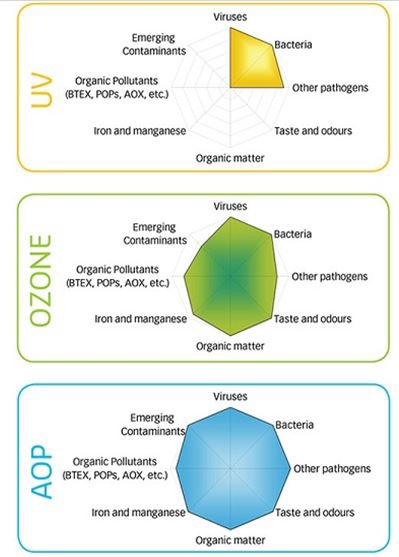
Municipal & Industrial Water Management
Due to industrial and demographic pressures, the use of AOP’s in water treatment is expanding for a number of critical users including the oxidation or removal of:
- Industrial chemicals
- Pharmaceuticals
- Endocrine Disrupting Compounds (EDC’s)
- Personal Care Products (PCP’s)
- Pesticides
- Toxic compounds
- Odor, color and taste
- Pathogens
- Persistent Organic matter
These contaminants are known threat s for aquatic ecosystems and human health and have become a major issue for water utilities around the world.
Current treatment practices in existing wastewater plants struggle to eliminate these pollutants and meet current and future regulations. AOPs, thanks to their high oxidation potentials, have proved to be an efficient solution for the removal of these persistent organics.