


- Home
- Companies
- First General Technology Co., Ltd. ...
- Products
- FGT - Model ECC200 - Artificial ...
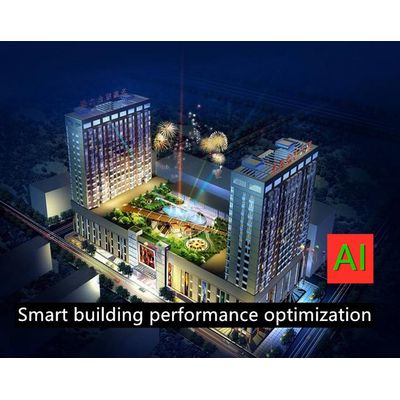
FGT - Model ECC200 -Artificial Intelligence Building System
ECC200 AI today is all about building a technology that captures what we do as humans and tries to automate it using machine learning to build models based on training data on past behavior. Another industry term I see is "augmented intelligence". It`s about using AI to help us do our jobs better rather than replace us, such as making decisions faster using large amounts of data.
System functions:
- Weak current equipment monitoring
- MC automation
- Property Management Automation
- Community announcement automation
- Community Collection Automation
- Community Shopping Automation
- Applicable multi-language support: Chinese/English/Japanese/Vietnamese/Thai
- Compatible with multinational environments
Smart Buildings: Buildings of Hope for the Future
Smart buildings are a buzzword these days. But what`s going on here? Well, we don`t have a generally accepted definition to cite. In short, a smart building can be called an automated structural model capable of responding to real-time events. The idea behind the concept is to provide users with a hassle-free experience while using energy efficiently. Earlier, buildings were deployed with CCTV surveillance cameras, smoke detection sensors and other light sensors to improve safety and efficiency. There are several other smart sensors embedded in buildings today, such as temperature, humidity, CO2, etc. Cameras and actuators are installed throughout the building. The data generated by these sources connects different building components and allows them to interact with each other. With such comprehensive data and intelligence, building managers have full transparency and control over the different systems of the building. With occupant comfort, safety and security in mind, managers can fine-tune operations to enhance tenants’ living experience.
Smart buildings can not only fully take care of the comfort and safety of occupants, but also save energy and finances. Now, combined with the Internet of Things, AI is also helping to make smart buildings smarter than ever.
Building developer smart houseActively optimize energy consumption smart house decoration
Based on these factors, an AI-based energy management platform can determine when there is less sunlight or larger users to blow the right amount of air into the room. It can even determine, based on usage patterns, a reasonable time to pre-cool buildings when energy prices are at their highest or reduce cooling when activity is low.
Add functional selling points and increase real estate selling points
By identifying anomalies and inconsistencies in data collected by IoT devices and sensors, AI and deep learning are ideal for detecting faults and failures in office building systems. Once these symptoms are identified, AI can be used to determine the cause and provide a diagnosis.
Mobile apps and wearables solve this problem by enabling occupants to connect directly with building operators. Building owners can now directly understand how occupants use the building and assess their comfort level through direct tenant feedback.
The data collected from these devices can be added to AI as variables to build advanced models of how buildings achieve their higher worker productivity, which in the long run will lead to tenant retention and other benefits for building owners. benefit.
Head of Household | Smart HouseAI voice chat instead of typing
Voice calls can turn on TV lights and control smart home hardware
User history traces active call history operating mode records
Eliminate manual setup uncertainty and create more accurate operating patterns for users
smart family
home automation(Home automation), refers to thebuilding automation, also known assmart home(smart home). There is also the name of Domotics in English. A home automation system can control lights, windows, temperature and humidity, etc. It may also include home security, such as access control or alarms.[1]Home automation has three main advantages: 1) Reduced environmental impact: Reduce energy and water usage by controlling window placement, utilizing natural light, ventilation or shading, ensuring that power and light are only activated when power and light are needed. 2) Improve the quality of life: Smart home provides proper heating, cooling, lighting and watering (3) Use automation system in smart home, save electricity and water bills, provide a sustainable indoor environment[2].
when connectedInternetAfter that, home devices become smartnetworkimportant ingredients. A typical home automation system uses a centralized hub or aboxer(Gateway) to connect. Use the terminal on the wall,smartphone,personal computerorWeb pageinterface as a control systemuser interface, they may also reachremote(Off-site) operation.
Although there are many competing manufacturers, there are not many common industrial standards in the world, and the smart home space is seriously fragmented.[3] Manufacturers sometimes prevent independent implementations through withholding documents and lawsuits.[4]
The market value of home automation in 2013 was about $5.77 billion, and it is predicted to reach $12.81 billion in 2020.[5]
At present, the platforms with the most users in the world are Amazon`s Alexa, Google`s Google Home and Apple`s Homekit. In order to solve the problem of smart home fragmentation, Google and Amazon, Apple and Zigbee Alliance jointly launched the "Project Connected Home over IP" program.
According to Li[8]The statement of et al. There are three generations of smart homes:
- 1st generation: hasproxy serverwireless technologies such asZigBee automation;
- Second generation: Artificial intelligence controls electronic devices, such asAmazon Echo, Apple Homepod, Google Home, Xiaomi AI Speaker (Xiao Ai), Xiaodu Speaker, Tmall Genie;
- The third generation: robot companions that can interact with humans, such as Robot Rovio,Roomba;