


- Home
- Companies
- Sterlitech Corporation
- Products
- CellQART - Cell Culture Inserts
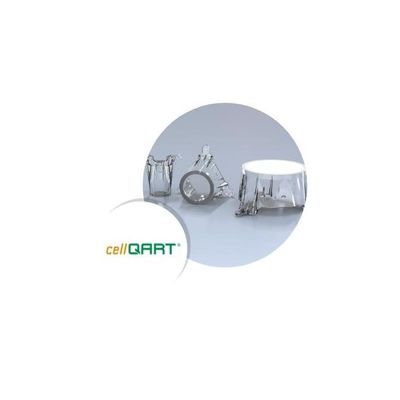
CellQART - Cell Culture Inserts
CellQART® Cell Culture Inserts combine the latest technology and high-quality materials to bring you cell culture products at affordable prices.
- Project based customization possible (R&D project organization and plastics & membrane production under one roof)
- Check 100% in-house production (true OEM - different to other players in the market)
Cell culture refers to the removal of cells from an animal or plant and their subsequent growth in a favorable artificial environment. The cells may be removed from the tissue directly and disaggregated by enzymatic or mechanical means before cultivation, or they may be derived from a cell line or cell strain that has already been established.
After the first subculture, the primary culture becomes known as a cell line. Cell lines derived from primary cultures have a limited life span (i.e., they are finite; see below), and as they are passaged, cells with the highest growth capacity predominate, resulting in a degree of genotypic and phenotypic uniformity in the population.
First generation researchers use live animal models for research, which for the most part is now consider cruelty. Cell culture inserts, also known as permeable supports, are an essential tool for the study of both anchorage-dependent and independent cell lines.
One can use cell culture inserts to:
- Create a cell culture environment that closely resembles an in vivo state
- Allow polarized cells to carry out metabolic activities in a more natural manner because the cells feed both apically and basolaterally
- Co-culture cells with or without cell-to-cell contact
- Design a diversity of experiments using various pore sizes, membrane types, and coatings
Cell Culture Inserts are convenient and easy-to-use devices for studies of both anchorage-dependent and anchorage-independent cells. These inserts provide independent access to both sides of a monolayer, thus giving researchers a versatile tool to study transport and other metabolic activities in vitro
- Cell Transport
- Growth and Differentiation
- Cell Migration
- Cancer Research
- Co-Culture
- Substance interaction between cells
- Cell Therapy
- Stem Cell
- Skin Models
- Epithelial cell growth