


- Home
- Companies
- LiqTech Holding A/S
- Products
- LiqTech - Ceramic Membrane Layer
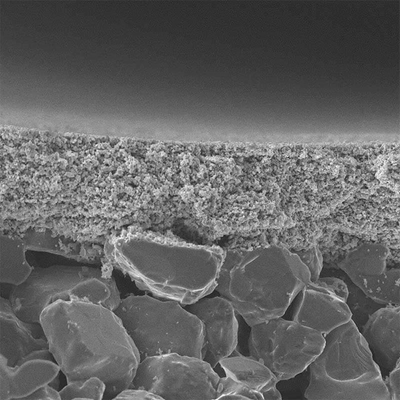
LiqTech - Ceramic Membrane Layer
Ceramic membrane technology is perfect for liquid filtration and diesel particulate filters (DPFs) for the control of soot exhaust particles from diesel engines.
The actual membranes are formed on the walls of the flow channels extending through the porous ceramic structure of the element by slip casting a specific coating material of ceramic particles according to the desired pore size and distribution.
The coating material containing the silicon carbide is dried and sintered. This process ensures a strong bond with the carrier material and provides the silicon filter membrane with its unique ruggedness and durability. Several layers may be deposited on top of each other in order to reach the desired combination of membrane pore sizes and water flux.
- Highest flux for any membrane material
- The high flux is reached through high membrane porosity (~45%) and a material with a low resistance to transport of water and a low contact angle. Reduce your footprint and system costs (fewer pipes, valves, etc.)
- Chemically inert pH 0-14
- No limitations, fast cleaning, reduced downtime during Cleaning in Place (CIP), filtration of acids and alkalis.
- Thermally resistant up to 800°C
- Steam cleaning, more efficient chemical cleaning, and high-temperature applications.
- Hydrophilic material (water-loving)
- Unmatched performance in oil/water separation.
- Isoelectric point pH 2.4
- Unmatched performance in oil/water separation – To some extent reduces fouling, easier to clean.
- Extremely hard & durable material 2930 +/- 80 kgf/mm³ (Vickers scale)
- Robust and long lifetime, less downtime and maintenance, stable operation, cleaning with shock pulses, and hard material.
- Abrasive Feeds
- Our silicon filter membranes are extremely durable, so abrasive feeds won’t damage the membrane.
- Low power usage and low pressure
- Our membrane systems typically use around 7 psi or 0.5 bar of pressure (depending on the feed water), so you save money on pumps and energy
- Long membrane life
- The silicon filter membrane is extremely durable (second hardest material in the world).
- Low operational cost, low total cost of ownership
- Wastewater
- Produced water
- Pre-RO filtration
- Polymer flooded streams
- Control of soot exhaust particles
- ... and many more