


- Home
- Companies
- Tholander Ablufttechnik GmbH
- Products
- Tholander - Counter Current Scrubber
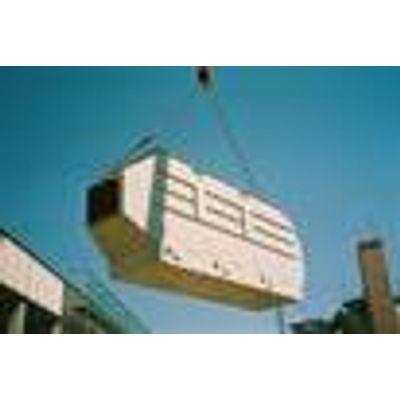
Tholander - Counter Current Scrubber
Effective scrubber with packing material. The scrubber can be optimally adjusted to clean gas values by variation of packing material and dosage of chemical agents in the washing liquid. Counter current scrubbers offer a competitive solution for "single substance problems". With our design we can ensure that contaminants will be removed efficiently from the waste air.
- Little space requirements
- Separation result > 99% with heavily loaded waste air
- Little pressure drop because of heavy-duty packing material
- Easy to maintain user interface
- Dosing of chemicals as needed
- Optimized energy consumption
- Level switch in pump sump
- Dry run protection
- Control of nozzle pressure
- Automatic, data controlled chemical dosing
- Automatic desalination
- Frost protection for outdoor installation
- Little pressure drop
- Little risk of clogging through choice of right packing material
- Plant made of corrosion-resistant and chemical-resistant FRP
- Optimized for varying raw gas loads
- No adjustment phase
- Active references of each size
- Worldwide delivery, installation and service
The washing liquid flows from top to bottom through the scrubber packing into an embedded sump. The gases to be scrubbed are conducted from bottom to top through the filling material (counter current). The application of the counter current principle leads to the highest scrubbing rates for toxic gases and odours. This way more than 99 % of e.g. chlorine gas, ammonia and hydrochloric acid vapour can be removed.
Typical applications are the separation of organic and anorganic acids like (HCl, HF, SO2, NOx, acetic acid) as well as H2S, ammonia and water soluble, organic compounds (Acetone, Alkohols among others).
Using a multi-stage cross-flow scrubber especially makes sense…
- in case of complex and variable waste air compositions
- as pre-treatment stage in front of a biofilter/activated carbon filter
- for separation of dust particles and gaseous compounds at the same time
- if redundancy is required (the failure of one washing stage can partly be compensated by the following stages)
- if biological scrubbing is an environmentally friendly and cost-effective alternative