


Wuxi Tengye Machinery Co., Ltd
- Home
- Companies
- Wuxi Tengye Machinery Co., Ltd
- Products
- Tengye - Cylinder
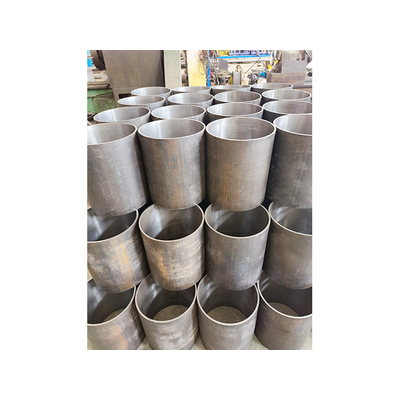
Tengye - Cylinder
A cylinder is a device that converts the pressure energy of compressed air into mechanical energy and belongs to pneumatic actuators.
Most popular related searches
compressed air
conveyor belt
excavator bucket
pneumatic actuator
gas cylinder storage
ventilation control
controlled ventilation
materials handling system
excavator pallet fork
bucket excavator
Main structure:
- Cylinder barrel: The main body of a cylinder that guides the piston to move in a straight line.
- End cap: Seal both ends of the cylinder, forming a closed space with the cylinder.
- Piston: It moves back and forth within the cylinder, separating two chambers.
- Piston rod: connects the piston to external loads and transmits mechanical energy.
- Seals: Ensure the sealing of the cylinder to prevent gas leakage.
Working principle
- The cylinder drives the piston movement through compressed air to achieve mechanical energy conversion.
- Single acting cylinder: Only one end has a piston rod, and compressed air enters from one side to push the piston to move, returning by spring or self weight.
- Double acting cylinder: alternate gas supply from both sides of the piston to achieve bidirectional movement, with greater output force and wider application.
Classification
- There are various types of cylinders, suitable for different scenarios:
- According to the action method:
- Single acting cylinder: Unidirectional movement, requires external reset.
- Double acting cylinder: bidirectional motion, strong controllability.
- By function:
- Buffer cylinder: Buffer when the piston reaches the end point, reducing impact.
- Rotary cylinder: The piston drives the output shaft to rotate, suitable for rotary motion.
- Gas liquid damping cylinder: Combining the cylinder and hydraulic damping, it moves smoothly.
- Rod free cylinder: without piston rod, driven by magnetic field or cable, suitable for long-distance movement.
Application scenarios
- Cylinders are used in various fields due to their advantages of simple structure, easy control and maintenance, and no pollution
- Industrial automation: Drive conveyor belts, rotating tables, lifting tables, etc. to achieve material handling and assembly.
- Mechanical equipment: excavator buckets, forklift forks, stamping press heads, etc., providing linear or rotational power.
- Robots: Drive joint movements to achieve precise control.
- Other fields: aerospace (rudder control), medical (ventilator drive), military (artillery control), etc.