


- Home
- Companies
- Influx Technology
- Products
- Influx Rebel - Model LT - Data Logger
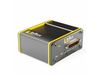
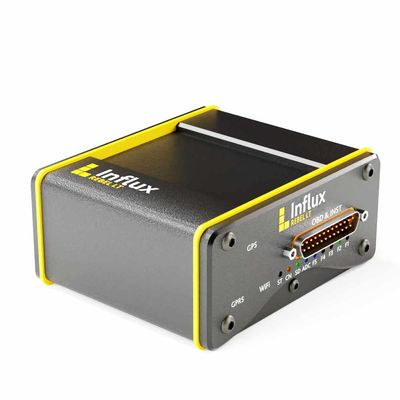
Influx Rebel - Model LT -Data Logger
Our "Out-the-Box" solution for in-vehicle data logging.
The Rebel LT is a state-of-the-art data logger supplied with our 'DiaLog' software; an easy-to-use data analysis tool. It is the most cost-effective and professional-grade R&D data logger currently available in the market! The Rebel LT comes equipped with advanced automotive protocols, intelligent power management, and high-level performance that's typically found in much more expensive data loggers. Designed with precision and user-friendliness in mind, it empowers engineers, researchers and developers.
Advanced Diagnostics with UDS and XCP:
- Go beyond the basics: Unlike standard OBD tools, Rebel LT offers advanced capabilities for in-depth diagnostics and control through UDS (Unified Diagnostic Service) and *XCP (Universal Measurement and Calibration Protocol).
- Direct communication with key components: Access data directly from the source, including the Battery Management System (BMS), Electric Motor Controller, and DC-DC Converter, providing valuable insights into their health and performance.
- Optimise and refine: Leverage UDS and *XCP to calibrate ECUs, troubleshoot complex issues, and optimise your vehicle's behaviour for improved performance and efficiency.
*XCP requires (DiaLog Plus)
Effortless Data Acquisition and Analysis:
- Synchronised CAN Bus Data: Capture data from two CAN buses simultaneously, providing a complete picture of your vehicle's interconnected systems.
- Comprehensive File Support: Utilise industry-standard file formats such as A2L, ODX, and DBC, ensuring compatibility and ease of integration with your existing tools and workflows.
- Robust J1939 Support: Benefit from full J1939 protocol integration, including DM1 and BAM messages, for unparalleled insights into heavy-duty vehicles health and status.
- Digital and Analog Inputs: Gather additional data from sensors and devices with built-in digital and analog input channels.
- Intelligent Event Triggers: Automate data collection based on specific events, ensuring you never miss critical information.
- Industry-Standard File Formats: Export your data in formats like MDF, MDF4, BLF, and MAT for seamless integration with your existing analysis tools.
- Advanced Graphical Oscilloscope: Gain deeper insights with clear visualisations of your data, accelerating your vehicle R&D and development.
- Isolation: The USB port is electrically isolated, protecting your equipment and data.
- Gateway: Move signals from one CAN bus to another whilst data logging.
The Rebel LT empowers you to go beyond simply collecting data, it unlocks a new level of understanding.
- 2x CAN buses
- 3x digital I/O channels
- 4x Analog Inputs (calibration tool supplied)
- SDHC card data storage maximum size 128GByte
- ABS enclosure
- Connects to Module Analyser for on-line CAN Analyser functionality
- J2543 Pass thru drivers available
- Supplied with Dialog Configurator, freely distributable data logger configuration application for Windows
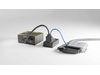
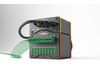
The Rebel LT can be convenitenly combined and stacked with Influx Technology’s K-Box for additional sensors and thermocouples.
Brake Pad Wear Analysis
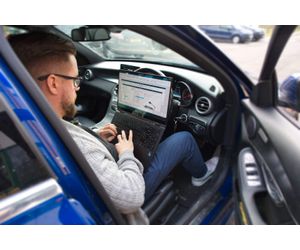
A truck fleet operator observed that the brake pads on their trucks did not meet the expected lifespan. The truck manufacturer was tasked with investigating the issue. By installing multiple Rebel LT data loggers across the entire fleet, the manufacturer could analyse CAN data during the evaluation period. Upon analysing the data, it became evident that drivers were not adequately utilising the vehicle's retarder system. Retarders can reduce brake pad wear by up to 80%. This is because they can be used to gradually slow the vehicle down, reducing stress on the brakes. As a result of the data analysis, a warranty claim against the truck manufacturer was avoided, and extra training sessions were arranged for the drivers. The Rebel LT data loggers enabled the manufacturer to gain valuable insights into driver behaviour and vehicle performance, enabling them to prevent premature wear and improve vehicle reliability.
EV double-decker bus climate control
In responding to the challenges posed by a growing urban commuter population, public transit authorities introduced modern EV double-decker buses. However, the unique multi-level design brought unforeseen climate control issues. Temperature disparities between upper and lower levels, discomfort in specific zones, inadequate airflow due to increased passengers and frequent door openings, along with electrical strain on compressors, lead to failures and battery drain. To address these challenges, Influx deployed the Rebel LT with DiaLog software and the K-TC 32 device. This involved over 100 temperature measurement points, multiple-day route profiling, alternate set-point evaluation, and the introduction of dual, independent climate control systems. The Influx DiaLog software allowed seamless analysis of multiple TC channels in a unified interface, providing real-time data streams, visualisation, and analytics. This meticulous testing led to targeted design improvements, ensuring consistent and comfortable conditions for passengers on both levels.
Verifying Analog and CAN Signal Integrity
To ensure accurate pressure data transmission over the CAN bus, a Rebel LT datalogger was installed to simultaneously capture analog sensor data and CAN signals. To bridge the analog and CAN data streams, the Rebel LT seamlessly interfaced with the vehicle's CAN bus via the OBD port. Leveraging Dialog software, we loaded a vehicle DBC file to decode CAN signals, enabling accurate pressure value logging. This enabled the simultaneous recording of CAN and analog data, enabling real-time correlation of sensor data through Dialog's oscilloscope feature. Dialog's graphical analysis revealed a perfect match between analog sensor measurements and CAN bus digitised pressure data, ensuring seamless data transmission and validating the integrity of sensor readings throughout the pressure range. This remarkable result reaffirmed the reliability of the system, demonstrating the effectiveness of combining physical analog measurements with digital network capabilities to achieve end-to-end data integrity assurance.
Resolving Vehicle Dashboard Warning Issues
To effectively tackle the persistent issue of sporadic dashboard warning symbol alerts reported by drivers, the Rebel LT data loggers were able to gain insights into the vehicle's display system. The Rebel LT data loggers seamlessly integrated with the vehicle's CAN bus, capturing detailed data streams related to display status messages. Leveraging DBC files, these messages were decoded into human-readable display data. DiaLog software played a crucial role in visualising, recreating, and playing back the exact symbols, graphics, alerts, and text displayed on the dashboard and centre console screens, replicating the driver's experience. The Rebel LT data loggers created an invaluable historical record, showcasing every element displayed to the driver with millisecond timing resolution. This level of detail enabled engineers to pinpoint the precise timing of warning occurrences, empowering them to diagnose issues with pinpoint accuracy. This comprehensive approach to dashboard warning system troubleshooting, significantly enhanced driver confidence and system reliability. By resolving the underlying issues, drivers no longer experienced unpredictable warning alerts, and the overall performance of the vehicle's display system was significantly improved.
Influx Technology's Vehicle Insight Program
We needed the benchmarking (Vehicle Insights Program) to gain access to more CAN signals. These values are needed to improve (or enable at all) our model for longitudinal vehicle control. Without those signals a precise control of the vehicle dynamics via our actuators is not possible. With those signals, we can build a better model of the vehicle's state.