


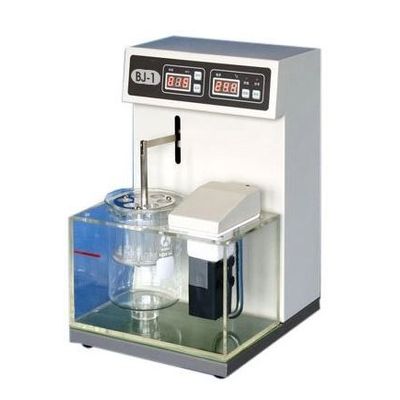
SaintyCo - Model BJ-1/2/3 -Disintegration Tester for Solid Dosage Forms
A disintegration tester is an essential instrument in pharmaceutical quality control, designed to assess the disintegration time of solid dosage forms like tablets and capsules. This apparatus uses a liquid bath to determine the time required for a dosage to break down into smaller pieces, providing crucial bioavailability and safety information. The device's components, including the bath, microprocessor unit, control panel, and heating system, work together to ensure precise testing conditions, aligning with USP and other pharmacopeial standards. It offers various configurations, such as semi-automatic and fully automatic models, catering to different production capacities. The tester aids in consistent dosage batch results without the need for in vivo testing, making it an efficient and cost-effective solution for the pharmaceutical industry. Understanding factors like lubricants, fillers, and compression force can impact disintegration time, informing the use of disintegrating agents to optimize test outcomes. Calibration and maintenance are crucial to achieving accurate and reliable results, ensuring long-term operational efficiency.
Model BJ-1/2/3 Series Disintegration Tester Series are the latest development and production of our company, which is the requisite instrument in detecting disintegration of solid dosage products. The design and technical specs of these testers reached or surpassed the advanced level of this kind of instrument in the world. All our lab instruments are engineered and built in according to USP Specifications.
- Disintegration series used a MPU to control all operations. The bath liquid can achieve an even temperature.
- Each test station is driven independently. It stops running at the end of a test.
- All components are selected of high quality brands.
- It can be operated conveniently by using keys. Its measurement results are displayed by LED.
- High quality designed and ruggedly built to meet the USP Codes.