


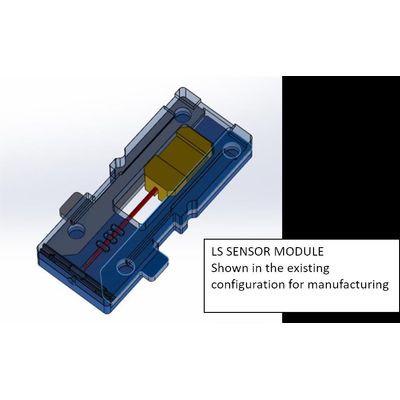
Electrochemical Biosensor
Over many years, Pepex has developed an extensive IP portfolio of over 300 global patents that protect our proprietary manufacturing process and unique biosensor design capable of detecting hundreds of unique biomarkers including COVID-19, Sepsis, HIV, Ebola, Hepatitis, and other life-altering antigens. The Pepex immuno-sensor can theoretically detect picomolar levels of antigen or antibodies in salvia or interstitial fluid such that the accuracy level of the test will easily exceed the current threshold of 95%. More specifically, our Lansing Sensor (LS™) technology is by design intended for use as an enzymatic or an immunologic probe, and based on recent worldwide events, Pepex is prepared to commercialize two COVID-19 products – one to detect the virus antigens (infections) and one to detect the virus antibodies (immunities) as described below.
COVID-19 virus initially presents itself in saliva, mucous, and sputum. In order to detect COVID-19 virus antigen in saliva, we will use an antibody for the SARS-CoV-2 virus on our sensor. The test would be extremely sensitive and highly specific for only the intended virus. Once a sufficient sample volume is obtained, and without any further patient contact or interaction, the fluid collection is immediately analyzed using Pepex’s patented CCM® technology, and a quantitative readout is produced.
To detect immunity (previously infected), the test paradigm is reversed. In this SARS-CoV-2 virus antigens on the sensor would detect for antibody presence in the patient. Being able to test for both Immunoglobulin M (IgM) and Immunoglobulin G (IgG) would allow further distinguishing recent versus remote infections, respectively. The COVID-19 antibody testing in interstitial fluid using Pepex’ patented Lansing Sensor (LS™) design automatically penetrates skin with a painless needle to a sufficient depth and then, as blood serum or interstitial fluid fills the test chamber, the needle retracks, removing contact with the patient. Without any further patient contact or interaction, the fluid sample is immediately analyzed using Pepex’s patented CCM® technology, and a quantitative readout is produced.
Pepex has developed significant proprietary advancements in manufacturing technique for the 3Electrode, Lancing Sensor, and Aerosol Jet Printing (AJP) platform. This unique production process provides significant enhancements to precision through the science of nanotechnology, adding meaningful benefits for high volume output while minimizing cost issues in all of our products. Prototype research has already been completed for both electrochemistry and engineering using the AJP techniques, but is redacted from this report on the advice of Patent Counsel.