


- Home
- Companies
- Sülzle KOPF GmbH
- Products
- Sülzle-KOPF - Fuel Cell Heating System
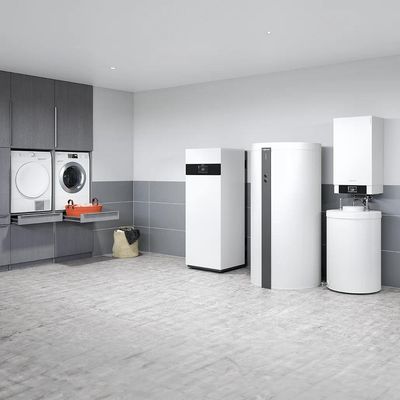
Sülzle-KOPF - Fuel Cell Heating System
Water vapor instead of smoke from the chimney. The technology on which modern fuel cell heating is based is almost two hundred years old. Heat and electricity are generated by the reaction of oxygen with hydrogen. No smoke comes out of the chimney, but rather water vapor. The hydrogen required for the reaction is produced within the fuel cell. Natural gas, biogas or liquid gas is usually used for this process, known as reforming. A fuel cell heating system also releases CO2 , but considerably less than a gas condensing boiler . Powered by green hydrogen, a fuel cell heating system is climate-neutral. However, hydrogen is currently difficult to obtain.
Designs
There are two types of fuel cell heaters: Solid oxide fuel cells work with high operating temperatures of 650° to 1000° Celsius and convert the fuel internally into hydrogen. They are more efficient and save energy compared to proton exchange membrane fuel cells. These reach operating temperatures of 70 to 90 degrees and require an external reformer to convert the hydrogen. Both systems run safely and require little maintenance.
Combinations
For increased heat requirements during the heating season, the combination with a gas condensing boiler is possible. The combination of fuel cells and photovoltaics also proves to be useful in practice . Their modules provide electricity in the house even on hot days when the fuel cell is not active.
Fuel cell heaters are designed for continuous operation and cover the basic heat and electricity requirements within a house. They require little space, run quietly and without vibration. This makes them suitable for single-family homes without basements. The market offers devices for small residential units, usually combined with a gas condensing boiler. This takes over heat production when demand increases.