


- Home
- Companies
- Systel Instrumentation Service Pvt. ...
- Products
- Systel - Horizontal Inclinometer
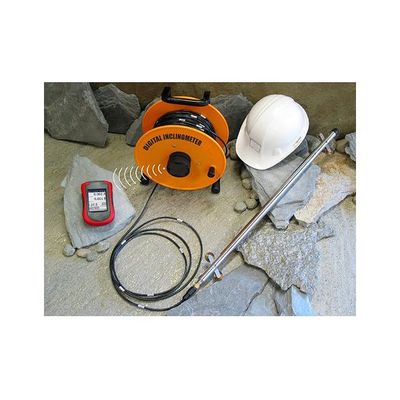
Systel - Horizontal Inclinometer
Systel Horizontal Inclinometer used to measure vertical movement and settlement associated with many types of structure along the length of the casing.
- Dams
- Bridge Abutments
- Storage Tanks
- Cut slopes
- Embankments
Portable readout equipment or in-place sensors suitable for automatic data acquisition.
Horizontal inclinometers are used to obtain high resolution profiles of settlement or heave. Typical applications include monitoring settlement and heave under storage tanks, embankments, dams, and landfills. These instruments are used to monitor the magnitude, direction, and rate of subsurface deformations. Typical applications include monitoring the rate and extent of horizontal movement of embankments or cut slopes, determining the location of an existing failure surface, and monitoring deflection of retaining walls. Inclinometers can be installed at several levels on an embankment or cut slope to define the extent and nature of subsurface movements. An inclinometer consists of a grooved casing grouted vertically in a borehole. The role of the casing is to deform with the surrounding ground such that readings taken within the casing reflect accurate measurements of ground movement.
Typically the grooves are aligned parallel to the direction of movement. The probe is periodically inserted down the casing and deflection of the casing is measured. The inclinometer probe contains accelerometers at either end to measure the parallel and perpendicular tilt of the casing. Successive measurements are plotted to provide a chronological indication of the extent and rate of subsurface movements.
An embankment or cut slope to define the extent and nature of subsurface movements. An inclinometer consists of a grooved casing grouted vertically in a borehole. The role of the casing is to deform with the surrounding ground such that readings taken within the casing reflect accurate measurements of ground movement. Typically the grooves are aligned parallel to the direction of movement. The probe is periodically inserted down the casing and deflection of the casing is measured. The inclinometer probe contains accelerometers at either end to measure the parallel and perpendicular tilt of the casing. Successive measurements are plotted to provide a chronological indication of the extent and rate of subsurface movements.
Standard Range ±53°
Resolution ±0.025 mm/500 mm (±10 arc seconds)
Total System Accuracy ±6 mm/30 m
Temperature Range 0°C to +50°C
Length × Diameter 671 × 45 mm
Casing Size I.D. 61 to 89 mm