


- Home
- Companies
- SensorsONE Limited
- Products
- Hydrostatic Level Sensors
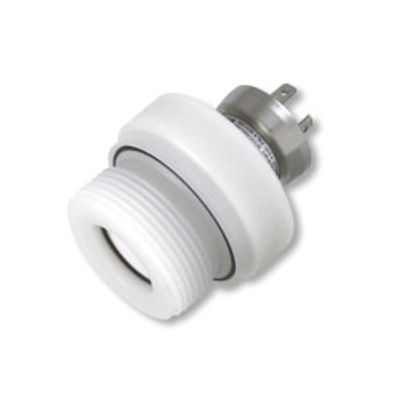
Hydrostatic Level Sensors
Hydrostatic pressure sensing devices for measuring liquid level and converting it to an electrical signal to send to other instrumentation. Hydrostatic level sensors for measuring the pressure generated by a static head of liquid. Use hydrostatic level sensors to measure fluid level in storage tanks, processing vessels, header tanks, pump inlet head and other applications where hydrostatic pressure is used to determine liquid height.
Hydrostatic level sensors are pressure sensing devices specifically designed for use on liquid level measurement applications.
All liquids which are under the influence of gravity generate a hydrostatic pressure. This pressure is similar to the weight of a solid object, but because of the fluid state it is possible to measure how the weight of the liquid varies with height.
The resulting pressure at different heights is directly proportional to the weight of a liquid between the surface and a specific height point. The weight of the liquid can be derived from the mass and force (gravity). The mass can be derived from the density and volume of the liquid. The volume of a liquid can be derived from the dimensions of the vessel containing the liquid. If the vessel has a fixed length and width, then the height is directly proportional to the volume, mass, weight and therefore the pressure.
A hydrostatic level sensor is an instrument for measuring the height of a liquid and converting it to an electrical signal. The hydrostatic level signal output can then be utilised by other instrumentation to display, monitor, log or control the liquid level.
There are many different types of technology used to measure liquid level, there are sensors that can be mounted above the liquid such as ultrasonic or radar which bounce a sound or electromagnetic wave off the surface of the liquid and use the travel time to determine the distance from the liquid surface.
For liquid filled tanks a pressure sensor can be installed in a hole at the bottom of the tank which measures the hydrostatic pressure generated by gravity acting on the liquid.
Another method is to lower a hydrostatic level sensing probe into the tank and immerse it in the liquid to measure the pressure generated by gravity acting on the surrounding liquid.
- Easily fitted at ground level to any port or take off, which is also convenient for maintenance
- No protrusion inside vessel
- Not affected by any surface disturbances such as turbulence, foaming, vibration
- Small compact size possible
- Compatible for conductive or non-conductive fluids
- Flush diaphragm types prevent clogging and works with thick liquids and slurries containing solids
- Pressurised or vacuum sealed vessels require a more complex installation
- SG or density change affects calibration
- Flush diaphragm types vulnerable to mechanical damage from debris, cleaning processes
- Requires regular calibration due to gradual error shifts
- Installed in a position below the lowest required liquid level
- Fittings must be leak tight
- Diaphragm movement vulnerable to clogging, wear and tear
- High cost