


- Home
- Companies
- Cavitron vom Hagen und Funke ...
- Products
- Cavitron - Machines for High-Efficiency ...
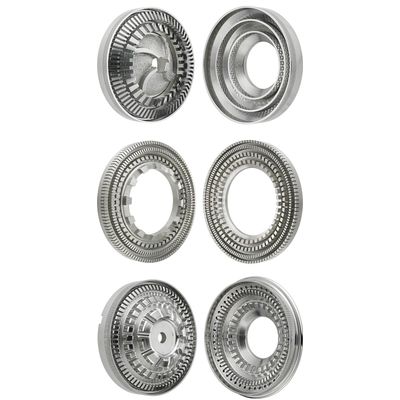
Cavitron - Machines for High-Efficiency Process Engineering
The operating principle of all Cavitron machines is based on the rotor-stator system of the mixing tools. High peripheral speeds and the interaction of the coaxially arranged rotors and stators create high shear gradients and high-frequency pressure changes in the processed product.
Various geometries of the mixing tool systems and a wide range of machine sizes form the basis of perfect customisation. From laboratory scale to large-scale continuous industrial operation: we can offer a solution for virtually every need in wet mixing.
Our machines achieve the desired result through simultaneous physical processes and the metered energy input. Our rotors and stators have passage openings, in the form of slots or cylindrical passages, with a minimum diameter of up to 0.5 mm. These »chambers« fill with the material being processed, which has been centrifugally accelerated by the rotor.
The rotor, rotating at speeds of up to 50 m/s, propels the material carried in the rotor chambers into the stator chambers. During »filling«, the stator chambers are closed in succession by the larger rotor ring, preventing the product from escaping. During this time, there is an overpressure of approximately 10 bar in the chambers. A thousandth of a second later, the rotor releases the chamber outlet – the material relaxes abruptly!
Cavitation in the micron range results in the processing of the product due to the energy transfer: drive → shaft → rotor-stator system → material being processed.
This process repeats itself, depending on the task and machine design, millions of times per second. The difference between our machines and conventional mixers becomes clear here. Despite the high number of different geometries of rotor-stator tools and the seemingly endless combinations, three fundamentally different systems can be distinguished.
Cavitron Nozzle System:
In-line centrifugal reactor with radial bores for the finest dispersions.
Cavitron Chamber System:
In-line mixer with a high dispersion rate and intensive mixing effect.
Cavitron Cone System:
Wet mill for grinding and dissolving processes.
The machines of the Cavimix type operate on the same principles. However, due to the open rotor-stator geometry and the vertical arrangement of the tool below a support container, they are suitable for different processes.