
WEHRLE-WERK AG
- Home
- Companies
- WEHRLE-WERK AG
- Products
- Membrane Processes System
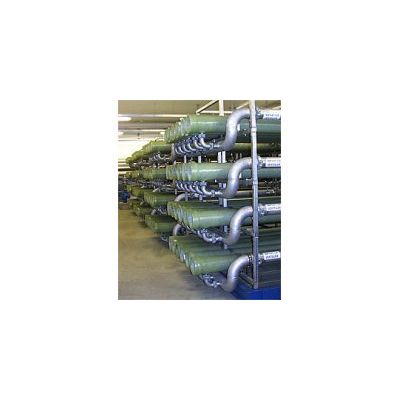
Membrane Processes System
FromWEHRLE-WERK AG
Water Recycling in the Paper Industry Without a system for recycling water, freshwater consumption in the paper industry would be more than 100 litres per kg of paper. The introduction of internal recycling systems and, where possible, the use of biologically treated wastewater can reduce the use of freshwater down to ca. 12 litres per kg of product.
Most popular related searches
drinking water
biological wastewater treatment
water reducing consumption
biological treatment
water hardness
process water
water recycling
water softener
recycling system
water softening
The wastewater loading from used paper handling plants is particularly high. New production plants show that, with help from membrane technology, it is clearly possible to reduce the specific water consumption
- Clearly reduce water consumption
- Produce high quality process water
- Increase the running times of paper machinery.
Economic produciton of paper can be improved through the installation of membrane technology.
Example: Palm-Eltmann Paper Factory
When the Palm Paper Factory increased their production capacity of newspaper by 420,000 t/a the existing biological treatment plant was likewise extended. A sand filtration bed was installed to remove any biological solids that were carried over from the biological unit. Following this step the water was recovered as process water by means of a nanofiltration plant
This process combination ensures that any COD, colour or AOX that remain in the water following biological treatment are completely removed. It is therefore possible to reuse this water in the production process at extremely sensitive points in the paper making process, whilst at the same time ensuring that all consents are met for the direct disposal of wastewater into the Main River.

Nanofiltration for Softening Drinking Water
An overwehlming proportion of freshwater consumed in German households is not used as drinking water, but is instead used in various household tasks. In these circumstances, a high water hardness proves to be a major disadvantage for the consumer. Calcium deposits on household appliances and sanitary fittings are particularly unwelcome. In addition, a high water hardness leads to a higher consumption of washing and cleaning chemicals, as well as salts used in the operation of ion exchangers, for example in washing machines.
For the average household (240 m³/a)), it has been estimated that a reduction in hardness (ca. 1.25 mmol/l) can lead to a minimum cost saving of 78 € per annum.
The consequential increase in the cost of treating drinking water is negilible. The application of nanofiltration in the softening of freshwater has already begun in Germany. The capacity of the plants already installed is almost 1.5 M m³/year. Over the next few years plants with capacities of up to 50 M m³/year will be built.
For the average household (240 m³/a)), it has been estimated that a reduction in hardness (ca. 1.25 mmol/l) can lead to a minimum cost saving of 78 € per annum.
The consequential increase in the cost of treating drinking water is negilible. The application of nanofiltration in the softening of freshwater has already begun in Germany. The capacity of the plants already installed is almost 1.5 M m³/year. Over the next few years plants with capacities of up to 50 M m³/year will be built.
An overview of the advantages of nanofiltration:
- Selective separation of hardness constituents
- Separation of bacteria and viruses
- Reduced energy consumption
- Reduced expenses in consequent treatment
- Reduced investment and operating costs
- Unloaded retentate (Direct disposal possible)
- Environmentally friendly solution
- Reduced problems in corrosion
- Many years of experience with membrane techology and nanofiltration