


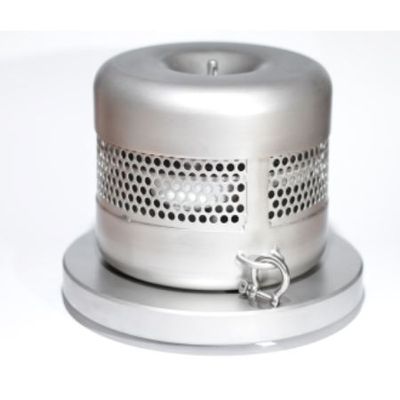
Chemcatcher - Passive Water Sampling Device
Chemcatcher® is a highly versatile and cost-effective passive sampling device for monitoring a wide variety of pollutants in potable, surface, coastal and marine waters. The worldwide licence to manufacture and sell Chemcatcher® has been acquired by TelLab, and we are now marketing it internationally to help identify and manage a number of environmental issues, such as the presence of acidic herbicides, problematic molluscicides, radionuclides and pharmaceuticals in water systems.
Chemcatcher® is a passive sampling device, capable of monitoring ultra-trace micropollutants in surface water, groundwater and coastal water monitoring applications. It has many advantages compared with traditional grab or spot sampling, biota, and, indeed, other forms of passive sampling.
- Chemcatcher® is an extremely cost-effective way of monitoring what is happening in an aquatic environment over time, with no power, maintenance or supervision requirements. The only manpower inputs required over the study period are for initial deployment and retrieval for analysis.
- With typical deployments of 7 days to a fortnight, it is capable of capturing sporadic, transient inputs of pollutants and fluctuations in levels over time, which are easily missed with spot analysis. An accurate, time-weighted average can be calculated for the deployment period.
- Chemcatcher® is capable of detecting problematic compounds even at very low levels, beyond what is often possible with conventional spot sampling.
- Typically, the amount of chemical accumulated by the device reflects the freely dissolved and labile fraction that is most readily bioavailable, thus providing a more accurate indication of impact on the ecosystem.
- Chemcatcher® is a highly versatile system. Different combinations of the membrane and receiving phase enable screening for the vast majority of problematic aquatic micro-pollutants, including both polar and non-polar organic compounds such as PAHs, PCBs, PBDEs, pharmaceuticals, pesticides, as well as radionuclides, trace metals, metalloids and organometallic compounds.
Chemcatcher® is a passive sampling device, capable of monitoring ultra-trace micropollutants in surface water, groundwater and coastal water monitoring applications. It has many advantages compared with traditional grab or spot sampling, biota, and, indeed, other forms of passive sampling.
- Chemcatcher® is an extremely cost-effective way of monitoring what is happening in an aquatic environment over time, with no power, maintenance or supervision requirements. The only manpower inputs required over the study period are for initial deployment and retrieval for analysis.
- With typical deployments of 7 days to a fortnight, it is capable of capturing sporadic, transient inputs of pollutants and fluctuations in levels over time, which are easily missed with spot analysis. An accurate, time-weighted average can be calculated for the deployment period.
- Chemcatcher® is capable of detecting problematic compounds even at very low levels, beyond what is often possible with conventional spot sampling.
- Typically, the amount of chemical accumulated by the device reflects the freely dissolved and labile fraction that is most readily bioavailable, thus providing a more accurate indication of impact on the ecosystem.
- Chemcatcher® is a highly versatile system. Different combinations of the membrane and receiving phase enable screening for the vast majority of problematic aquatic micro-pollutants, including both polar and non-polar organic compounds such as PAHs, PCBs, PBDEs, pharmaceuticals, pesticides, as well as radionuclides, trace metals, metalloids and organometallic compounds.
- The conventional approach to water quality monitoring – collecting samples in bottles and bringing them back to the laboratory for analysis – is very expensive and time consuming. Likewise, automated samplers can be expensive, vulnerable to theft or vandalism, and require maintenance, and, again, laboratory analysis costs can be significant.
- Spot sampling is also severely limited in the information it provides. It simply reveals the level of pollution at the particular time of sampling. In real-life aquatic environments, concentrations vary over time, due to sporadic effluent discharges, tidal impacts, rainfall variations and so on.
- For some priority substances, environmental quality standards (EQS) demand detection at extremely low levels, particularly in marine environments. When contaminants are present at such low levels, with spot sampling, it may be necessary to collect large volumes of water and concentrate the sample prior to analysis to reach detectable levels, making the process more expensive and highly cumbersome.
- Certain substances, targeted for monitoring under environmental legislation, accumulate within aquatic species, such as fish, allowing biota monitoring to be used to detect environmentally relevant concentrations of lipophilic substances, and, as accumulation represents exposure over time, this can provide a time-weighted representation.
- However, in practice, there are a number of difficulties associated with biota monitoring. For instance, there can be challenges finding the correct species, size range, age, etc at a given location. In extreme cases, poor water quality conditions may make it impossible for the targeted species to survive. Furthermore, issues such as metabolism and intraspecies biological variability can further cloud the comparability of results.
- In contrast, with Chemcatcher® the results are site specific; samples are easier to extract and potential problems associated with metabolism are eliminated.
- Chemcatcher® can detect both polar and non-polar compounds, extending its applications.
- Because it uses a disk as opposed to beads, there is increased absorption across the whole of the disk.
- The larger surface area provides improved performance for the detection of pharmceuticals and pesticides.
- The Chemcatcher® casing is re-usable, allowing the user to move away from single-use plastic and providing better value for money in cases where multiple deployments will be required.
- The Chemcatcher® deployment unit/cage
- This must must be fitted with 3 detectors (i.e. the housing plus disk and membrane). You will also need a field blank detector per site and 1 x fabrication blank detector per assessment. Therefore a total of 5 detector units are required. (However, if a number of sites are being monitored at the same time, one set of blanks (i.e. 1 x fabrication blank and 1 x field blank) is sufficient.
Chemcatcher® can be adapted to detect a wide range of substances – from trace metals, PAHs, PCBs and pesticides to pharmaceutical and personal care residues – depending on the materials chosen for the receiving phase and the membrane selected.
Use the tables below to determine the most appropriate deployment unit and the correct disk and housing for the pollutant(s) being detected. Then complete the form at the bottom of the page to view our price list.
- Chemcatcher® is a low-cost and passive (non-mechanical) device, with no power, maintenance or supervision requirements
- Different combinations of the membrane and receiving phase allow Chemcatcher® to be tailored for different purposes
- This enables screening for the vast majority of problematic aquatic micro-pollutants, including both polar and non-polar organic compounds
- The device can be deployed in situ for varying durations – typically from a minimum of 7 days to an average of two weeks
- This allows the target compound to be sequestered continually from the environment. Thus, Chemcatcher® captures sporadic, transient inputs of pollutants and fluctuations in levels over time, and a time-weighted average can be calculated for the deployment period