

Dynamic Equipments Private Ltd.
  1. Companies
  2. Dynamic Equipments Private Ltd.
  3. Products
  4. DEPL - Polyelectrolytes for Diverse ...
DEPLPolyelectrolytes for Diverse Applications

SHARE

Polyelectrolytes are specialized polymers known for their unique electrolyte groups, giving them charged properties when dissolved in aqueous solutions. These materials play a crucial role in various industrial processes due to their flocculation capabilities, where they destabilize colloidal suspensions to facilitate precipitation. Dynamic Equipments Pvt. Ltd. offers all three types of polyelectrolytes: cationic, anionic, and non-ionic, each suited for specific applications. The company's expertise includes determining the optimal type and dosing for specific needs, backed by stringent methodology and laboratory analysis. Used as thickeners, emulsifiers, conditioners, clarifying agents, and even drag reducers, polyelectrolytes find applications across sectors, addressing challenges in wastewater treatment, paper processing, and beyond. The synthetic variants like poly(sodium styrene sulfonate) and polyacrylic acid expand their use, providing strong and weak polyelectrolyte solutions.

Most popular related searches

DEPL provides the best selection of polyelectrolytes suitable for the user based on the type of application. Our application engineers and laboratory have a diligent methodology for recommending the optimal polyelectrolyte and also the optimal dosing. We provide all 3 types of polyelectrolytes – Cationic, Anionic, and Non-Ionic

Polyelectrolytes are polymers whose repeating units bear an electrolyte group. Polycations and polyanions are polyelectrolytes. These groups dissociate in aqueous solutions (water), making the polymers charged. Polyelectrolyte properties are thus similar to both electrolytes (salts) and polymers (high molecular weight compounds) and are sometimes called Poly salts.

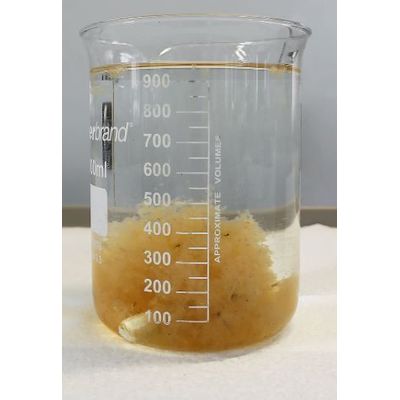
They are used to destabilize a colloidal suspension and to initiate flocculation (precipitation). They can also be used to impart a surface charge to neutral particles, enabling them to be dispersed in aqueous solution. They are thus often used as thickeners, emulsifiers, conditioners, clarifying agents, and even drag reducers. 

Chemical structures of two synthetic polyelectrolytes, as examples. To the left is poly(sodium styrene sulfonate) (PSS), and to the right is polyacrylic acid (PAA). Both are negatively charged polyelectrolytes when dissociated. PSS is a ‘strong’ polyelectrolyte (fully charged in solution), whereas PAA is ‘weak’ (partially charged).