


- Home
- Companies
- Solecta, Inc.
- Products
- Solecta - Model Microfiltration (MF) - ...
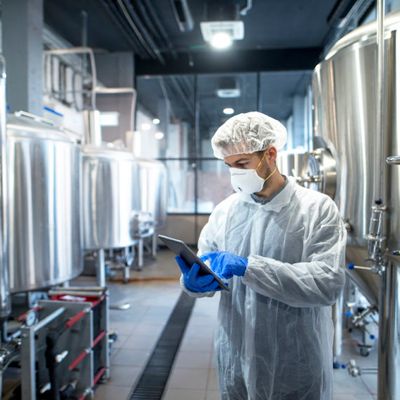
Solecta - Model Microfiltration (MF) -Polymeric Membrane Solution
Microfiltration (MF) products are widely used today, where unwanted materials and/or contaminants are typically removed from a process. Separation processes, such as clarification, are ideally suited for MF and have been utilized now for several decades. While it can be effectively used as a single-step separation process, it is oftentimes followed by another membrane technology, such as ultrafiltration (UF) or nanofiltration (NF), to further purify and improve quality of an end-product.
- Productivity
- Yield
- Quality
- Operating Efficiencies
- Peace of Mind
In the spectrum of membrane technology, MF has the largest, or most “open,” pore sizes – which in turn equates to rejection of particles in the micrometer size range. Examples of solids that will not pass through the membrane into permeate include fats, bacteria, yeast and suspended solids greater than 0.1-10 µ. Other high value materials such as proteins, sugars, dissolved salts, and lower molecular weight molecules will pass through into permeate, making this format attractive for removal of contaminants from recirculating or higher-value feed streams.
While there are many form factors (e.g. tubular, spiral wound, plate and frame) and materials of construction (e.g. polymeric, ceramic) for microfiltration, the most commonly used is polymeric spiral-wound technology. Solecta is proud to offer polyvinylidene fluoride (“PVDF”) spiral-wound membranes in a variety of pore sizes and feed spacers to accommodate the needs of numerous process applications.What are some key benefits of microfiltration?
When properly designed and operated, MF, and specifically spiral-wound membranes, can offer several benefits over traditional separation process:
Compact footprint
With advances in element construction and system design, substantial surface area can be designed into a membrane solution
Lower energy consumption
Because these systems operate under lower pressures and have few moving parts, they generally consume less energy
Minimized waste generation
With proper operational protocols, including cleaning procedures, MF membranes can generally run with a higher proportion of runtime vs cleaning/downtime
Ease of operation
MF membrane operations are well understood, and control systems can ensure smooth, safe separation operations
Lower cost of operation
When considering capital and operating costs, including those mentioned above, MF membranes offer an attractive solution for filtration based on size exclusion of 0.1-10 µ
MF is used broadly across process industries, most namely dairy, food ingredients, biotechnology/life sciences, beverages, and automotive manufacturing operations. Some of the key applications across these industries include the following:
- WPI production (whey defatting)
- Cheese production (brine clarification)
- Skim milk production (casein/whey fractionation)
- Sugar/sweetener processing (dextrose clarification prior to refining)
- Gelatin processing (downstream clarification)
- Other fermentation processes (clarification)
- Enzyme manufacturing (downstream processing of bulk fermentation)
- Beer, wine, and juice production (color removal and clarification)
- Paint recovery (clarification)
- Oil-water separation (for water/waste treatment and/or recovery of oils)
In these applications, microfiltration can replace more costly filtration options, such as rotary-drum vacuum filters, which also use filtration aids such as diatomaceous earth. Microfiltration can greatly simplify the separation process and avoid the on-going operational cost and burden of burden of disposal of these aids.
Otherwise, MF technology is broadly used in industrial water and wastewater treatment processes. In water treatment applications, the technology can be used for clarification of plant process water and/or as pre-treatment for advanced membranes, such as nanofiltration or reverse osmosis. Additionally, microfiltration can also be used in wastewater treatment, to help remove suspended solids either as stand-alone technology or embedded in a more complex process, such as membrane bioreactors (MBRs).