

- Home
- Companies
- Nanovex Biotechnologies
- Products
- Nanovex - Model PLGA - Polymeric ...
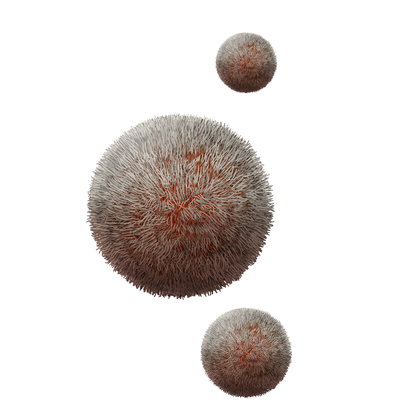
Nanovex - Model PLGA -Polymeric Nanoparticles Copolymer
The PLGA copolymer is synthesized via random ring-opening copolymerization of the two monomers lactic acid and glycolic acid by ester linkages. Different ratios of glycolic acid to lactic acid can be found (identified with the molar ratio) the most common are 50:50 and 75:25 lactic acid to glycolic acid.
WHAT IS A NANOPARTICLE?
It falls in the general category of polymeric nanoparticles, which are uniform spherical nanostructures made of synthetic polymers. In this case, it is the linear copolymer poly(d,l-lactic-co-glycolic acid), usually referred to as PLGA. However less common, other polymers as poly(ε-caprolactone) or PCL; poly(ethylene glycol) or PEG, polyethyleneimine or PEI and poly(lactic acid) or PLA can be used as well.
This is a determining factor in the final properties of the nanoparticle. On one side, lactic acid has a methyl group which makes it more hydrophobic (thus, it degrades slowly) and stiff. On the other side, glycolic acid is more hydrophilic (degrades faster) and is more flexible. The amount of each will determine the hydrophobicity of the polymer, the rate of degradation (that could go from months to years) and its amorphous structure. The poly(d,l-lactic-co-glycolic acid) polymer can be terminated in a carboxyl group (not end capped) or in an alkyl ester which protects against quick degradation.
Polymeric nanoparticles can be classified in two categories according to their morphology: nanocapsules and nanospheres. Nanocapsules contain an oily or aqueous core surrounded by a polymeric layer. On the contrary, nanospheres, consist of a solid continuous polymeric matrix. In either case, the drug is can be dissolved in the core (nanocapsules) or the polymeric network (nanospheres), or it can be adsorbed onto the nanoparticle surface.
PLGA nanoparticles are synthesized by emulsion-solvent evaporation methods. This is, preparing a single oil-in-water (o/w) emulsion for hydrophobic substances or double water-in-oil-in-water (w/o/w) emulsion for hydrophilic compounds. The emulsification is done using stirring or homogenization, emulsifiers and controlling the temperature which forms the nanoparticles. After that, the solvent is removed via evaporation or extraction and the PLGA drug-containing nanoparticles harden and can be collected.
WHAT IS A PLGA NANOPARTICLE DELIVERY SYSTEM?
Polymeric nanoparticles are excellent in vivo nanocarriers due to their biocompatibility (approved by the FDA) and their special suitability for oral administration of pharmaceuticals. They are made of biodegradable and biocompatible polymers or copolymers with a size in the range of nanometers, like PLGA – Poly (lactic-co-glycolic acid). Drugs can be encapsulated within the carrier, physically adsorbed onto, or chemically linked to the surface.
PLGA VS PLGA-PEG VS PLGA-PEI
Bare PLGA nanoparticles are rarely used due their high hydrophobicity, short circulation times due to opsonization and low cellular uptake due to surface negative charge. Surface coatings with PEG or PEI are essential to ensure that the nanoparticles reach their target.
PLGA-PEG NANOPARTICLES
Poly(ethylene glycol) or PEG is the most common polymer used in combination with PLGA nanoparticles. It helps in reducing the nanoparticle aggregation, increasing solubility and stability over time, reducing immunogenicity and uptake from RES cells. All of this contribute to the increase in the circulation time. For these reasons, it is recommended for in vivo applications. While PLGA is naturally hydrophobic, PEG is the opposite, so the combination of both is amphiphilic, facilitating the emulsification process.
PEG-PLGA nanoparticles can be prepared by two methods: using of PLGA-PEG block copolymers or by adding a PEG coating after the preparation of the PLGA nanoparticles. The PEG-PLGA block copolymers are typically double or triple: PEG-PLGA, PEG-PLGA-PEG and PLGA-PEG-PLGA. As with the lactic acid : glycolic acid ratio, the ratio of PEG to PLGA in the in here will provide the molecule with different chemical properties. The higher the ratio (higher PEG content), the lower it is the molecular weight and the more soluble in aqueous media it is. On the contrary, if the ratio is low (higher PLGA content), the higher the molecular weight and the less hydro soluble the molecule is. For the second method, the PEG is linked to the PLGA nanoparticles by amide bonds between an amine terminated PEG derivative and a free carboxyl group of PLGA.
PLGA-PEI NANOPARTICLES
Polyethyleneimine, commonly referred to as PEI is a synthetic hydrosoluble polymer used to coat PLGA nanoparticles and confer them with a positive charge. This property makes PEI-PLGA nanoparticles suitable for the intracellular delivery of genetic material which is negatively charged. It has great affinity for lipopolysaccharides and cell membranes increasing circulation times of the nanoparticles.
PEI consists of the repeated monomer aziridine containing an amine group. PEI is available in a linear and several branched forms, the latest being the most positively charged. The formation of PLGA-PEI is the result of the electrostatic interaction of the amine group from the PEI and the carboxylic acid end from the PLGA.
The most cationic variants condense nucleic acids more and provides them with protection from nucleases. A PEI coating also favours the endosomal scape. Whereas the linear PEI only contains secondary amines, the branched PEI contains primary, secondary, and tertiary amine groups. The firsts are the ones that form the complexes with the nucleic acids, and the others play their role in disrupting the endosomal membrane due to their buffering effect.
- GENE THERAPY
- CANCER TREATMENT
- OCULAR DRUG DELIVERY
- DIABETES TREATMENT
- BRAIN DRUG DELIVERY
- VACCINES
- BIOSENSORS
- TISSUE ENGINEERING
Approved by the Food and Drug Administration (FDA) and the European Medicines Agency
The PLGA copolymer is naturally degraded by hydrolysis under biological and environmental conditions to lactic acid and glycolic acid, which are natural metabolic by-products. Then, they are cleared via the renal system.
Another challenge faced in the pharmaceutical industry is the degradation of the drug compound under light, pH or oxidative conditions. PLGA nanoparticles help maintaining the therapeutic activity and molecular integrity of the susceptible pharmaceuticals.
There are many protocols to prepare the polymeric nanoparticles which enable the loading of drugs with different polarities. Both hydrophobic and hydrosoluble drugs will be trapped in the polymeric matrix during the synthesis process and will be released in a controlled way.