
- Home
- Companies
- Nanjing Junxin Environmental Technology ...
- Products
- PVDF MBR Membrane & Modules
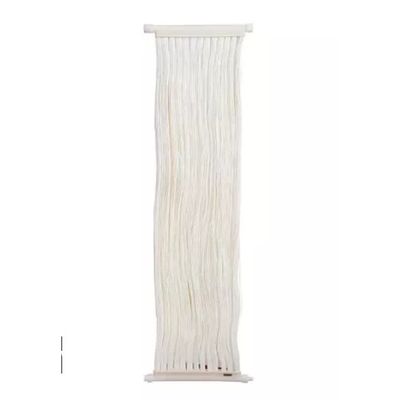
PVDF MBR Membrane & Modules
Membrane filtration has a major role in water and wastewater treatment, which is superior to the conventional water technologies with a proven better performance and more efficient economics.
The basic membrane processes are microfiltration (MF), ultrafiltration (UF), nanofiltration (NF), reverse osmosis (RO).
Separation ranges for those membranes are as follows: 100 to 1000 nm for MF, 5 to 100 nm for UF, 1 to 5 nm for NF, and 0.1 to 1 nm for RO.
For more than the last 10 years MBRs have emerged as an effective secondary treatment technology by using membranes in the range of MF and UF.
A Membrane bioreactor (MBR) processes are mainly used for wastewater treatment (WWT) by using microfiltration (MF) or ultrafiltration (UF) and integrating them with a biological process like a suspended growth bioreactor.
The membranes are employed as a filter removing the solids which are developed during the biological process, which gives a clear and pathogen free product. A visual example can be found from the following picture of an immersed MBR (iMBR) in Figure 2.
Fig.2 The wastewater goes through a fine screen for the removal of big objects that might cause damage to the downstream equipment. Then it enters an Anoxic Zone for the treatment of nitrogenous matter and phosphate following an Aerobic Zone where microorganisms with the help of the oxygen coming out of the FBD will digest the organics matter in the wastewater and clump together as they do so, producing a sludge. This sludge will enter the Immersed Membrane Bioreactor where the membrane will separate the solids and microorganisms from water.
A membrane bioreactor is essentially a replacement in the conventional activated sludge (CAS) system for the settlement tank for solid/liquid separation. The MBR gives to the end user improved process control and much better product water quality.
The MBR process operates over a considerably different range of parameters than the conventional activated sludge process
- SRT 5 -20 days for conventional system - 20 -30 days for MBR
- F/M 0.05 -1.5 d-1for conventional system - < 0.1 d-1for MBR
- In general MBRs have three distinct membrane configurations (Fig.3),
1. Hollow fibre (HF)
2. Multitube (MT)
3. Flat sheet (FS)