


- Home
- Companies
- GEONICA, S.A.
- Products
- Geonica - Model LI-190SA/SZ - Quantum ...
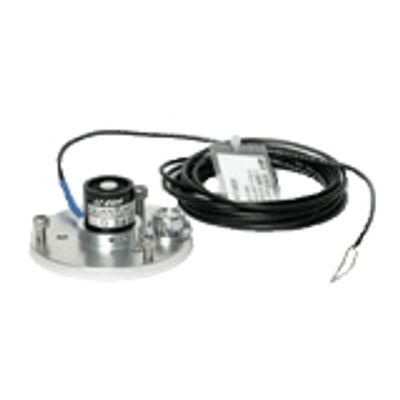
Geonica - Model LI-190SA/SZ -Quantum Sensor
During photosynthesis,plants use energy inthe region of the electromagnetic spectrum from 400-700 nm (1,2). The radiation in this range,referred to as Photosynthetically Active Radiation (PAR), can be measured in energy units (watts m2) or as Photosynthetic Photon Flux Density(PPFD),which has units of quanta (pho-tons) per unit time per unit surface area.The units most commonly used are micro-moles of quanta per second per square-meter (pmol s`m2). Plant scientists, horticulturists, ecologists,and other environmental scientists use the LI-190SA Quantum Sensor to accurately measurethis variable.
Accurate measurements are obtained under all natural and artificial lighting conditions because of the computer tailored spectral response of the LI-190SA. Colored glass filters are used to tailor thesilicon photodiode response to the desiredquantum response (Figure 1). An interference filter provides a sharp cutoff at 700nm, which is critical for measurements under vegetation where the ratio of infrared to visible light may be high. A small response in the infrared region can causean appreciable measurement error. This sensor, developed from earlier work (3),was pioneered by LI-COR and has become the standard for PPFD measurement inmost photosynthesis related studies. The LI-190SA is also used in oceanography, limnology, and marine science as a reference sensor for comparison to underwater PAR measured by the LI-192SA Underwater Quantum Sensor.
- Absolute Calibration: ±5% traceable to theNational Institute of
- Standards andTechnology (NIST).
- Sensitivity: Typical 5pA per 1000pmol s `m2.
- Linearity: Maximum deviation of 1% up to10,000 pmol s"1m"2.
- Stability: Typically < ±2% change over a 1 year period.
- Response Time:10 ps.
- Temperature Dependence: 0.15% per °Cmaximum.
- Cosine Correction: Cosine corrected up to80°angle of incidence.
- Azimuth: < ±1% error over 360°at 45°elevation.
- Tilt: No error induced from orientation.
- Operating Temperature: -40 to 65°C.
- Relative Humidity: 0 to 100%.
- Detector: High stability silicon photovoltaicdetector (blue enhanced).
- Sensor Housing: Weatherproof anodizedaluminum case with acrylic
- diffuser andstainless steel hardware.